The Final Solicitation Has an Unusually Honest Line
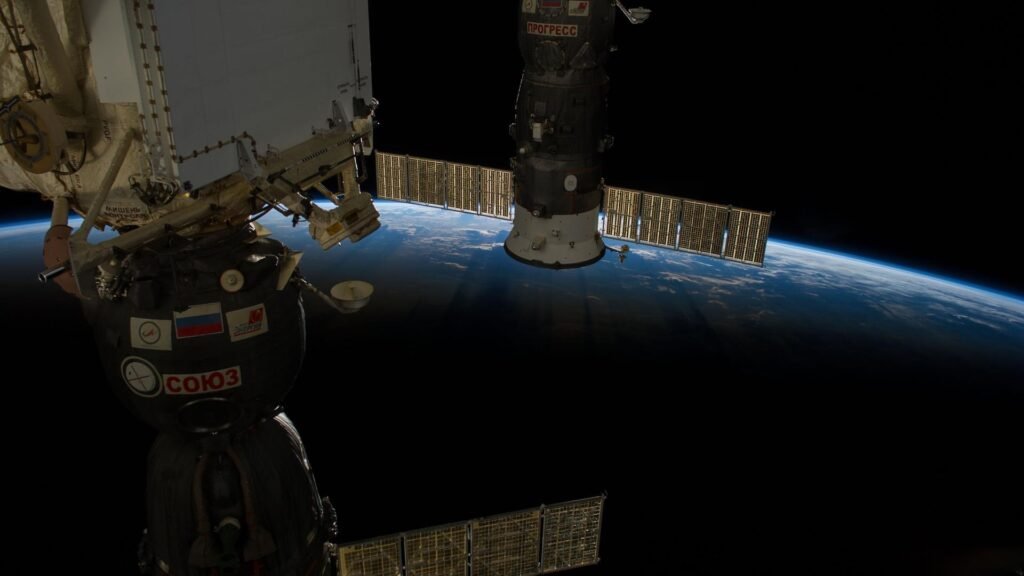
On Friday, NASA released the final Request for Proposals that will decide what replaces the International Space Station — and buried in the announcement was a sentence agency leaders rarely say out loud. According to NASA, Administrator Jared Isaacman told industry the opportunity is significant, “but the economics ultimately have to work. We want to see credible plans, strong technical execution, and companies prepared to invest in destinations that can serve NASA while developing additional customers and markets of their own.”
The solicitation — a roughly 360-page final RFP — invites U.S. industry to submit plans for commercial space stations that NASA would use as a customer rather than own outright. Proposals are due Tuesday, Dec. 8, with NASA intending to award firm-fixed-price, multi-award, indefinite-delivery/indefinite-quantity contracts in spring 2027. The agency plans to pick two or more contractors for early development, followed by a competitive task order for final design, testing, certification, and services from one or more providers.
The Timeline That Matters
This did not come out of nowhere. NASA issued two requests for information in March, published a draft RFP in July, and ran an industry day plus one-on-one meetings before locking the final version. As recently as Oct. 2, the agency’s own procurement page stated no final solicitation existed — the Oct. 9 release is genuinely new.
The clock is tight from here. The certification path NASA sketched for its Commercial LEO Destinations program requires a crewed flight test by 2029, according to reporting on the acquisition approach — and the ISS is scheduled to retire around 2030. Four companies already hold more than $400 million in combined NASA seed funding from the program’s earlier phases: Axiom Space, Blue Origin, Nanoracks/Voyager Space, and Northrop Grumman, per an analysis of the field.
Why this matters: the economics have to work — and they might not
Here is the part the straight-news summaries skip. NASA’s own Inspector General and the Government Accountability Office have warned of a possible gap in the U.S. human presence in orbit once the ISS retires around 2030. Independent analysts question whether a self-sustaining commercial market — beyond NASA’s own subsidy — actually exists yet.
That is the real story of this RFP. For the first time in a quarter-century, the United States has no government-owned successor waiting for its orbital outpost — only a bet that private industry can build one in time, on a business case that must close by 2029. The firm-fixed-price structure means NASA is a customer, not an owner: if no company’s numbers work, there is no plan B, just the gap. Isaacman’s candid line — “the economics ultimately have to work” — is the whole contest in one sentence.
The practical watch list for the next five months: who actually bids by Dec. 8, whether the spring 2027 awards land on one design or two, and whether any proposal shows a revenue model that does not begin and end with NASA. Space stations have never paid for themselves; the next two years will test whether that can change.
Meanwhile in Space:
Also this week: Crew-12 splashed down after 237 days aboard the ISS — the crew the final-RFP stations will eventually have to serve.
And: Blue Origin’s IPO push, and how Bezos’s company stacks up to SpaceX — one of the four funded contenders now has to turn seed money into a station proposal.