2,200 Cases an Hour, No Extra Headroom Needed
While the robotics world chases humanoids, the actual money is in the boring end of the factory. Kawasaki Robotics (USA) announced this week that it will launch the CP110L, a high-speed palletizing robot, in North America at PACK EXPO International 2026 — October 18–21 at McCormick Place in Chicago, in booth N-5933.
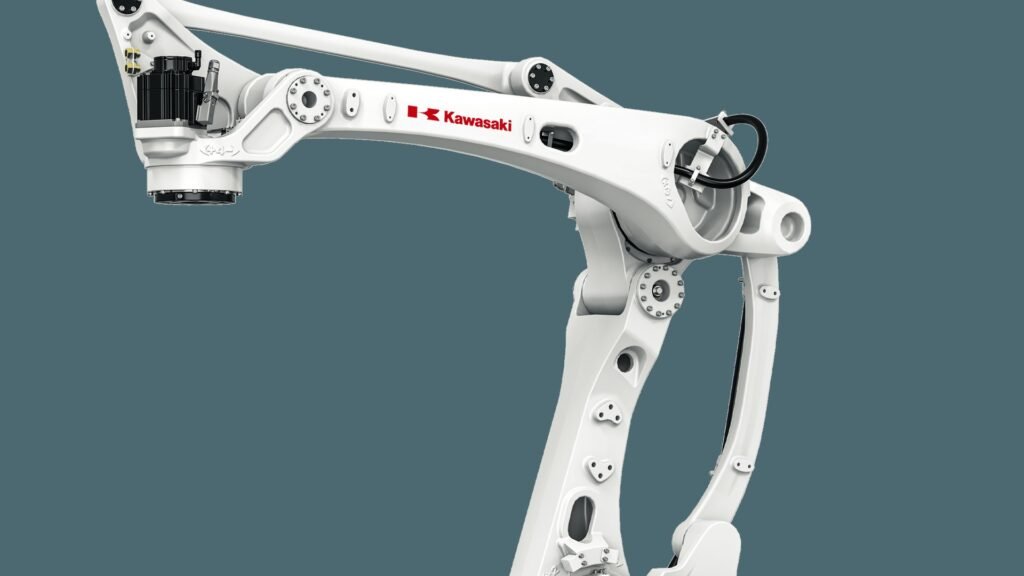
The numbers are serious. The CP110L carries a 110-kilogram payload, stacks up to 2,200 cases per hour under specified operating conditions, and reaches 2,505 millimeters — with four controlled axes and ±0.05-millimeter repeatability. A hollow wrist routes cables and hoses internally to avoid snagging on surrounding equipment, and a standard power-regeneration function converts energy from the robot’s deceleration back into usable electricity — a real saving in a job that is constant vertical motion.
At the trade show, Kawasaki will also demonstrate an R Series case-packing cell built around its smaller RS013N robot, and the IRIS RPZ-U palletizing system pairing IRIS Factory Automation’s modular platform with a 25-kg RS025N arm. The CP110L extends Kawasaki’s CP Series lineup, which now spans payloads from 110 to 700 kilograms.
Designed for the Factory You Already Have
The spec sheet is not the interesting part. The interesting part is the constraint the CP110L was designed around: most factory floors cannot be rebuilt to fit a robot. The whole machine is built for space-starved end-of-line cells — it needs just 2,242 millimeters of ceiling height and has a revolute-axis interference radius of only 453 millimeters, so integrators can drop a palletizing cell into a tight existing line without knocking down walls.
As Kawasaki’s Paul Marcovecchio put it in the announcement, palletizing is often one of the clearest places for a manufacturer to automate — but the available space at the end of the line does not always match the automation they want to install. The CP110L is a retrofit story disguised as a spec bump: the innovation is fitting more palletizing into the plant you already own.
Why this matters: the quiet boom in end-of-line automation
Here is the data point the commodity coverage of this launch skips. Per PMMI’s 2026 Robotics in Packaging & Processing report, 61% of packaging end users expect to increase their investment in robotics over the next 12 months. Palletizing sits at the center of that wave: it is repetitive, it involves heavy lifting, it causes injuries — and it is usually the first thing a factory automates when labor gets tight.
Notice what the tier-1 tech press did with this launch: nothing. No straight-news rewrite from a giant outlet exists, which is precisely why it belongs here. The humanoid race gets the headlines; end-of-line automation gets the purchase orders. A robot that stacks 2,200 cases an hour inside a cell that fits under a low ceiling is the kind of unglamorous product that actually pays for itself — and a signal that the packaging robotics boom PMMI measured is now hardware, not just surveys.
The honest caveats: that 2,200-cases figure is qualified as “under specified operating conditions,” Kawasaki announced no pricing, and a trade-show debut is a debut, not a deployment — real customer installations come later. But if you run a warehouse, this is the robot class to watch, and PACK EXPO is where to see it first.
Meanwhile in Robotics:
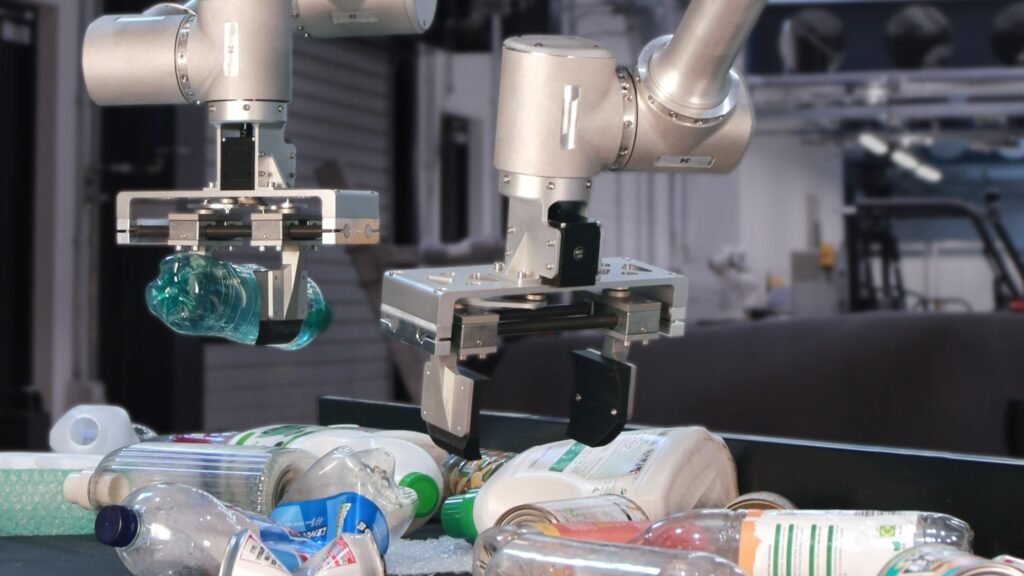
Also this week: Danu Robotics’ H.E.R.O. Recycling Robot Hits the Market — after six years of development, a claw-gripped waste sorter starts earning its keep.