NASA’s next crew will not go to the Moon. That is the most important detail in the agency’s newly reaffirmed plan to land astronauts on the lunar surface in 2028, and it is the detail most headlines skip.
The Rehearsal Before the Return
According to AP, NASA Administrator Jared Isaacman said Friday that the agency remains on track to launch Artemis III next summer as a docking exercise with test versions of the lunar landers built by SpaceX and Blue Origin. The two-week mission will carry four astronauts, but it will stay in orbit around Earth. There will be no Moon trip this time.
That is a deliberate reshuffle, not a delay dressed up as progress. Artemis III was once the mission expected to put astronauts back on the lunar surface. NASA has now turned it into a full dress rehearsal: the Orion crew capsule will rendezvous and dock with lander hardware, more than once, a few hundred miles above Earth, before anyone is asked to trust that hardware on the way down to the Moon.
Two Landings in One Year
The landing itself moves to Artemis IV, still scheduled for 2028 and still billed as the first crewed lunar landing since Apollo. A separate mission-by-mission breakdown reports that Artemis V is also targeted for 2028, giving NASA two crewed landings in a single calendar year, followed by a landing roughly every six months after that.
That cadence is the real break with the past. Apollo landed 12 astronauts across six missions in just over three years. NASA’s new plan asks for a repeatable landing rhythm, not a one-off triumph, and that rhythm only works if the landers, the rockets, and the ground teams can be turned around like an airline schedule rather than rebuilt for each flight.
The Lander Decision NASA Has Not Made
Here is the second detail the headlines blur: NASA has not yet chosen which company’s lander will fly Artemis IV. Officials say they will keep their options open as long as possible between SpaceX’s Starship-based lander and Blue Origin’s Blue Moon lander, and Artemis III is, in part, the test that will inform that choice.
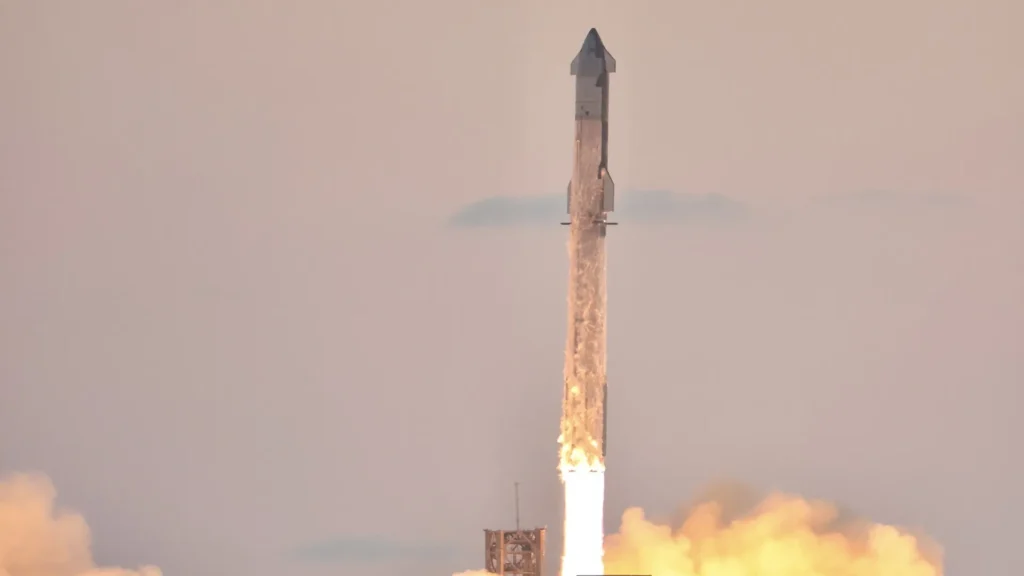
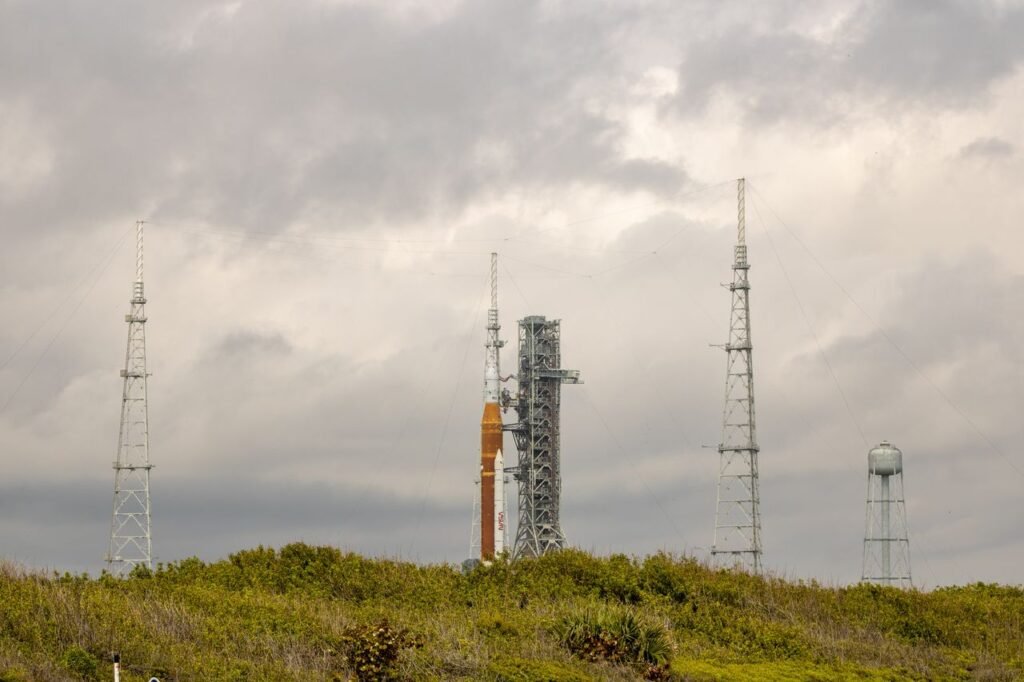
The rehearsal itself is no formality. Artemis III will require three massive rocket launches, with Orion docking and undocking multiple times in a campaign NASA’s Artemis program manager Jeremy Parsons has called likely the most complicated launch campaign ever undertaken. Any slip in that choreography ripples straight into the 2028 landing date.
Isaacman framed the push as a race against China, saying the new space race will be much closer than it ever needed to be because of slow going in past years. He also reached for Apollo’s own playbook, noting that the agency went from the Apollo 7 splashdown to Apollo 11 in just nine months in 1968 and 1969.
Why This Matters
The commodity version of this story reads as a simple countdown: Moon landing in 2028. The schedule underneath it is a chain of dependencies, and the weakest link is not the rocket. It is the open lander decision, the three-launch rehearsal, and the demand for two landings in one year after a half-century gap. If Artemis III finds an integration problem, as rehearsals are meant to do, 2028 is the date that pays for it.
There is also a quieter shift in what success means. Isaacman has said the goal this time is to stay, not just to visit, with a Moon base as the end state rather than a flags-and-footprints return. That makes Artemis III more than a test flight: it is the first check on whether NASA can run the kind of repeatable lunar logistics a permanent presence requires. A single landing proves a vehicle. A rehearsal, two landings in a year, and a six-month cadence would prove a system.
Meanwhile in Space: SpaceX Crew-13’s record-fast docking showed how quickly crews can now reach orbit, and NASA’s final call for commercial space stations shows what comes after the International Space Station. Artemis III sits between those two stories: routine access to orbit, and a permanent destination beyond it.