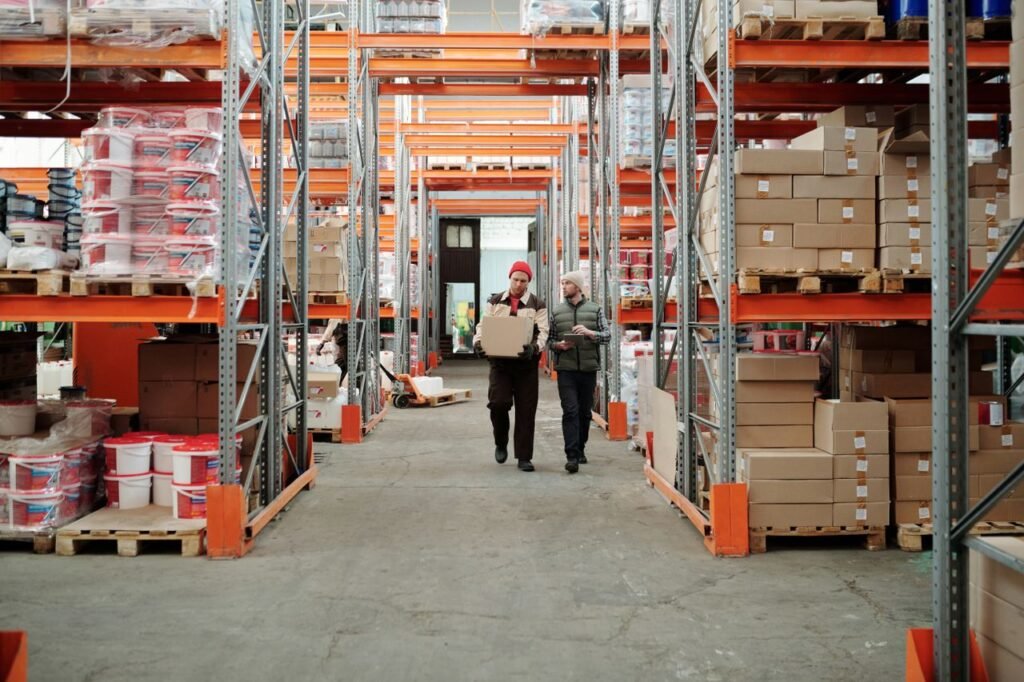
GXO Logistics is sending humanoid robots to two more American warehouses — and this time, the news is not a demo, a pilot or a rendering. It is a paying customer buying more of something it already uses. On October 26, GXO and Agility Robotics announced Digit humanoid robots will deploy at GXO sites in Statesville, North Carolina, and Lebanon, Tennessee, starting in early 2027.
According to Agility Robotics, the expansion builds on Digit’s work at GXO’s Flowery Branch, Georgia, facility, where the robot moves totes onto conveyors. The new deployments start with Digit 4 and transition to Digit 5 once that model becomes commercially available. GXO is the world’s largest pure-play contract logistics provider, with more than 150,000 team members across more than 1,000 facilities — so a two-site expansion is a toe in the water, not a flood.
From One Georgia Warehouse to Three States
The partnership did not start with a press release. It started with a proof-of-concept pilot at Flowery Branch in late 2023, formalized in June 2024 as a multi-year Robots-as-a-Service agreement — described by the companies as the industry’s first formal commercial deployment of humanoid robots in live operations. Digit works alongside existing automation, handling repetitive tote transfers that wear people out and slow lines down.
The number that separates this announcement from most humanoid headlines is 100,000: the totes Digit has moved at Flowery Branch since 2024. Add more than 65,000 hours of real-world operation across Digit’s commercial operations and customer programs, and you get something rare in this sector — a usage record, not a promise. Unite.AI reports the same figures, and notes the expansion covers e-commerce fulfillment work the companies describe as highly repetitive material handling.
Digit 4 Now, Digit 5 Later
The upgrade path is the catch buyers should read twice. New sites will open on Digit 4, then migrate to Digit 5 when it ships commercially. Digit 5, unveiled on September 15, 2026, is designed to work safely in close proximity to people and to take on broader industrial workflows — so early sites will run a mixed fleet during the transition, with different capabilities and support needs.
The Numbers Behind the Headline
Agility used the same October 26 announcement to report three additional manufacturing customers in paid programs — a major global automaker selling more than three million vehicles a year, a large automotive technology developer, and one more unnamed manufacturer — plus a pipeline of more than 30 prospective customers across automotive, logistics, e-commerce, agricultural equipment, consumer products and defense.
Two caveats keep this honest. The new manufacturing customers are unnamed, so their scale cannot be independently verified. And Agility’s path to the public markets is not yet closed: its SEC Form S-4 was declared effective on October 13, 2026, and the business combination with Churchill Capital Corp XI is expected to close in the fourth quarter of 2026, after which the combined company would trade on Nasdaq. Until that close, the listing — and the capital it would bring — remains expected, not done.
What is concrete is capacity: RoboFab, Agility’s 70,000-square-foot Salem, Oregon, facility, can build up to 10,000 robots a year. GXO’s expansion is evidence its customer problem is shrinking.
Why This Matters
Humanoid news usually comes in two flavors: a giant number of robots planned for some distant year, or a factory starting production with no customer named. GXO’s announcement is the third flavor, and the most useful one: an existing customer, with measured tote counts and operating hours, choosing to expand to new states on a Robots-as-a-Service contract.
For warehouse workers, the near-term read is narrower than the headlines suggest: Digit takes repetitive tote work first, inside buildings that still employ thousands. The 2027 question is whether Statesville and Lebanon hit Georgia’s reliability bar, and whether Digit 5 arrives before GXO must run yesterday’s fleet for long.
Meanwhile in Robotics:
Not every giant robot number survives scrutiny — see our fact-check of Toyota’s 400,000-robot plan. And for the hardware behind Digit’s next generation, read about Digit 5’s nine-minute battery charge.