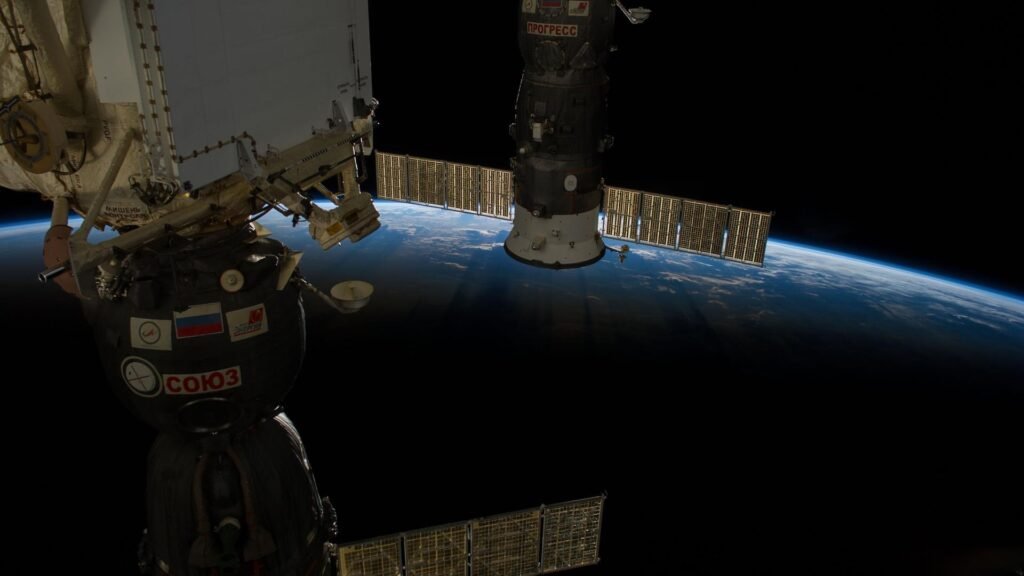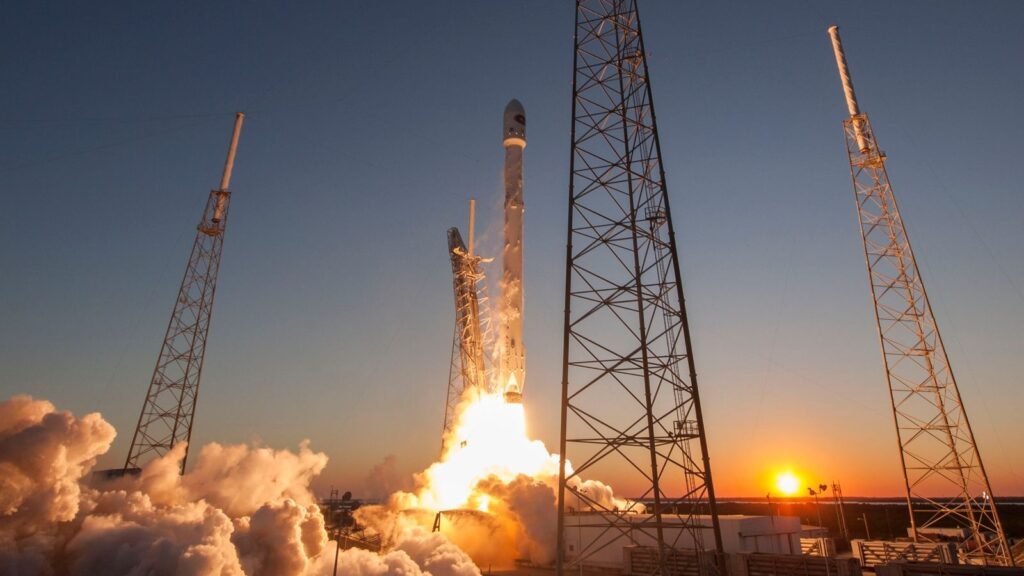
Set your alarm. At 6:33 a.m. ET on Tuesday, a SpaceX Falcon 9 is scheduled to lift off from Space Launch Complex 40 at Cape Canaveral Space Force Station, lofting a Cargo Dragon stuffed with more than 6,300 pounds of supplies, hardware, and science experiments toward the International Space Station. According to NASA, the Dragon will dock autonomously at the space-facing port of the station’s Harmony module roughly two days later.
If the skies are clear, East Coast early risers could get a bonus: sunlight catching the rocket’s exhaust before sunrise can paint a glowing “jellyfish” cloud across the sky. Meanwhile, Floridians near the Space Coast should expect a rumble — the Falcon 9’s first-stage booster will fly back to land right next to the pad, producing sonic booms on its return, as Florida Today reports.
The Last Pair of Wings
The headline cargo isn’t the food or the spare parts. Tucked inside Dragon’s unpressurized trunk is the final pair of ISS Roll-Out Solar Arrays — the last set the station will ever receive.
Six iROSA arrays, each generating 20 to 28 kilowatts, are already bolted onto the station’s truss. This final duo will be installed on power channels 3B and 2A during future spacewalks, and once in place, the upgrade is done: the station gains another 20 to 30 percent of power, buying crucial margin as the original arrays age and degrade. Per reporting from NASA Spaceflight, that extra capacity helps carry the ISS through its final years and its eventual controlled deorbit.
Meanwhile in Space: NASA has opened final bidding for the commercial stations meant to succeed the ISS — making this last power upgrade a bridge to whatever comes next.
A Manifest From a Science-Fiction Lab Notebook
The pressurized cargo reads like a tour of tomorrow’s medicine cabinet. LambdaVision-1 will test manufacturing artificial retinas in microgravity, where researchers hope the weightless environment grows more uniform layers that could one day restore vision. The MINDS experiment uses lab-grown brain organoids to study inflammation linked to Alzheimer’s, Parkinson’s, and multiple sclerosis. Stellar Spheroids will probe how 3D human heart tissue — including developing blood-vessel networks — behaves in orbit, with an eye toward better drug testing.
And then there’s the hardware with character: a collapsible urinal demonstration unit that feeds into NASA’s Artemis III planning, plus a failed Canadarm2 robotic arm joint riding home for analysis and refurbishment.
How to Watch
NASA’s live launch coverage begins at 6:15 a.m. ET on Tuesday through the agency’s website and NASA+. Docking is expected around 11 a.m. ET on Thursday, October 15, with NASA astronaut Anil Menon and Canadian Space Agency astronaut Joshua Kutryk monitoring the arrival. The spacecraft making this run is Cargo Dragon C211, on its fourth flight, riding a Falcon 9 booster flying for the eighth time.
Meanwhile in Space: SpaceX’s Transporter-18 ride-share is taking Google’s orbital computing experiment to space.