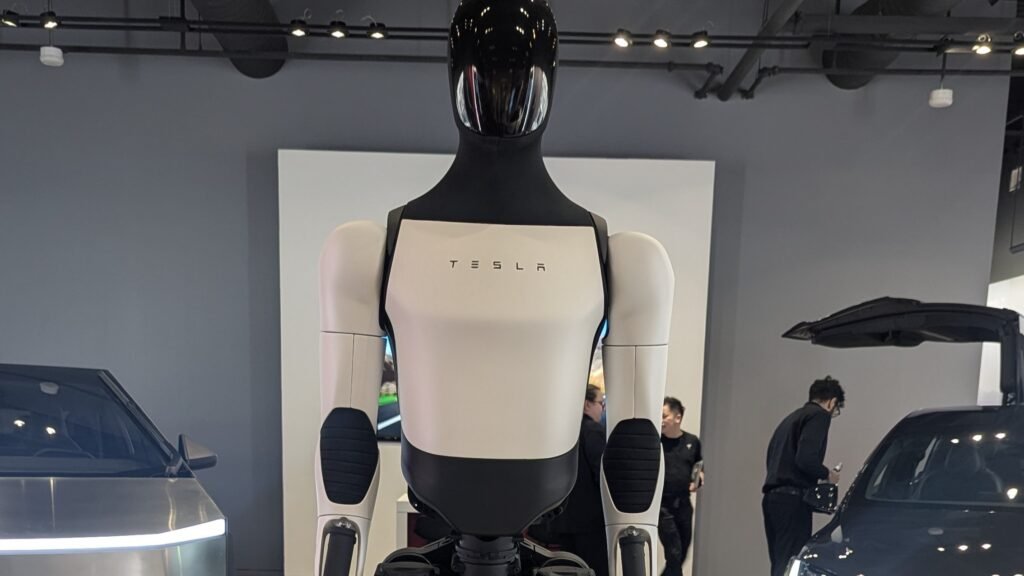
Germany just opened a school for robots, and it is not a metaphor. On October 22, NEURA Robotics and the Technical University of Munich (TUM) opened the TUM RoboGym at LabCampus near Munich Airport, a training center of more than 2,300 square meters where around 100 robots will learn real industrial skills in 48 training cells. To mark the opening, NEURA also unveiled 4NE1 Gen 4, the new generation of its humanoid robot, designed for series production rather than the demo stage.
The timing is deliberate. While the US and China race to build the most impressive humanoid, NEURA and TUM are betting on a different bottleneck: the data that teaches it. According to TUM, embodied AI cannot scrape the internet the way chatbots do. It needs training data from real physical interaction, and that data is currently scarce. The RoboGym exists to manufacture it at scale.
A School Where Companies Teach Robots Their Trade
Companies have trained workflows there since September, and demand is already high. RoboticsTomorrow reports firms from more than ten industries are involved, including automotive, pharmaceuticals, medical technology, packaging, logistics, agriculture, and care. The tasks are unglamorous and specific: handling boxes, filling bottles, loading wooden components, folding boxes, assembling parts, and using tools.
The center generates training data three ways: real robots performing tasks while sensors capture movements, contacts, and outcomes; people demonstrating workflows in sensor suits, motion capture, and teleoperation; and simulation, where a Data Amplifier multiplies real experience into new variations, validated back on physical robots. Data flows into a curated cloud data lake.
Meet 4NE1 Gen 4, the Lighter, Softer Humanoid
Gen 4 is slimmer and 20 percent lighter than its predecessor, with a black textile sensorized outer skin, a deliberate choice for a robot built to work alongside people. Advanced hands grip more precisely, and Smart Limbs build reflexes directly into each limb, so arms and legs react independently and move more fluidly.
The brain is Neuron AI, NEURA’s Perception-Language-Action model. Unite.AI reports that alongside vision, touch, force, sound, and the robot’s own state all feed into the model, which matters when a robot must feel whether a fastener has clicked into place. Neuron AI runs locally on the robot, and through the Neuraverse platform, skills learned by one robot become available to others. At NVIDIA GTC Berlin, NEURA demonstrated 4NE1 running Neuron AI through an eleven-minute laundry sequence, sorting, loading, unloading, and drying without human intervention.
Germany’s Different Bet on the Humanoid Race
NEURA founder and CEO David Reger frames the project as a play for Germany’s industrial knowledge: As RoboticsTomorrow quotes him, companies hold knowledge built up over generations about working materials and mastering difficult processes, and the RoboGym turns that know-how into robot skills. The Mittelstand, Germany’s mid-sized firms, should help shape this future rather than buy it ready-made from abroad.
The commitment is concrete: three years initially, around 17 million euros invested, about 11 million from NEURA. Munich is the first site in a planned international network of NEURA Gyms, with another German Gym planned with RWTH Aachen and more sites planned in Europe, the US, and China.
Why This Matters
Most humanoid coverage grades robots on spectacle: speed, strength, looks. The RoboGym grades them on something duller and more decisive: how quickly a robot learns a new task and how reliably it performs it. NEURA calls this Time-to-Skill, the metric that will decide whether humanoids graduate from pilots to factory floors. Note the honest gap: NEURA has not published measured Time-to-Skill figures, and the announcement gives no price or delivery date for Gen 4. This is infrastructure being built, not a product you can order.
For US manufacturers, the lesson is structural: the race will not be won by the flashiest demo but by the cheapest pipeline for turning a skilled worker’s know-how into a robot’s skill. Germany just opened a factory for exactly that; the next question is where its first American branch lands.
Meanwhile in Robotics: Eka Robotics’ $150M bet on touch over vision and Hyundai’s plan for humanoids in factories by 2032 track the same race from the American and Korean sides.