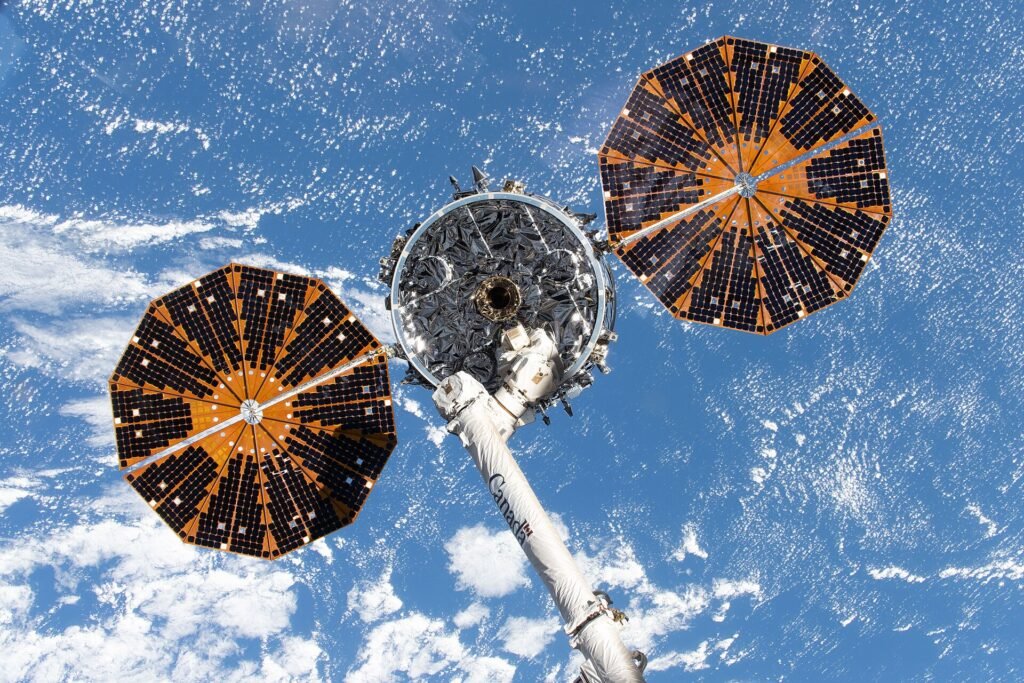
NASA has given the go-ahead for the next cargo run to the International Space Station — and it is carrying something no spaceflight has carried before: a working farm. According to NASA, Northrop Grumman’s Cygnus XL spacecraft is scheduled to lift off aboard a SpaceX Falcon 9 rocket at 10:47 a.m. EST on Sunday, November 29, from Space Launch Complex 40 at Cape Canaveral, carrying about 11,000 pounds of science, supplies and equipment.
A Farm, a Brain Experiment, and a Famous Name
The headline cargo is Ohalo III, a prototype growth chamber NASA calls a first-of-its-kind space crop production system. The experiment will validate water delivery and volume optimization for growing crops in microgravity — the two engineering problems that stand between today’s freeze-dried rations and a Moon base that feeds itself. What researchers learn, the agency adds, could also inform vertical farming and indoor growing systems back on Earth.
A second experiment looks inward rather than outward. Building on an earlier investigation that sent lab-grown models of human brain tissue, known as miBrains, to the station, researchers will test a miniature fluid-handling system designed to mix, deliver and maintain the nutrient-rich liquid that keeps the tissues alive — a step toward long-duration studies of human brain tissue in space.
According to NASA’s mission overview, the rest of the manifest covers the station’s usual beat: studies on muscle loss, drug delivery for cancer and osteoarthritis, and radiation sensing, alongside crew supplies, hardware and tools for a future spacewalk.
Then there is the name on the side of the spacecraft. This Cygnus XL is the S.S. James “Jim” A. Lovell, after the astronaut who flew Gemini VII, Gemini XII and Apollo 8 — and commanded Apollo 13, the mission that turned into a fight for survival when an oxygen tank exploded on the way to the Moon. Lovell brought his crew home. Now a ship carrying his name is hauling the equipment that could keep future crews alive far from Earth.
The schedule is tight. SpaceX rolls the Falcon 9 to the pad on Saturday, November 28. NASA’s launch coverage begins at 10:25 a.m. on Sunday, with liftoff targeted for 10:47 a.m. If all goes to plan, astronauts Jessica Watkins and Luke Delaney will capture Cygnus with the station’s Canadarm2 robotic arm at about 2:35 a.m. on Tuesday, December 1. The spacecraft will stay docked until May 2027, then depart loaded with trash and burn up on re-entry. Early forecasts give the launch a 60 percent chance of favorable weather, with thick clouds the main concern; the backup opportunity is 10:24 a.m. on Monday, November 30.
Why This Matters
Most cargo flights are routine. This one is not, and the reason is food. Every calorie an astronaut eats today was launched from Earth at enormous cost, and that math breaks down on a three-year trip to Mars or a permanent Moon base. Ohalo III is the first attempt at a mostly automated crop system designed to work in orbit — not a lettuce experiment for the cameras, but a prototype for a food supply. If its water delivery and volume tricks work, the same engineering feeds vertical farms on Earth, where the same problem — growing more food in less space with less water — is already urgent. And the name is not decoration: NASA is sending a ship named for Apollo 13’s commander to test the systems that decide whether the next crew that gets into trouble comes home. The giants are covering this as a launch time. The story is what is inside the ship.
Meanwhile in Space:
NASA’s Hera mission recently sent back the first images of the stadium-sized crater its DART impact carved into the asteroid Dimorphos — read our coverage of the crater photos and the asteroid’s 33-minute orbit shift. And China’s space station welcomed its first foreign astronaut aboard Shenzhou-24 — here is what that flight means for Tiangong.