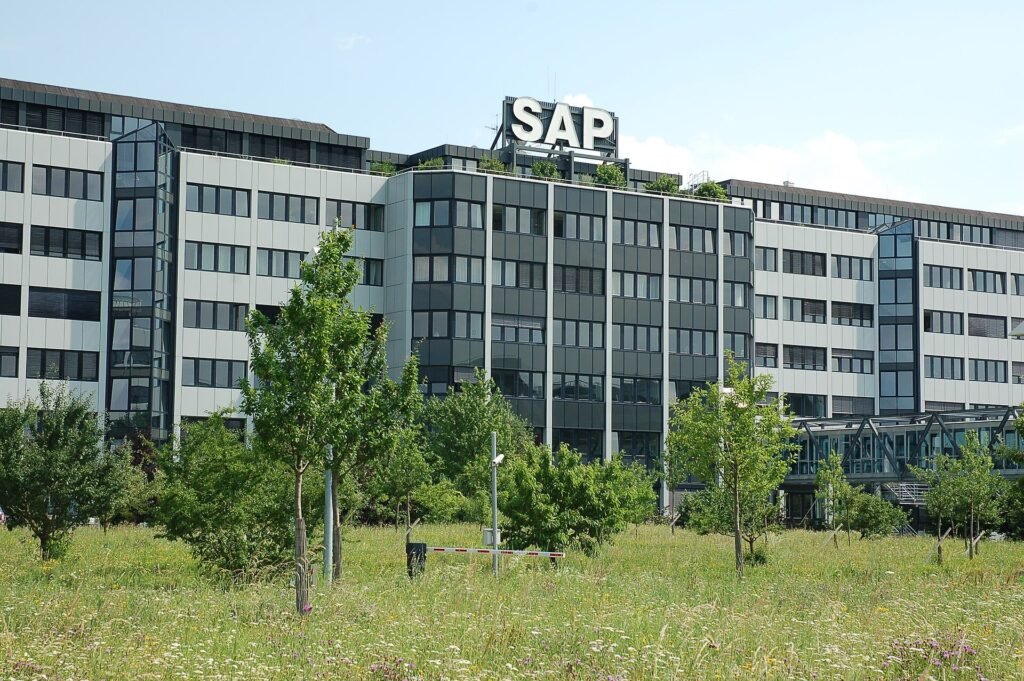
Bloomberg reports that SAP is preparing a plan to eliminate at least 10,000 positions as it reshapes its business around artificial intelligence. The cuts would affect at least 9 percent of the German software giant’s global workforce of more than 110,000 people, with product, engineering and sales teams in particular focus. The plan is not final, and the total could still change after negotiations with employee representatives.
Reuters reports that two people familiar with the matter confirmed a sizeable reduction is being prepared, and that the company’s works council has not yet been informed. Chief executive Christian Klein and finance chief Dominik Asam have signalled at investor events in recent weeks that the workforce will shrink. SAP itself is not confirming anything: the company told CNBC that “no decisions have been made” and that it does not comment on speculation.
Here is the strange part: SAP is not in trouble. In the third quarter, cloud revenue rose 26 percent to €6.67 billion and total revenue climbed 13 percent to €10.27 billion. Headcount actually grew over the past year, to 113,076 full-time employees. This is not a rescue plan. It is a profitable, growing company deciding that artificial intelligence can do a meaningful share of the work its own engineers, product managers and salespeople do today — and reorganizing itself accordingly.
It has done this before, and the last time is instructive. In January 2024 SAP announced a restructuring that eliminated around 10,000 positions at a cost of about €3 billion. It ran mostly on voluntary departures and retraining, took more than a year — and then SAP hired so heavily for new roles that its headcount barely moved. “10,000 cuts” did not mean a company with 10,000 fewer people. It meant a company with different people, doing different work.
The context inside SAP points the same way. Klein has reorganized the executive board twice this year to push an AI-first strategy, and two of six board members will leave in March: product chief Muhammad Alam is not renewing his contract, and sales chief Thomas Saueressig is departing to become chief executive of Ionos. The company is targeting more than $2.19 billion in annualized efficiency gains by the end of 2028. Notably, Klein told CNBC in 2023 that he did not necessarily expect the workforce to shrink. Three years later, the message has reversed.
For American readers, the reason to care is not SAP’s share price. SAP’s software runs the payroll, invoicing and supply chains of many of the largest companies in the United States. When the company that sells AI productivity to corporate America applies the same logic to its own staff, every chief information officer running SAP hears a preview of their own next budget meeting. SAP has historically announced major restructurings in late January alongside its full-year results — the same occasion it used in 2024. That is the date to watch for confirmation, and for the final number.
Why This Matters
The SAP story is easy to misread as another layoff headline. It is something newer: an AI restructuring at a company that is growing. The first wave of AI job cuts hit struggling firms and obvious automation targets. SAP is profitable, its cloud business is booming, and it is still preparing to cut one in eleven jobs because its chief executive believes AI changes what a software company needs people for. If the plan goes ahead in January, it becomes the template every other enterprise software maker will be measured against — and the 2024 precedent is the warning label: the headcount may barely move, but the jobs themselves will not be the same ones. The open question is not whether SAP cuts, but what it hires next — and whether the people it lets go are the ones it ends up needing back.
Meanwhile in Tech News:
Neuralink just won FDA approval to begin a pivotal trial of its LINK brain implant — here is what the trial will test, and who it is for. And 1Password has confirmed a breach linked to GitHub — we explain what was taken and whether your passwords are safe.