A startup building gun-carrying humanoid robot soldiers could not pay its own employees. Now a South Korean conglomerate may bail it out with $150 million.
Base Group is preparing to invest $150 million in Foundation Future Industries, the company behind the Phantom military humanoid, according to internal company emails seen by Reuters. The planned investment had not previously been reported, and a Base Group spokesperson confirmed the company is considering it, citing “the long-term value and growth potential of humanoid robotics.”
Foundation stopped paying employees in recent weeks and is pinning its future on Base Group’s funding, chief executive Sankaet Pathak wrote in emails to staff. Reuters reports the company missed its October 30 payroll, a failure CNBC first reported on November 14. In a November 8 email, Pathak called the payroll problem “a timing issue, not an existential one for the company.”
A rescue that buys a supply chain, not just time
The deal is about more than keeping the lights on. In a November 12 email, Pathak called Base Group’s involvement “a long-term partnership and not just a financing event,” adding that the conglomerate would set up a joint venture supplying aluminum for the robots and lithium for their batteries. Base Group chairman Kim Seong-jip “sees humanoid robotics as the biggest unlock for the labor constraints across their businesses,” Pathak wrote — the conglomerate is buying a fix for its own workforce shortages, and locking in the raw materials to build it.
Foundation’s most prominent backer is Eric Trump, the US president’s son, who serves as chief strategy adviser. Democratic senators have already questioned Base Group’s ties to the Trump family, including a $2 million payment to the Trump Organization in 2025 that they linked to its push for relief from US aluminum tariffs. Base did not address those questions in its statement to Reuters.
From a $3 billion pitch to missed paychecks
The rescue is a sharp comedown for a self-styled future defense giant. Foundation has raised only $11 million to date, from investors including Tribe Capital, Defined and Gaingels, according to PitchBook — yet it has been seeking hundreds of millions at a $3 billion valuation since at least January, according to CNBC. Even its best-known credential is disputed: widely reported claims that it won $24 million in Pentagon contracts were overstated, CNBC reported, because the contracts belonged to Boardwalk Robotics, acquired by Foundation in late 2024.
The cash crunch has also put Pathak’s conduct under scrutiny. He took a $4.6 million company loan to buy a California home, and told employees it was agreed in August 2025 and “had no relationship to the current cash situation.” He is also the company’s sole board member and owns most of its shares. His previous startup, fintech firm Synapse, filed for bankruptcy in April 2024; he launched Foundation months later.
Why this matters
The humanoid robot boom now has two faces, and this week showed both of them. Two days earlier, Genesis AI announced a $500 million Series A at a $3.5 billion valuation for its general-purpose robot. One humanoid startup is being showered with capital; another, pitched at a similar valuation, could not make payroll.
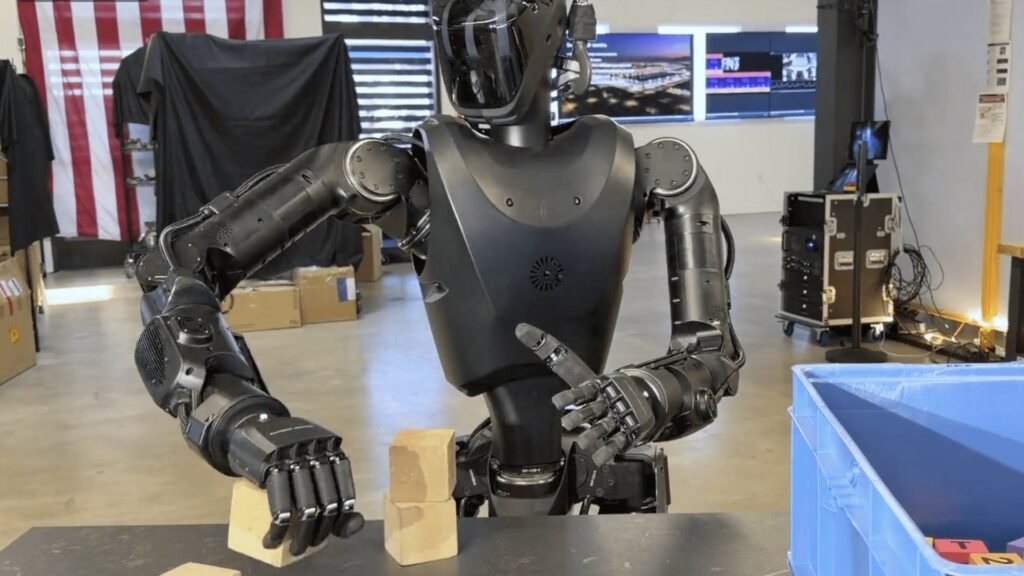
The difference is not the pitch. It is proof. Investors are still pouring money into humanoids, but they are asking harder questions about what the robots can actually do and who is buying them. Foundation’s Phantom is a real machine, shown handling mortar rounds in demos — but demonstrations are not orders, and a $3 billion valuation is not a business.
Base Group’s bet is different from the venture capital flooding the sector. A conglomerate with factories and labor shortages is buying a robot maker for its own operations, plus the aluminum and lithium to feed it. If the deal closes, Foundation’s future will depend less on Pentagon contracts and more on whether its robots can do useful work on a factory floor. That is a smaller dream than robot soldiers winning wars — and a much more plausible one.
Meanwhile in Robotics: Hyundai’s Humanoid Robots Are Headed for Its Factories by 2032
Meanwhile in Robotics: GXO Puts Agility’s Digit Robots to Work in North Carolina and Tennessee Warehouses