The Anti-Humanoid Bet
While billions chase humanoid robots that walk, a Brooklyn startup just raised $50 million for robots that never move at all. On October 9, Ultra announced a Series A led by Framework Ventures, with Y Combinator participating — bringing total funding to $62 million after an earlier $12 million seed, as Humanoids Daily reported, citing Fortune’s Term Sheet coverage.
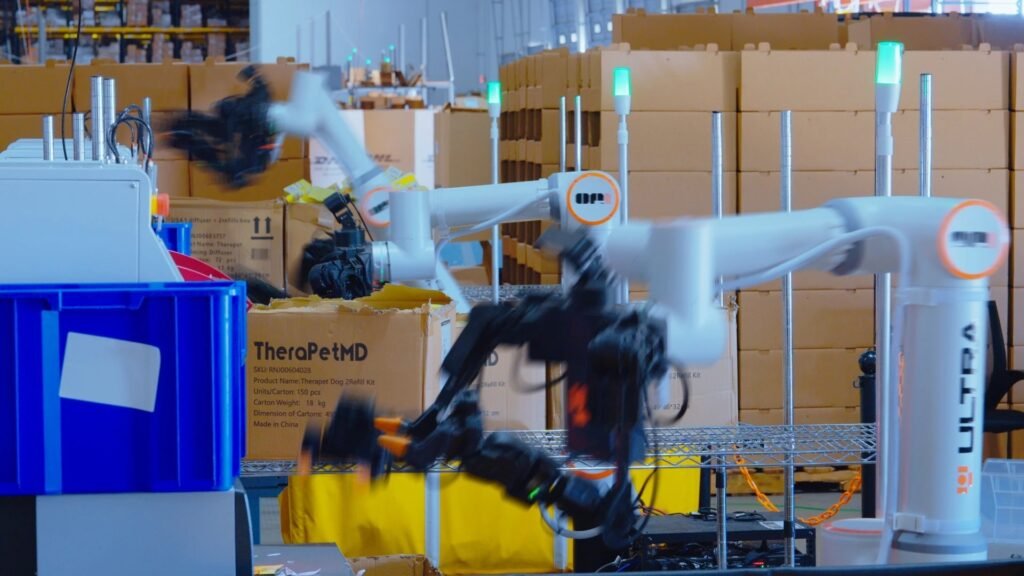
Ultra’s pitch is deliberately boring: it builds dual-arm packing robots called the Operator (OP1) and rents them to warehouses by the month. Customers pay an upfront integration fee, then a monthly charge for hardware and software support. The machine occupies a five-by-five-foot footprint on locking caster wheels, lifts up to 10 pounds per arm, and runs off a standard 120-volt outlet. Its job description is packing, sorting, and kitting — the unglamorous fulfillment work. Per Humanoids Daily, the company’s robots have packed more than 500,000 orders across sites in New York, Georgia, New Jersey, and Texas, handling up to 30 percent of fulfillment volume at Highline Commerce in Brooklyn.
Alongside the raise, Ultra deepened its partnership with Physical Intelligence, the $5.6 billion robot-AI company founded by Google DeepMind alumni. The division of labor is explicit: Ultra builds the robots; Physical Intelligence supplies the AI that lets them learn from each customer’s setup. AI Weekly’s recap of Fortune’s reporting notes the company’s claim that PI’s π0.6 model reached 96.4% autonomy during an eight-hour demo shift — though, as Humanoids Daily cautions, that figure describes a reported shift, not a fleet-wide guarantee. Human operators still intervene when the model gets stuck; those interventions train the next one.
Why this matters: deployment is the whole game
The commodity take is “another robotics funding round.” The interesting part is what Ultra’s CEO told Fortune — and what the money says about it. Co-founder and CEO Jon Miller Schwartz argued that fixed industrial systems “are having more real-world impact than humanoid robots, which receive most of the attention.” Ultra’s own announcement video puts it sharper: “Robotics has a deployment problem.”
That thesis is the anti-hype reading of this year’s robot gold rush. Humanoids dominate headlines while, per Fortune, they remain prone to falling over and struggling to deploy outside controlled environments. Meanwhile a stationary box-packer — profitable enough that Schwartz says Ultra has been able to raise prices — just banked $50 million. The robots-as-a-service model is the financial engineering that makes it work: it removes the six-figure upfront capital check that has killed countless warehouse-automation deals, shifting the hardware risk onto Ultra’s balance sheet instead.
And the “body and brains” split with Physical Intelligence is a template worth watching: a robotics startup that doesn’t have to win the foundation-model race to win customers, paired with an AI company that gets the one thing no lab can fake — hours of real orders with real messy items. The honest caveats: Ultra hasn’t disclosed revenue or its installed robot count, the 500,000-order figure is the company’s own count, and human intervention is still part of the loop. But if the next wave of AI money lands anywhere physical, this is the shape it takes: boring, stationary, and shipping boxes at 3 a.m.
Meanwhile in Robotics:
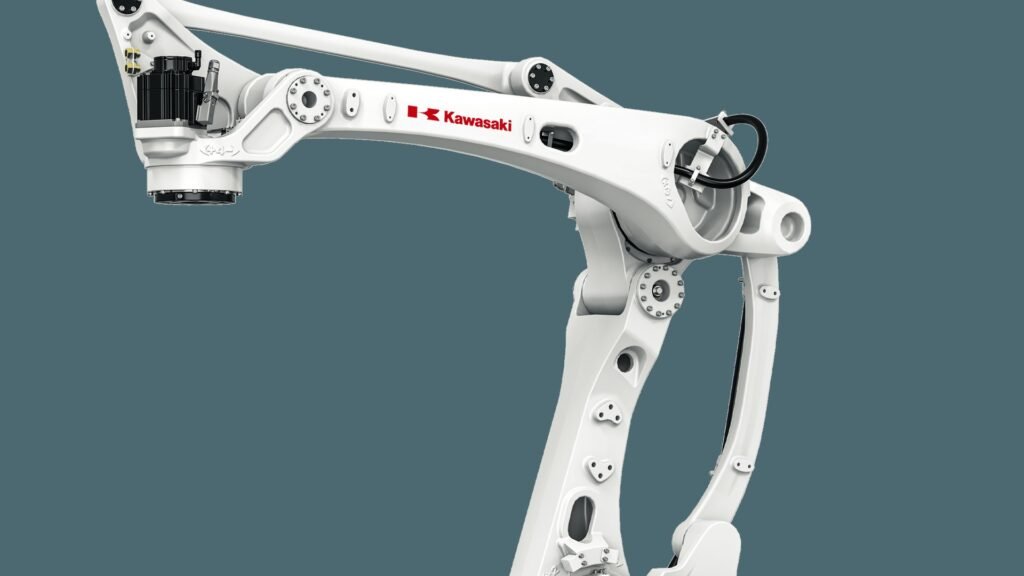
From this week’s warehouse beat: Kawasaki’s 110-kg CP110L palletizing robot, debuting at PACK EXPO in Chicago.