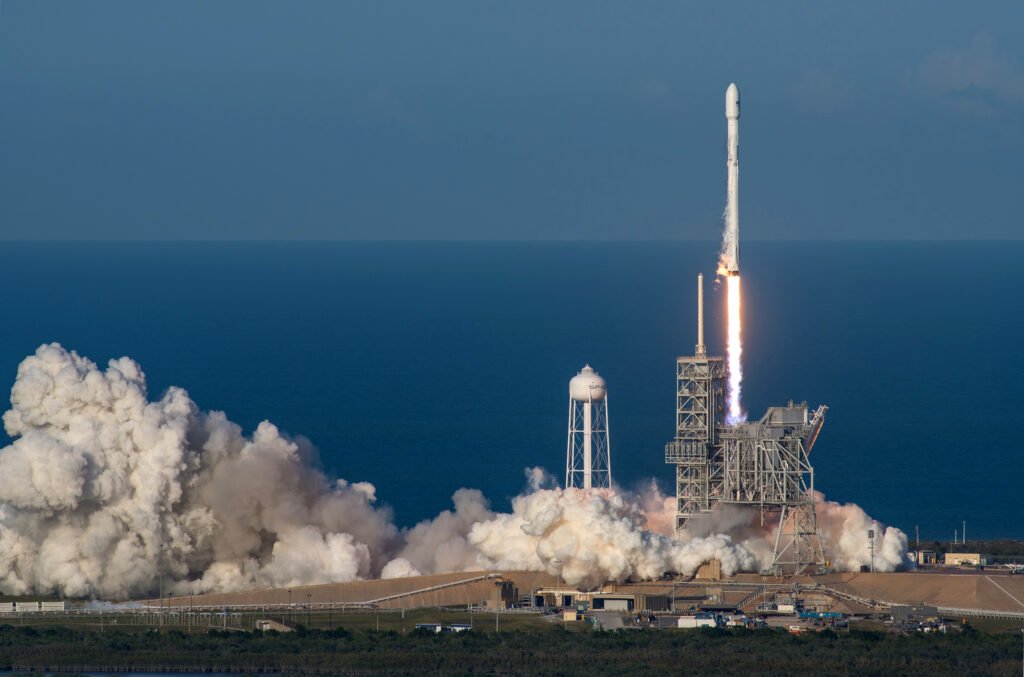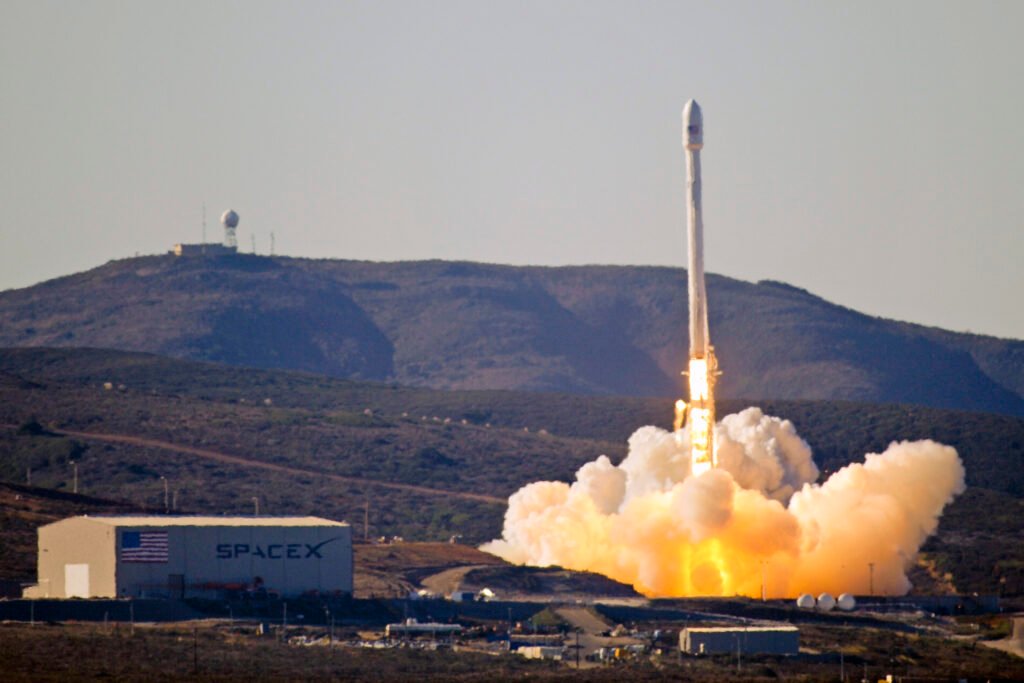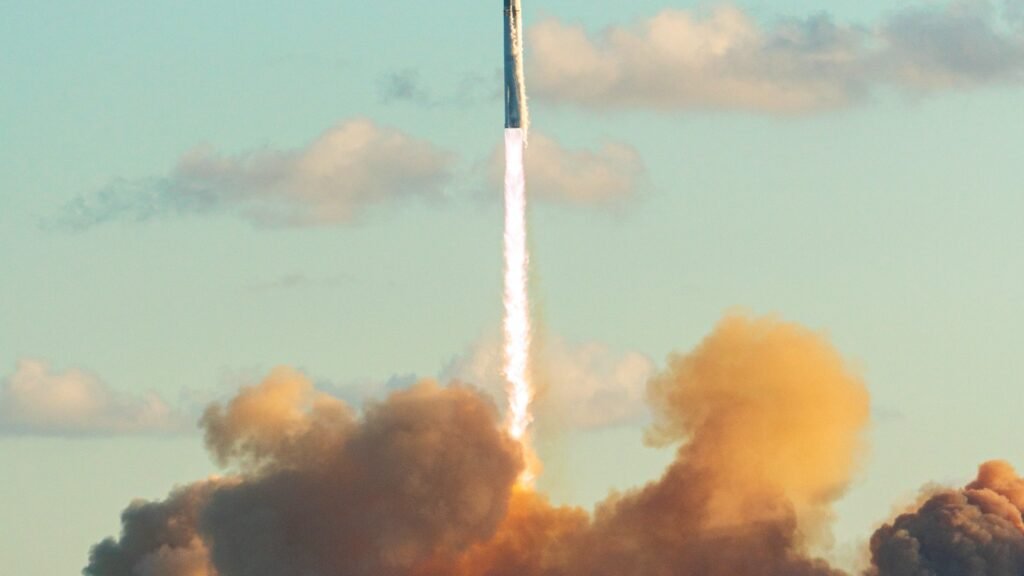
SpaceX’s Starship finally did the thing it was built to do — and nearly didn’t. On September 28, the 40-story rocket lifted off from Starbase, Texas on its 14th test flight and reached Earth orbit for the first time, deploying 26 next-generation Starlink satellites in its first-ever commercial satellite mission. Reuters covered the milestone.
But the flight that was supposed to last 10 hours and six orbits was cut to two. One of Starship’s three Raptor engines shut down unexpectedly after separation from the Super Heavy booster. Flight controllers pressed on, got the vehicle to orbit anyway, and then brought it home early. The Pacific splashdown, per The Conversation’s analysis, ended in a huge bang rather than the soft landing SpaceX had hoped for.
One Engine Out, Still Made Orbit
The engine failure is the detail that deserves more attention than it’s getting. Starship lost a third of its upper-stage thrust seconds into the most critical phase of flight — and still completed its primary objective. That’s genuine engine-out resilience, the kind of redundancy that matters enormously when the vehicle is eventually rated to carry crew.
But resilience has limits. The mission profile collapsed from six orbits to two, the satellite deployment was the only major objective fully completed, and the hard splashdown suggests the reentry sequence is still far from routine. SpaceX accomplished the headline; the fine print is messier.
The Heat Shield Is Now the Whole Story
Strip away the drama and flight 14 comes down to one subsystem: the dark ceramic tiles covering Starship’s underside. For SpaceX’s vision — fully and rapidly reusable transport, hundreds or thousands of flights a year, launch costs collapsing — to work, Starship has to survive reentry, get refurbished quickly, and fly again. That depends almost entirely on whether the heat shield holds up flight after flight.
This is why the shortened mission stings. Two orbits instead of six means less thermal data, less reentry testing, less progress on the single hardest reusability problem. Orbit was the milestone; the heat shield is the business.
The Moon Is Watching
As Reuters reported, the stakes extend well beyond SpaceX’s Starlink deployment schedule. Starship is one of two vehicles vying to land NASA astronauts on the moon as early as 2028 — the first crewed lunar landing since 1972 — and the moon-landing variant would rely on the same Raptor engine system that just malfunctioned.
Whether the failure becomes a footnote or a program-level problem depends on the root cause: a one-off part failure is a very different story from a design flaw requiring fleet-wide upgrades. “Any engine fix that holds up the next flights eats into that schedule,” one aerospace engineer told Reuters. NASA and SpaceX declined to comment.
The context: Starship’s development has already cost SpaceX more than $15 billion over nearly a decade, and Musk once predicted orbital flight in 2022. It arrived in 2026 — with an asterisk.
What’s Next
The launch calendar doesn’t pause. NASA’s SpaceX Crew-13 mission is targeting liftoff Thursday, October 1 at 11:10 a.m. EDT from Cape Canaveral, carrying four astronauts to the International Space Station — NASA’s mission blog puts weather at 60% go. For Starship, the next flight’s most important cargo isn’t satellites. It’s answers.
Why This Matters
Flight 14 is the clearest picture yet of where Starship actually stands: orbit-capable, engine-out-resilient, commercially useful — and still not reusable, still not crew-rated, still carrying a 2028 moon deadline that gets tighter with every anomaly. The space industry spent years asking whether Starship could reach orbit. It can. The harder question starts now: can it come home in one piece, twice in a row?
Meanwhile in Space: