Toyota is about to show the world its first range-extender electric vehicle — and the teaser all but gives away what it is. GAC Toyota, the company’s Chinese joint venture, posted a preview ahead of the Guangzhou Motor Show reveal on November 27, and the blurry SUV in the image looks unmistakably like a Highlander. The caption, translated from the Weibo post, reads “#Toyota doesn’t rush but range-extended.”
It would be Toyota’s fifth kind of electrified vehicle — alongside pure EVs, plug-in hybrids, conventional hybrids, and fuel-cell vehicles. The idea is simple: a small gas engine acts as a generator, recharging the battery when it runs low, so the car drives on electric power with a gas backup for long trips. According to Electrek, which first reported the teaser in English, the new model could be the next-generation Highlander.
The Numbers Behind the Teaser
Toyota has not confirmed the name, the specifications, or the price — but the reporting around it is unusually specific. A Nikkei report from September said Toyota plans to start building its first EREV in China in spring 2027, targeting 200,000 units that year and doubling to around 400,000 in 2028.
Chinese media reports, cited by CarNewsChina, go further: a 1.5-liter turbocharged four-cylinder engine working purely as a generator, around 150 km (93 miles) of electric-only driving, and roughly 1,000 km (621 miles) of combined range, on a 3,050 mm wheelbase — the same wheelbase as the all-electric Highlander Toyota sells in America. Those figures come from leaks, not from Toyota, so treat them as reported rather than confirmed. Full details arrive with the reveal on November 27.
Why Toyota Is Doing This Now
The timing is not a coincidence. Toyota sold just over 1.05 million vehicles in China in the first nine months of 2026, about 19% fewer than a year earlier, and its gas and hybrid cars have been hit hardest — eight straight months of year-over-year declines. As one company executive told Nikkei, “Competition in China is intensifying as the market fixates on battery EVs, leading to price wars among automakers. We need to take steps to avoid being dragged into that competition.”
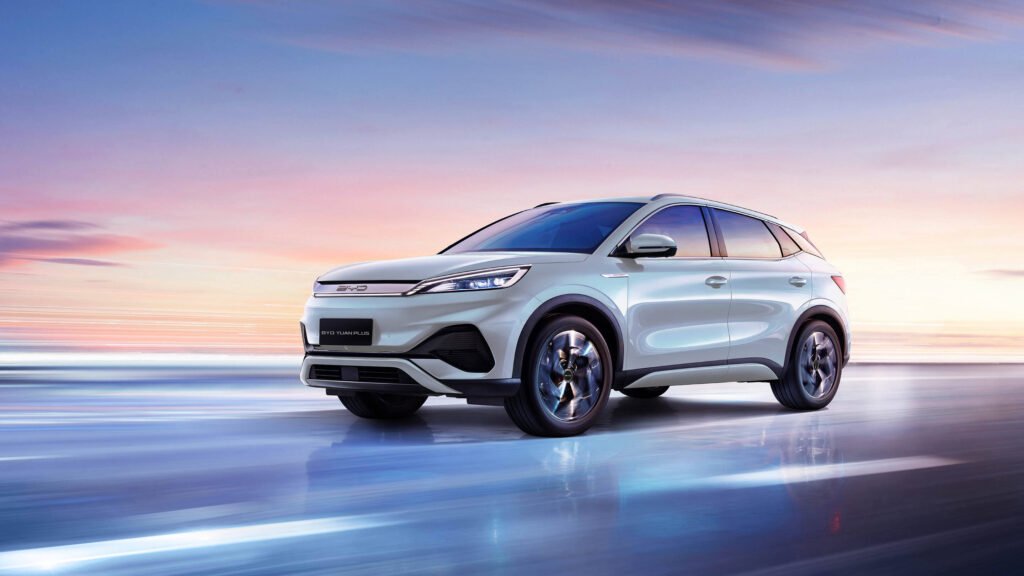
The EREV is the escape hatch. A flagship SUV with a gas backup can command a premium price instead of fighting BYD and the rest on pure-EV sticker prices — a fight Toyota is losing. Its own electric SUV, the bZ3X, starts at 94,800 yuan, about $14,000, in China. A range-extender Highlander would sit far above that price war.
The Other Highlander: America’s All-Electric One
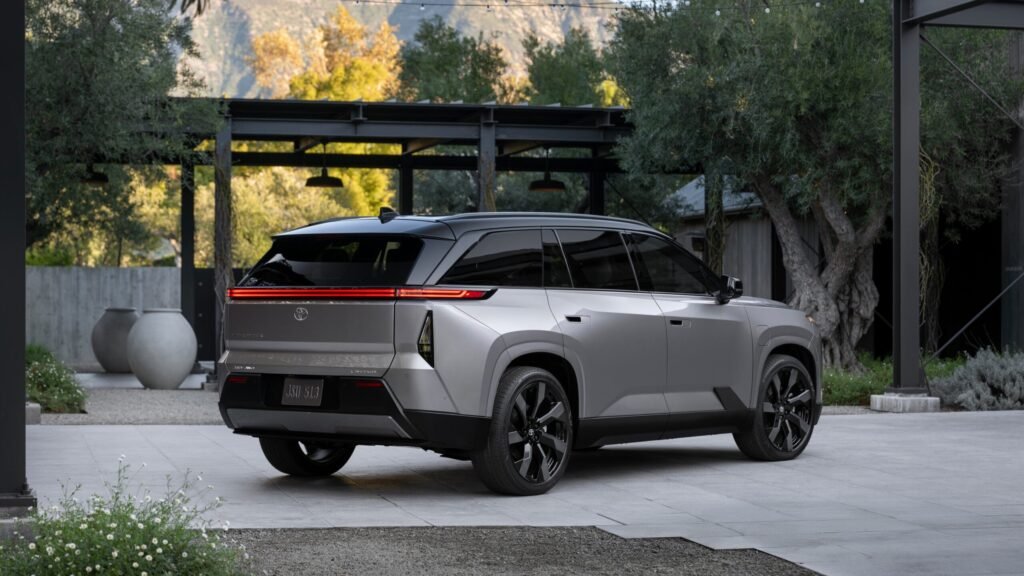
American buyers almost certainly won’t get the EREV. Instead, they get a different Highlander entirely: the all-electric 2028 Highlander, Toyota’s first three-row battery-electric vehicle and its first EV assembled in America, at the company’s plant in Georgetown, Kentucky, with battery modules from its new $13.9 billion plant in Liberty, North Carolina.
According to Toyota’s own announcement, the electric Highlander offers two battery packs — 77.0 kWh or 95.8 kWh — with up to 315 miles of manufacturer-estimated range, 338 horsepower on all-wheel-drive models, a standard NACS charging port, and vehicle-to-load capability that can power appliances at a tailgate. Sales are expected to begin in early 2027.
Why This Matters
Toyota built its empire on hybrids and spent years arguing the world wasn’t ready for pure electric cars. Now it is building a car with a gas engine whose only job is to make an electric car go further — a quiet admission that in the world’s biggest EV market, range anxiety still decides what people buy.
And the two-Highlander split is the tell. Toyota no longer believes one powertrain fits the whole world: China gets the hedge, America gets the bet. The open question is whether a premium-priced Toyota range-extender can sell in a market where the company’s own electric SUV starts at about $14,000 — and whether roughly 150 km of electric-only driving is enough for the car to feel like an EV at all. We will know more on November 27.
Meanwhile in Cars & EVs: BMW’s first US-built electric SUV, the iX5, starts at $79,800, and Volkswagen’s ID. Tiguan replaces the ID.4 as its electric SUV.