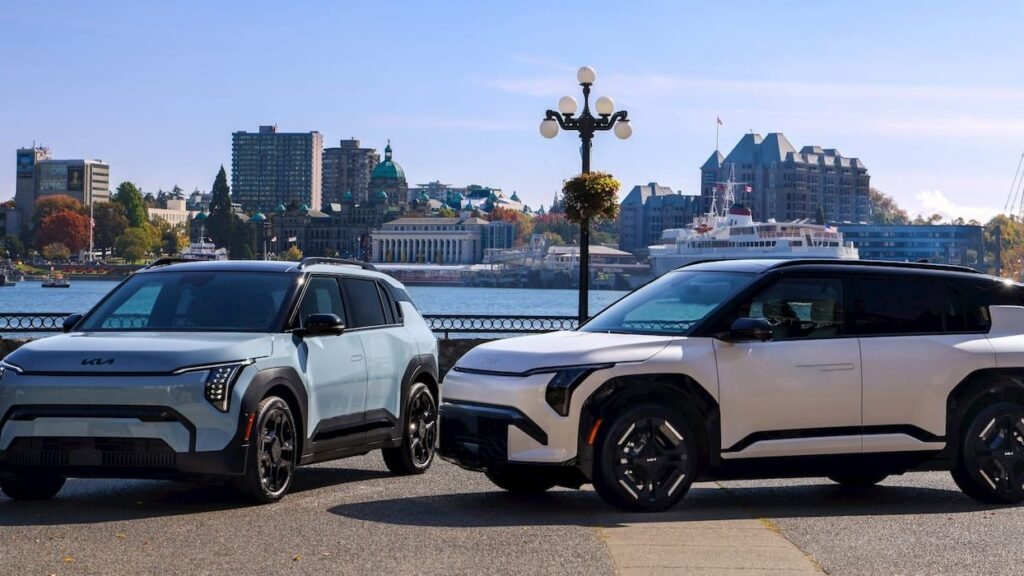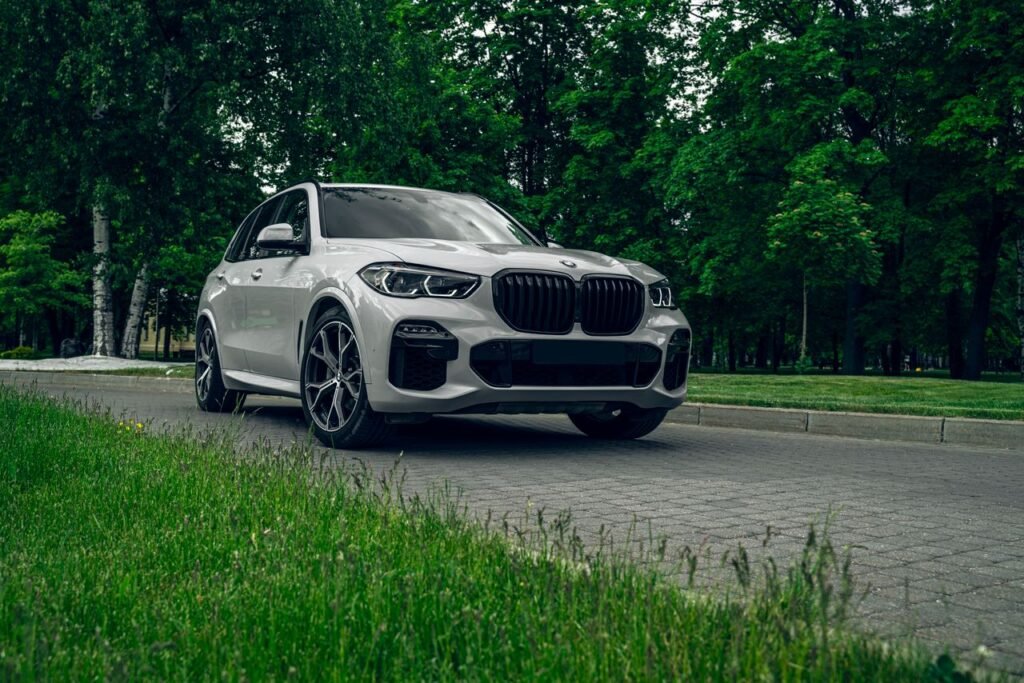
BMW’s best-selling SUV is about to get its first fully electric twin, and the clearest look yet at how different it really is arrived this week in a side-by-side photo set. According to Electrek, new images posted by Bimmertoday park the upcoming BMW iX5 next to the outgoing X5, and the family resemblance only goes so far.
The Side-by-Side Tells the Story
Parked beside its predecessor, the new iX5 still reads instantly as an X5, but its face has changed. BMW’s Neue Klasse design brings a slimmer, more upright kidney grille in place of the old model’s wide, chunky one, and a new Double-X light signature that folds the headlights, daytime running lights, side lights and turn signals into a single unit.
That light signature is not just decoration. According to Electrek, the Double-X headlights come as standard, but drivers who find them too loud can switch them off for simpler diagonal stripes. It is a small, telling detail: BMW knows the new look will divide opinion, so it built in an off-ramp.
What November Orders Actually Buy
The launch model is the iX5 60 xDrive, a dual-motor all-wheel-drive SUV producing 578 horsepower and 593 lb-ft of torque, with a 0-to-60 mph time of 4.4 seconds and a towing capacity of up to 6,000 lbs. Its 144 kWh battery is rated by BMW at up to 435 miles of range, and the SUV measures 197.2 inches long, 78.7 inches wide and 68.9 inches tall, or about the size of the Porsche Cayenne Electric.
BMW will open orders for the iX5 60 xDrive in November, starting at $79,800, against $72,100 for the gas-powered 2027 X5 40 xDrive already on sale: just $7,700 more before options, a strikingly narrow gap rival brands will have to answer.
The Charging Math Worth Noticing
Range figures grab headlines, but the charging demonstration BMW staged last week may matter more to owners. During a media event in Southern California with IONNA and Alpitronic, the iX5 hit a peak charging rate of 464 kW, which BMW said enables it to add up to 170 miles of range in 10 minutes.
Do the division and the claim sharpens: 170 miles is roughly 39 percent of the SUV’s 435-mile range estimate, recovered in a single coffee stop. Treat it as a best case: peak rates taper as a battery fills, and everyday road-trip stops will usually be slower than the demo.
Built in South Carolina, Not Shipped In
The iX5 will be BMW’s first electric vehicle built in the United States, with production set to begin at Plant Spartanburg in South Carolina by the end of the year. As BMW Group notes, the company has completed a $1.7 billion investment in its South Carolina operations, including the Woodruff battery plant, and plans to assemble at least six fully electric models in the US by 2030.
That domestic footprint matters in a tariff-heavy year: an electric flagship assembled in Spartanburg, with batteries from nearby Woodruff, sidesteps the import-duty exposure hanging over German-built rivals.
Why This Matters
Two cautions belong in any coverage of this car, and commodity write-ups tend to skip both. First, the 435-mile figure is BMW’s own estimate, not an EPA-certified rating yet, so treat it as a target until the official test lands. Second, do not confuse the order book with the showroom: Electrek reports orders opening in November, while BMW’s own launch material puts the battery-electric and plug-in hybrid X5 variants on sale in early 2027. Ordering early and driving one home are different dates.
Even with those caveats, the iX5 changes BMW’s US pitch: one model line, built in one American plant, where the electric version costs only slightly more than the gas one and charges fast enough to make its case on a road trip, not just a spec sheet.
Meanwhile in Cars & EVs: US buyers are still warming to electric cars despite the market’s ups and downs, as shown in our look at the US EV sales rebound in Q3 2026, and BMW’s electric ambitions do not stop with the X5, with the BMW i3’s 2027 pricing and range already staking out the smaller end of the lineup.