Gone in Three Minutes: The Timeline
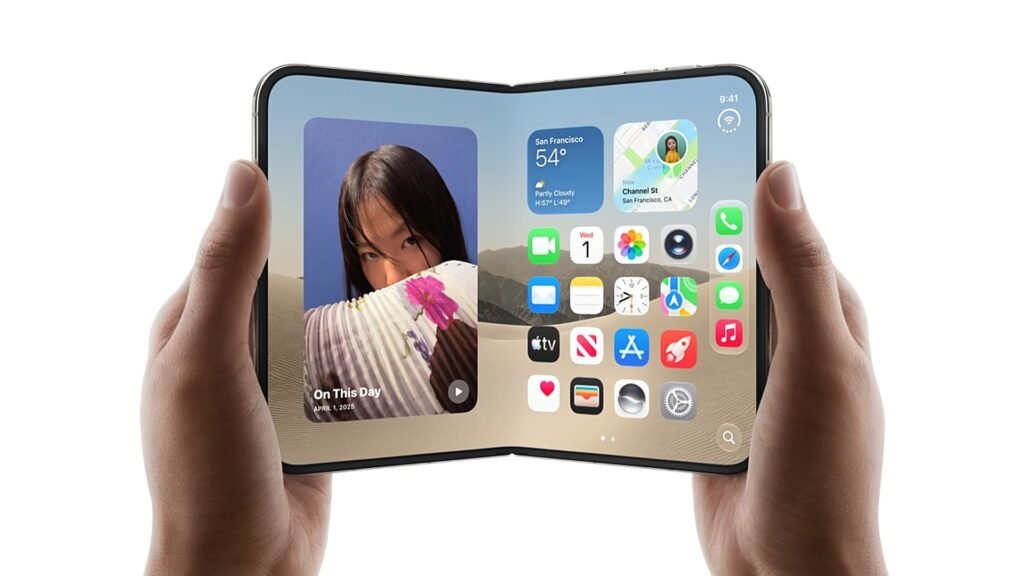
Apple’s first foldable sold out faster than almost any iPhone in recent memory. Pre-orders for the iPhone Duo opened Friday, October 16, at 8:00 a.m. ET — and the opening-day stock was gone globally within about three minutes, according to CNBC TV18.
The collapse of the delivery windows was almost comical in its speed. By 8:03 a.m., the October 23 launch-day window for base models had vanished. By 8:10, delivery dates at all major U.S. carriers and Apple’s own online store had slipped to late November. At 8:30, the high-demand 512GB and 1TB configurations fell to January 25, 2027. By noon, every color and storage option on the U.S. Apple Store — from the $1,999 256GB base to the $3,199 2TB top end — showed late-January delivery.
Apple’s Statement — and the Numbers It Didn’t Give
Apple acknowledged the rush, saying: “The pre-order demand for iPhone Duo, our first foldable iPhone, has been nothing short of extraordinary.” It added that it is working to get phones to customers as quickly as possible and will keep accepting orders online.
What Apple did not say is just as telling. It has released no figures for orders or launch-day stock — so nobody outside Cupertino knows whether the sellout means ten million eager buyers or an allocation that was never going to satisfy them. The company also said nothing about whether stock will be available for walk-in buyers when sales begin on October 23. The Economic Times notes the contrast with the iPhone 18 Pro and Pro Max launch last month, which went smoothly for customers who ordered on time.
The Supply Side of the Sellout
A sellout is only half a story without the supply numbers, and here the picture looks thin. One supply-side breakdown put launch allocation at well under 10 million units across more than 70 countries. Earlier supply-chain reports relayed by MacRumors put output at only a few hundred units a day as recently as late August — a yield struggle on the Duo’s nano-texture folding display Apple never confirmed.
Then there is the memory crisis. VietnamNet reports that beyond unexpectedly strong demand, the shortage has been significantly affected by a global components supply crunch, particularly a shortage of memory chips — the same shortage that just torpedoed the entire smartphone quarter. It is a strange irony: the memory crisis that killed the budget phone is now squeezing a $1,999 flagship too.
Why This Matters: The $28 Billion Math
Every outlet is telling you the Duo sold out. Nobody is doing the revenue math — and the math is the real story. Bloomberg Intelligence analysts Anurag Rana and Josh Christensen now say Duo sales could exceed their earlier estimates of 14 million units and $28 billion for Apple’s fiscal 2027. Their kicker: if Apple persuades iPhone Pro and Pro Max owners to switch to the base foldable, the iPhone’s average selling price would rise 82% and 67%, respectively, per CNBC TV18.
That is the number Apple actually cares about. A sellout is a headline; a rising average selling price is a quarter. The Duo is also new CEO John Ternus’s first flagship launch — he took charge in September — so the pressure to turn this shortage into sustained demand is personal.
How to Still Get One Before 2027
Missed the rush? Apple’s online queue is not the only queue. In-store pickup briefly appeared, then was switched off with a “check back on 10.24” note — retail launch-day stock sits in a separate allocation, and Apple traditionally holds units back for October 23 walk-ins. Carrier stores run on separate allocations too, so it is worth checking your carrier directly.
One warning: do not feed the scalpers. Resale listings for 2TB units are already circling $5,000 — nearly $1,800 over Apple’s $3,199 retail price. At that markup, the only rational move is patience.
Meanwhile in Mobiles: our foldable buyer’s guide comparing the Duo, Pixel 11 Pro Fold, and Galaxy Z Fold8, and why smartphone shipments just plunged 20% as the memory crisis kills the budget phone.