Crew-12 is coming home today after 237 days in orbit
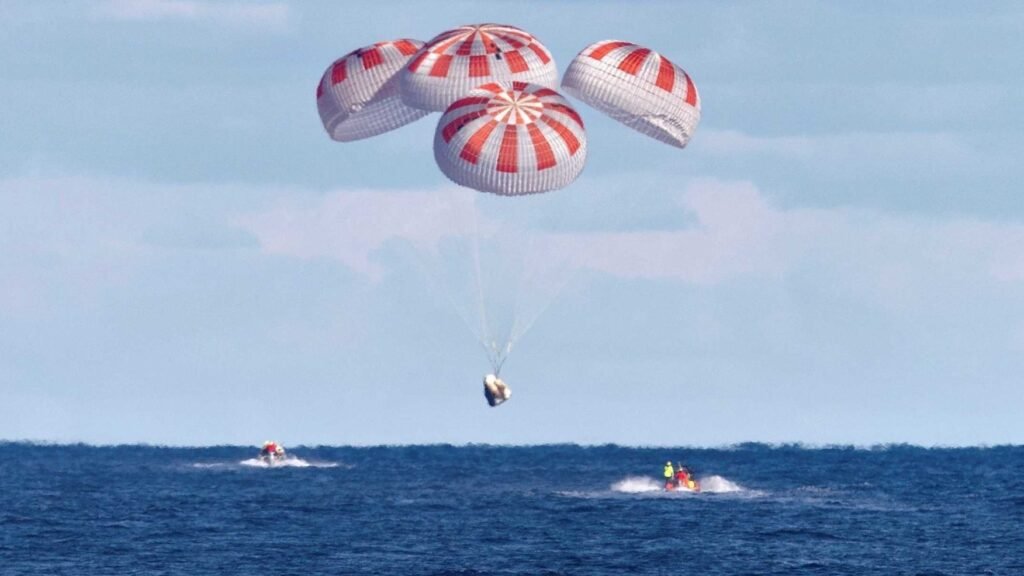
NASA’s SpaceX Crew-12 mission wraps up its 237-day stay aboard the International Space Station on Thursday, with the Crew Dragon capsule Freedom targeted for a parachute-assisted splashdown in the Pacific Ocean off the California coast at about 11:34 a.m. ET. According to NASA, the capsule began its journey home Wednesday morning, autonomously undocking from the space-facing port of the station’s Harmony module at 8:05 a.m. ET after the crew closed the hatch at 6:05 a.m.
The crew — NASA astronauts Jessica Meir and Jack Hathaway, ESA astronaut Sophie Adenot, and Roscosmos cosmonaut Andrey Fedyaev — launched from Cape Canaveral on February 13 and docked the following day. Their departure follows the October 1 arrival of the Crew-13 replacement team, which Reuters reports marked the 13th long-duration NASA crew rotation flown aboard SpaceX hardware.
How the return unfolds
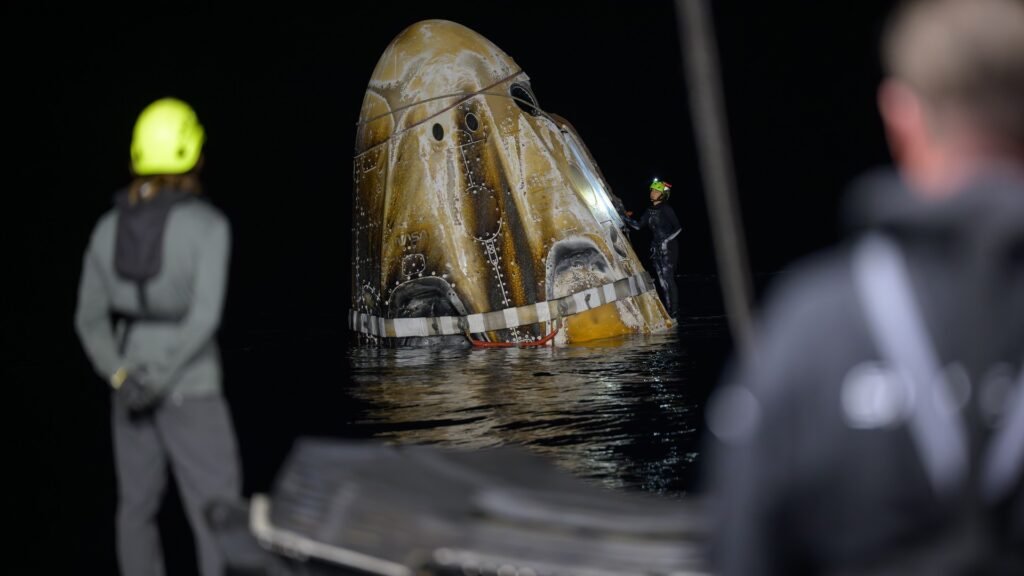
After a day in free flight, Dragon fires its deorbit burn at 10:46 a.m. ET, then reenters the atmosphere and descends under four main parachutes. Recovery teams positioned off the California coast will secure the capsule and pull the crew from the water. NASA’s live return coverage resumes at 10:20 a.m. ET, and a post-splashdown briefing covering the return and SpaceX’s upcoming CRS-35 cargo launch is set for 1:15 p.m. ET. Return coverage streams free on the NASA+ app as well as Amazon Prime, Discovery+, and YouTube, according to Florida Today.
The Pacific landing is now routine: NASA and SpaceX shifted crew recovery operations from Florida to the West Coast in early 2025, most recently bringing the Artemis II lunar crew home off San Diego in April, as The Desert Sun has noted.
Meanwhile in Space:
Yesterday’s chapter of this mission: how Crew-12 undocked from the station and began the full 27-hour journey home.
Why this matters
This splashdown closes the 12th consecutive successful NASA crew rotation aboard a SpaceX Dragon — an unbroken chain stretching back to 2020. And it lands in the middle of the biggest reshuffle of American crew transport in years. Last month NASA modified its SpaceX contract with a $946 million award for three more Dragon missions — Crew-15, Crew-16, and Crew-17 — keeping the capsule flying through 2030, as Startup Fortune reported. Meanwhile, Boeing’s Starliner, the vehicle NASA originally bought as Dragon’s redundant backup, will not carry astronauts before 2028: an uncrewed test flight is targeted for December or January, with a crewed mission to follow in mid-2028, according to Archyde.
The upshot: Crew Dragon is now, by default, America’s only operational ride to orbit — a single point of failure the Commercial Crew Program was designed to avoid. The station itself tells the cooperation story too: on October 4, Meir handed command of the ISS to Roscosmos cosmonaut Pyotr Dubrov, and the crew coming home today includes a Russian cosmonaut riding an American spacecraft. Twelve missions in, the Dragon era isn’t winding down. It’s being extended — one splashdown at a time.