Tesla just turned its two best-sellers into backup generators
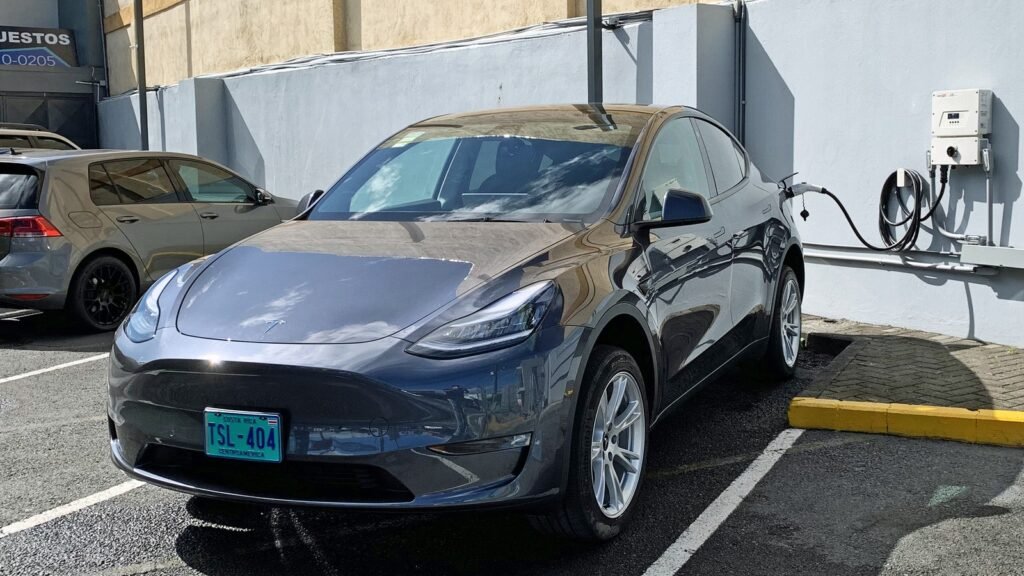
Your Tesla can now keep your house lit during a blackout — if it is new enough. Electrek reports that Tesla Energy switched on Powershare Home Backup for the Model 3 and Model Y this week, letting the two best-selling EVs feed power back into a home when the grid goes down. Until now, the Cybertruck was the only Tesla that could do it.
The pitch is seductive: a car in the driveway that keeps the lights on for more than two days. Tesla estimates a Model 3 or Model Y adds “over two days” of backup for a home using 30 kWh a day, starting from a 90% charge, with up to 11.52 kW of continuous output.
The catch: your Tesla almost certainly doesn’t qualify
Here is the fine print Tesla left out of the announcement. The feature is guaranteed only for Model 3 and Model Y vehicles ordered in the U.S. or Puerto Rico on or after October 1, 2026 — barely a week ago, Teslarati notes. Millions of existing owners are locked out, at least for now.
There is one loophole worth checking. Some cars built before the cutoff shipped with the needed bidirectional hardware anyway — an inverter Electrek identifies as “PCS2 Lite.” Owners can look under Controls > Software > Additional Vehicle Information on the touchscreen; if “Powershare Support” reads Enabled, the car can do it. If not, no software update will change that.
The home side has its own tollbooth. You need a Powerwall 3 plus a Wall Connector or Universal Wall Connector — Powerwall 2 and Powerwall+ owners are told support is “coming soon,” and the Model S and Model X are excluded entirely.
What your car is actually giving you
The numbers explain why Tesla bothered. Premium and Performance trims carry roughly 75–85 kWh of usable battery, Standard trims about 70 kWh, according to Not a Tesla App’s breakdown of Tesla’s ratings. At 30 kWh a day that works out to over two days of backup for the bigger packs and up to two for the Standard cars. A Powerwall 3 holds just 13.5 kWh by comparison — your sedan stores five to six times as much energy.
Tesla’s senior director of residential energy, Colby Hastings, framed the launch as a redefinition of what a car is for: “With Powershare Home Backup, choosing a Tesla is no longer just a decision to buy an EV. It’s a decision to invest in home energy resilience,” Solar Power World quotes him saying.
Tesla is late — Ford did this in 2022
For all the fanfare, Tesla is years behind. The Ford F-150 Lightning has offered full home backup since 2022, and GM’s EVs followed — both without requiring a house battery from the same brand, as Notebookcheck points out. Tesla’s version still chains you to the Powerwall 3, which looks less like a technical requirement and more like a business decision: letting every car replace a five-figure home battery would undercut Tesla Energy’s own sales.
Tesla is also holding back the most lucrative trick. Powershare Grid Support — which pays Texas Cybertruck owners bill credits for feeding power back to the grid during demand spikes — remains Cybertruck-only, Teslarati reports. Model 3 and Y owners get backup power, not a revenue stream.
Why this matters: your car is now the biggest battery in the house
Strip away the asterisks and this is still a milestone: the two EVs that define the American electric car are now rolling home batteries, years after rivals. But Tesla gated the feature behind an October 2026 build date and a Powerwall 3 — a deliberate funnel toward its energy business rather than an open feature. If you ordered your Model Y before October, the most useful new Tesla capability of the year is not for you, and no update will fix that. Check the touchscreen before you dream about blackout-proofing your weekend.
Meanwhile in Cars & EVs: Tesla’s robotaxis are learning to see in the dark — and the results are equal parts impressive and eerie.