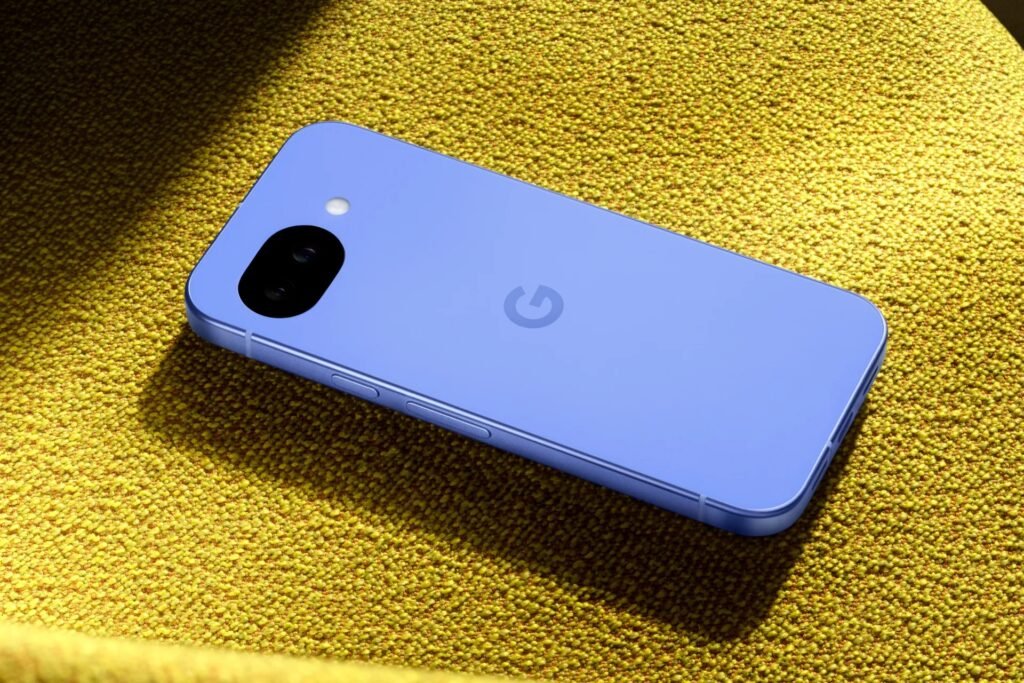
Google didn’t announce it. There was no blog post, no press event, no cheerful email. But sometime on October 3, the Pixel 10a quietly went from $499 to $599 in the Google Store — a $100 price hike on the phone that was supposed to be the sensible, affordable one. According to 9to5Google, the new pricing has already spread to Amazon and Best Buy, and the 256GB model jumped from $599 to $699. Google hasn’t commented on the move.
A Price Hike in the Middle of the Product Cycle
This is the part that stings. Midrange phones are supposed to get cheaper the longer they sit on shelves — last month, the Pixel 10a was reportedly discounted as low as $424. Instead, Google raised it by 20%, and the 10a is now the most expensive A-series Pixel ever made. For perspective: the Pixel 4a, the cheapest A-series phone Google ever sold, launched at $349. The A-series has nearly doubled in price in a few short years.
And what do you get for $599? 9to5Google called the Pixel 10a a “well-rounded experience” at $499 — but at $599, the same phone running the now two-generation-old Tensor G4 is a much harder sell. It sits uncomfortably close to real flagship money, and Google’s next budget phone, the Pixel 11a, is already surfacing in leaks.
AI Data Centers Ate Your Phone Discount
The culprit is the same one behind every price hike this year: memory. DRAM prices are soaring because Samsung, Micron and SK Hynix are shifting production capacity away from phone memory and toward high-margin HBM chips for AI data centers, as PhoneArena reports. Nothing CEO Carl Pei says memory costs for the upcoming Nothing Phone 4A have doubled, and Qualcomm has raised prices on its chips too.
Google even told us this was coming. When it raised prices across the Pixel 11 lineup in August — the base Pixel 11 starts at $899, up from $799 for the Pixel 10 — the company said the increases would eventually reach “in-market Pixel phones.” The Pixel 10a is the first casualty. And Google is far from alone: Samsung raised prices across the Galaxy S26 lineup by $100 earlier this week, while Apple hiked the iPhone 18 lineup and, in an unprecedented move, raised prices on older iPhones too. The year-old iPhone 17, which would normally have gotten a $100 price cut, instead went up by $100 to $899.
Why this matters
The $500 phone was the last refuge of the sensible buyer. Google’s A-series practically invented the “flagship camera, midrange price” category, and at $599 with a two-generation-old chip, that pitch collapses. Worse, this hike signals that 2027 won’t be any kinder — GSMArena notes that analysts aren’t hopeful about next year, and its own reader poll found roughly 12% of voters have given up on buying a new phone amid the climbs.
Here’s the one piece of good news: you don’t have to pay Google’s new list price. Some retailers are already discounting the 10a below the new price, and Walmart was still listing it at $499 with limited stock. If you want one, shop around — $599 is a list price, not the street price.
Meanwhile in Mobiles: Samsung pulled the same move days earlier, raising Galaxy S26 prices by $100 across the board. Read our breakdown of what Samsung’s hike means for buyers.
Meanwhile in Mobiles: the next flagship test of how high prices can go arrives soon — the OnePlus 16 launches October 12 with a massive 9,000mAh battery. Here’s what to expect.