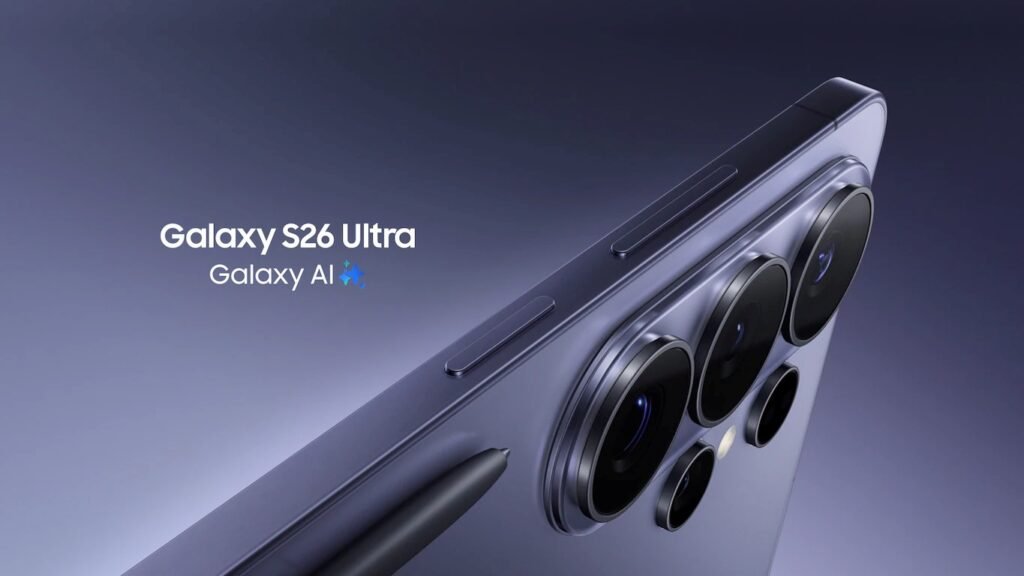
Seven months after launch, the Galaxy S26 just got more expensive. Samsung quietly raised the price of nearly every Galaxy S26 model in the US by $100 on October 1, with the 1TB Ultra jumping $200 — pushing the base S26 to $999 on Samsung.com and stacking on top of the $100-over-S25 increase already baked in at the March launch.
The new US pricing, confirmed by 9to5Google, reads like a sticker-shock table: the S26 moves from $899 to $999 (256GB) and $1,099 to $1,199 (512GB); the S26+ from $1,099 to $1,199 and $1,299 to $1,399; and the S26 Ultra from $1,299 to $1,399, $1,499 to $1,599, and $1,799 to a round $1,999 for the 1TB model. Amazon and Best Buy had not yet updated their prices at reporting time, so the old prices may linger a little longer at third-party retailers.
The stacked math: $200 over last year’s S25
This is the second $100 increase hitting the same lineup. When the S26 series debuted in March, the base S26 and S26+ already launched $100 above their S25 predecessors — with Samsung’s mobile chief Won-Joon Choi telling The Verge at the time that the memory shortage made a “significant contribution” to that increase. The Ultra, by contrast, held its price until now. Stack the two hikes and an entry-level Galaxy buyer today pays $200 more than last year’s equivalent.
Who got spared
Not everything moved. The Galaxy S26 FE, which launched in August at $699 — itself $50 above the S25 FE — is untouched. So are the foldables: the Galaxy Z Fold 8 and Z Flip 8 keep their prices. The pattern is deliberate: Samsung is protecting the models aimed at price-sensitive buyers and the premium foldable line, and concentrating the increases on the core S26 flagships where memory costs bite hardest.
The division that posted its first-ever loss
The squeeze behind the hike is unusually visible. Samsung’s own mobile division posted its first-ever quarterly loss in the second quarter of 2026 — a 700 billion won operating shortfall — despite solid Galaxy S26 and A-series sales. As the Seoul Economic Daily reports, surging memory chip prices are the culprit: memory is the largest single cost component in a smartphone, and AI data-center demand has created shortages that even Samsung — one of the world’s biggest memory producers — cannot absorb.
The Korean paper adds that Samsung had already raised Galaxy prices in India before the latest domestic adjustment, and plans to pair the increases with expanded sales of premium models that carry lighter cost burdens — including next year’s Galaxy S27.
Why this matters
Samsung gave no official reason for this round, and the commodity coverage stops at the price table. But the signal underneath is the one buyers should hear: the AI memory crunch is now big enough to force a memory *maker* to raise prices on a seven-month-old flagship, and the same force is rippling across the industry — Apple and Google have raised flagship prices this year too.
The practical read is simple. Samsung.com has the new prices now, but Amazon and Best Buy hadn’t followed yet at reporting time — so the old $899 price may still be findable. And with Prime Day slated for October 6, waiting for a discount beats paying the new sticker on day one of the hike.
Meanwhile in Mobiles: Huawei’s Mate 90 launched with a homegrown Kirin 9050 Pro that out-benchmarks Apple’s 3nm silicon.
Meanwhile in Tech News: HPE’s $1.2B AI order shows where the industry’s money is really flowing.