The flagship Washington spent six years trying to stop
Huawei took the wraps off its Mate 90 smartphone series in China on Thursday, betting that its in-house operating system and a radically redesigned chip can carry the flagship line past American export controls. Reuters reports that premium models, including the Mate 90 Pro Max, run on Huawei’s Kirin 9050 Pro — a system-on-chip built with a technique Huawei calls “LogicFolding” that restructures a chip’s internal wiring in three dimensions instead of the conventional flat layout.
The launch is Huawei’s biggest hardware statement of the sanctions era. It succeeds the Mate 80 line from November 2025, and the company says more phones built on the LogicFolding technique are on the way.
A 7nm-class chip that out-benchmarks Apple’s 3nm silicon
Here’s the number that should make Qualcomm and Apple pay attention. Analysts at Bernstein found that the Kirin 9050 Pro — built on what they estimate is a 7nm-class process, without EUV lithography — beats Apple’s 3nm A17 Pro in Geekbench 6 multicore tests, according to the South China Morning Post. The firm called the advance an “underestimated breakthrough,” estimating the chip narrows Huawei’s gap with Apple from roughly four years to about three.
The trick is density, not smaller transistors. Bernstein estimates LogicFolding pushed transistor density past 238 million per square millimeter, up more than 50% from about 155 million in the previous generation. The caveat: single-core performance still lags — Bernstein puts the chip around 30% behind Apple’s current 2nm A20 Pro, closer to TSMC’s older 4nm-class silicon.
Why this matters
Washington’s bet was that cutting China off from extreme-ultraviolet lithography would freeze its chips in place. Huawei’s answer is to stop chasing process nodes and start redesigning the chip itself — folding logic vertically to shorten the distance signals travel. If the technique scales the way Huawei claims, every sanctioned chipmaker just got a blueprint for closing the gap without EUV machines.
Huawei isn’t pretending the constraints are gone. Consumer chief Richard Yu told reporters that “advanced semiconductor capacity remains very limited in China,” and that smartphone-chip capacity “remains tight.” The economics are biting too: Yu said rising memory prices have added an average of $200 to the cost of each handset, and retail prices will have to rise — just slower than costs. Against that backdrop, IDC data shows China’s overall smartphone shipments fell 7% year-on-year from January to August, while Huawei’s own shipments rose 13%.
What the phones actually bring
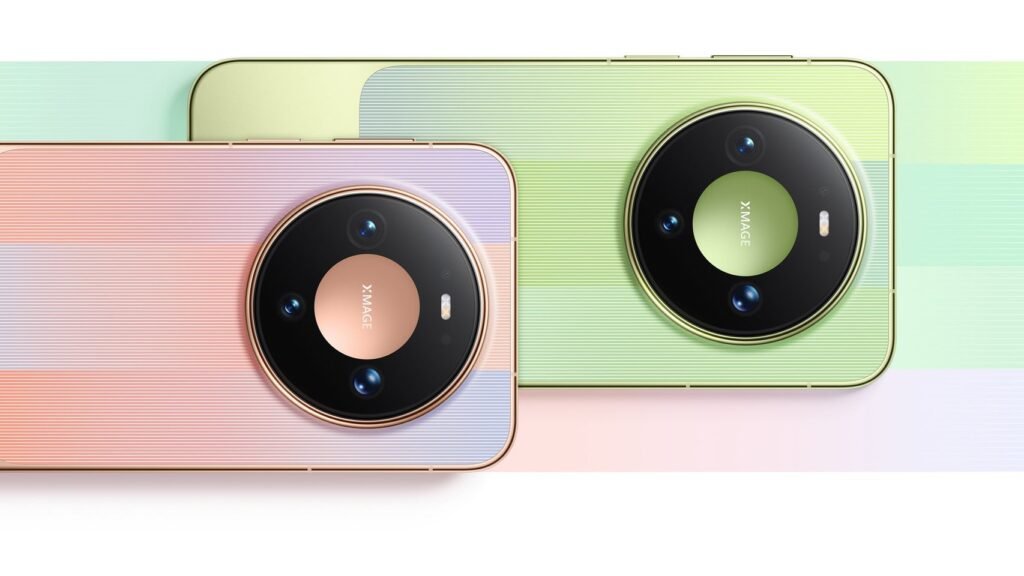
The base Mate 90 runs the Kirin 9030, packs a 6,600mAh battery with 66W wired and 50W wireless charging, and carries IP68 and IP69 ratings, per Huawei’s official product page. The whole lineup ships with HarmonyOS 7 — Huawei’s Android-free OS, which the company says now supports more than 450,000 apps and services — plus satellite messaging that can send photos, not just text.
Camera details are murkier. Pre-launch reports from GSMArena point to a 200MP periscope telephoto and dual-layer OLED displays on the Pro Max, and a leaked video showed a clip-on teleconverter accessory — but Huawei hadn’t confirmed full camera specs or pricing at launch time, and there’s no word on availability outside China.
Meanwhile in AI Tech: OpenAI’s GPT-6.1 pricing moves ahead of DevDay.
Meanwhile in Tech News: Trump’s White House meeting with AI CEOs on guardrails vs. speed.