Tax the Bots, Save Some Jobs for Humans
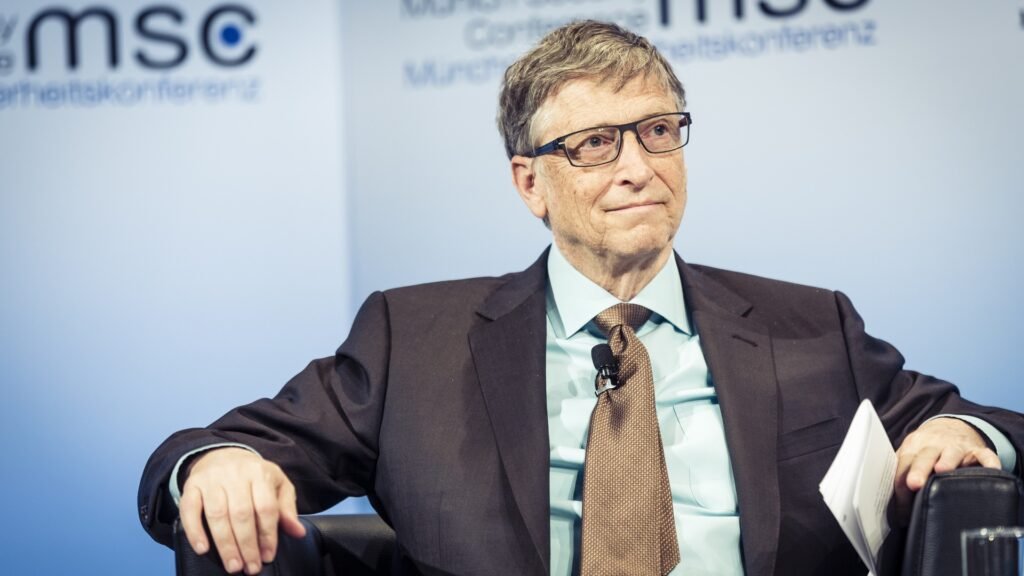
Bill Gates wants to tax your AI. Appearing on CNN’s State of the Union on Sunday, the Microsoft co-founder said society will soon have to decide “how do we tax AI usage or robot usage? And where do we want to make sure the human jobs are preserved?” According to IANS reporting on the interview, Gates — pressed by host Jake Tapper on his earlier warning of “unprecedented” job losses — called for reserving some occupations, particularly in education and health care, for humans. AI, he said, “changes the world more than all previous technologies”: the PC and internet eras were “a big deal, but nothing compared to this.”
It’s a striking position from a man who built one of the world’s great software fortunes on automation. “Until people get their mind around how powerful this is, and, therefore, what it’s going to be doing to these jobs, the idea that you need to reserve things for humans may sound bizarre, but, in fact, we will get there,” Gates said. His logic is incentive-based: models are improving fast, and the economic incentive to swap human labor for AI is only growing.
Why Cyber Comes First
Gates named the most immediate danger plainly: “bad people using AI,” especially for cyberattacks. “When you have bad people, no safeguards, and then the latest models, that’s where, over the next year, primarily in the cyber area, we are going to have a lot of negative surprises,” he said. As the New York Post reported, he warned that criminals could disrupt financial systems, extort businesses and run far more sophisticated attacks than today.
His reasoning is brutally practical: cybercrime has a known business model. “There, there’s a known business model where you threaten to do something and then ask somebody to pay you for that,” Gates told Tapper — or cause a disruption that moves a stock or a bet. And the guardrails are thinner than they look. In a detailed breakdown of the interview, FourWeekMBA highlights Gates’s most alarming line: safeguards exist, “but, right now, you’re allowed to take all those safeguards out.”
The numbers back his urgency. According to CrowdStrike’s 2026 Global Threat Report, attacks by AI-enabled adversaries jumped 89 percent year over year in 2025, while the average time for intruders to move laterally inside a compromised network fell to 29 minutes. Tapper also pressed Gates on his assessment that AI could make bioterrorist attack development 50 times more likely than a natural pandemic; Gates answered, “Well, no, we’re not doing enough.”
Why this matters: self-governance has an expiration date
Here’s the part the straight rewrites buried: Gates put a timeline on the end of the industry’s self-policing era. “Over the next year, we will move beyond self-governance,” he said — toward government safety bodies modeled on aviation and medicine regulators. He said he has heard from “a number of politicians” and hopes to discuss his concerns with Trump and “his key people.”
That framing is the real news. The standard tech-billionaire script is “regulate carefully, don’t slow us down.” Gates just proposed the opposite end of the spectrum — tax AI like a robot, legally fence off human-only jobs, and submit models to FDA-style safety bodies — while admitting the tension outright: America can’t regulate itself into losing the race, but no American should be left out either. Dario Amodei’s September letter calling for an AI slowdown and Trump’s new “super intelligence” safety pact with tech CEOs are already pulling Washington in the same direction.
The open question is whether a founder-turned-philanthropist can move the Overton window faster than the models move the threat landscape. Gates gave the window twelve months.
Meanwhile in Tech News:
Also this week: Tavus’s Griffin AI avatar fooled 48% of people in a live video Turing test — the “bad people” use case Gates is warning about.
And: TypeSafe raised $870M for AI that decides instead of chats — exactly the kind of autonomous system Gates says needs government safety bodies.