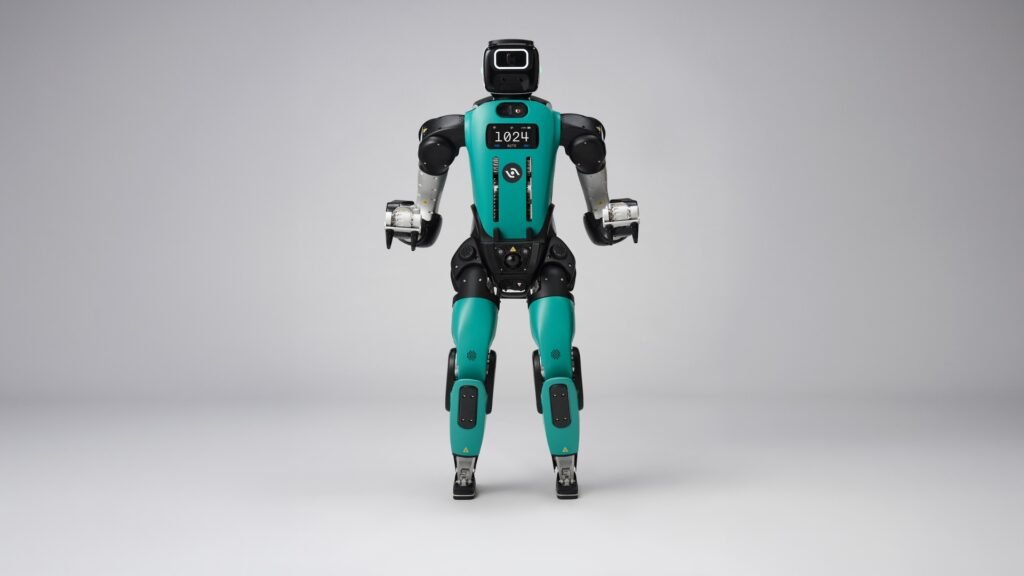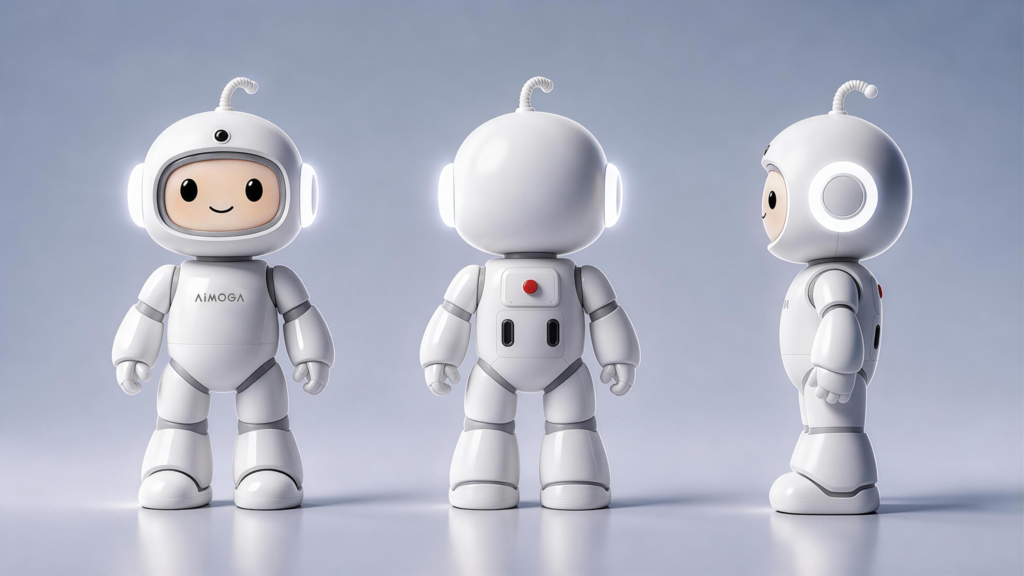
Chery, one of China’s largest carmakers, wants its next product to live in your living room. Its robotics brand AiMOGA announced on October 16 that it will formally showcase Mobo, its first consumer-grade home humanoid robot, and open global pre-orders at the 2026 Chery International User Summit in Wuhu, China, running October 19–23.
Mobo is designed as a home companion and, according to the company’s announcement, it has already been exhibited at the World Robot Conference and the World Manufacturing Convention. This week’s summit is its formal global debut — with order books opening at the same time.
A Robot That Plans, Not Just Obeys
Mobo runs on AiMOGA’s proprietary MoAgent AI system, which the company says can interpret complex instructions, break them into actionable steps, and plan longer-term tasks rather than just responding to isolated commands. Combined with spatial perception and multimodal interaction — voice, visual information, and conversational context — the robot is designed to recognize objects and navigate home environments with dynamic obstacle avoidance.
The hardware pitch: a full-body system with 22 degrees of freedom enabling expressive gestures, stable movement, and even dance routines. AiMOGA also says Mobo is designed to remember individual family members’ habits and preferences, with privacy protection built in from the outset.
The Carmaker Playbook, Ported to Robots
The more interesting story is the strategy behind the cute exterior. AiMOGA is explicitly borrowing Chery’s automotive playbook — its R&D network, established supply chain, precision perception hardware, and the company’s CheryMind large AI model — to scale a robot business the way it scaled car production. The company claims more than 100 commercial use cases already, cumulative global deliveries above 3,000 units, and operations spanning over 60 countries and regions.
At the summit, AiMOGA will demonstrate the breadth of that portfolio: police robots doing patrol and traffic guidance, healthcare robots offering visitor guidance at medical stations, the Mornine robot in livestreaming and checkout-free retail zones, and the Argos Pro quadruped showing autonomous following and load carrying. Mobo’s job is companionship and educational support at home — the consumer end of the lineup.
Chery is not alone in making this bet. XPeng put a European timeline on its IRON humanoid just last week — mass production targeted for late 2026, first deliveries in the first half of 2027 — while Tesla keeps pushing its Optimus timeline back. The pattern is clear: carmakers, armed with factories, supply chains, and automotive-grade perception, are treating humanoids as a second product line. And the new battleground is the home, not the factory floor.
Why This Matters
What separates Mobo from the crowded field of cute demo robots is the go-to-market math: a carmaker’s supply chain and a 60-country distribution footprint are things most humanoid startups can only dream of. If AiMOGA can actually manufacture Mobo at automotive scale and price it for consumers, it changes the competitive picture for home robots faster than any lab breakthrough.
That is still a big if. Everything so far — the capabilities, the delivery figures, the timeline — comes from AiMOGA’s own announcement. The company has disclosed no pricing, no detailed specifications, and no delivery dates for Mobo pre-orders. Treat this as the starting gun on Chery’s consumer-robot ambitions, not as a product you can evaluate yet. The summit demonstrations starting October 19 will be the first real test of whether Mobo is more than a charming press photo.
Meanwhile in Robotics: for contrast, see the startup approach — Feather’s $30,000 modular humanoid aims to be the Android of robotics, while RoboParty’s open-source RP1 is betting developers want full control of the hardware.