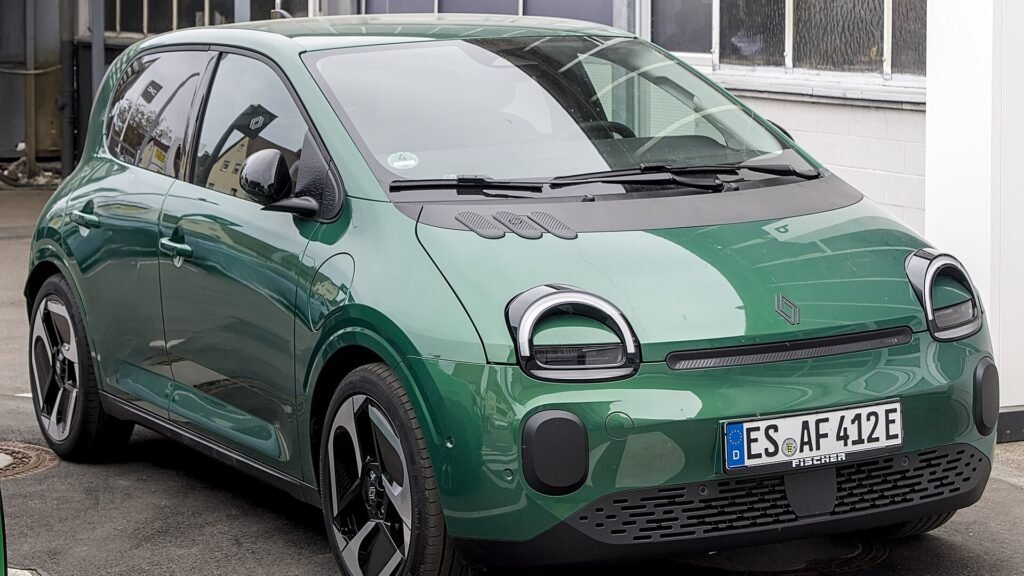
The cheapest electric car in Britain now costs less than the cheapest gas car. Renault has confirmed UK pricing for the new Renault Twingo E-Tech, and the little retro city car starts at £14,745 — about $19,500 — once the UK government’s £3,750 Electric Car Grant is applied. That makes it cheaper than the gas-powered Dacia Sandero and comfortably cheaper than BYD’s cheapest EV, the Dolphin Surf. And no, you cannot buy one in America.
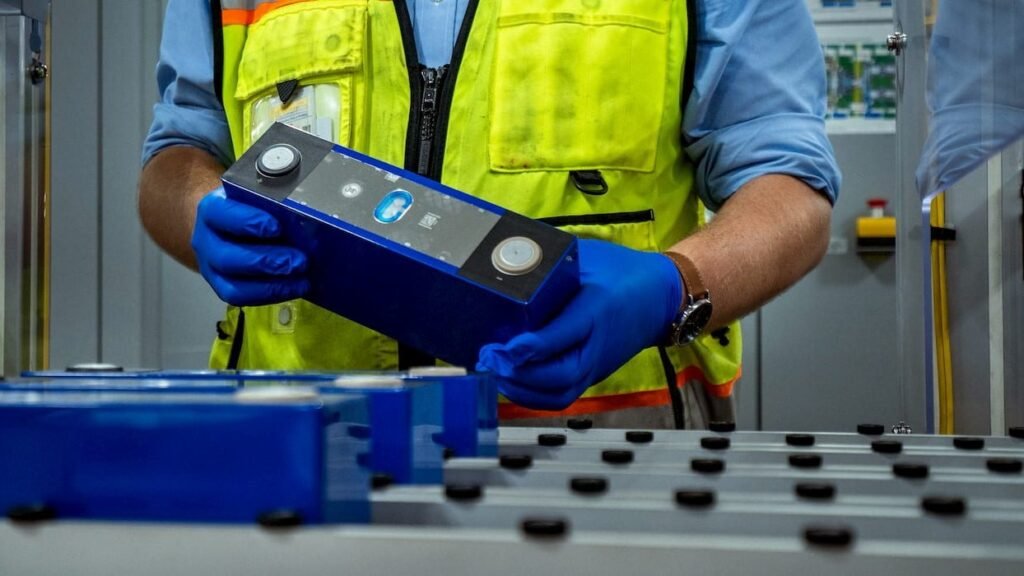
What you get for the money is a proper car, not a penalty box. The base Evolution trim pairs a 27.5 kWh lithium-iron-phosphate battery with an 80-horsepower motor, good for up to 163 miles of WLTP range. It charges from 15 to 80 percent in 28 minutes on a 50 kW DC fast charger, and even the cheapest version comes with a 7-inch driver display, a 10-inch navigation screen, cruise control and lane-keep assist. Step up to the £16,245 Techno trim and you get Google built in — Gemini AI assistance, Google Maps and more than 100 apps — plus a reversing camera, heated seats and one-pedal driving.
The $10,500 gap
Here is the number that should sting. The cheapest new electric car on sale in the United States is the redesigned 2026 Nissan Leaf, which Nissan prices from $29,990 — the lowest starting MSRP of any new EV currently on sale in America, according to the company. The Renault Twingo E-Tech costs about $10,500 less than that, and it still undercuts a gas car. The average new EV in the US costs $56,221.
The gap is not about technology. It is about policy — and geography. The Twingo’s headline price depends on the UK’s £3,750 grant, and in Germany it starts at about €13,990 after a €6,000 federal grant. In the US, the $7,500 federal EV tax credit expired on September 30, 2026, and October was the first full month without it. Renault, meanwhile, does not sell cars in America at all, and the Twingo — built in Slovenia — was never engineered for the US market. A Nissan-badged version called the Pixo exists, but it is headed for other markets, not American showrooms.
Europeans, meanwhile, are buying it. Renault has sold about 26,000 Twingo E-Tech cars since the model launched in April 2026, making it the best-selling A-segment electric car in Europe in the third quarter, and the little car is a finalist for the 2027 European Car of the Year award.
Why this matters
October 2026 gave the auto industry a clean experiment: Europe’s EVs took 32.1% of the market while America’s stalled at 6.2%. The Renault Twingo E-Tech is the clearest illustration of why. Europe’s cheapest EV is a cheerful, well-equipped city car that costs less than a gas equivalent. America’s cheapest EV is a $30,000 crossover. The technology to build a sub-$20,000 electric car plainly exists — Renault built it in under two years, with three-quarters of its suppliers within a short radius of its Slovenian factory. The question is not whether cheap EVs can be built. It is whether American buyers will ever be allowed to buy one.
For now, the Twingo stays a European story. UK order books open in the first quarter of 2027, with deliveries from March. Americans watching from across the Atlantic get the same view they have had for years: the affordable electric car exists — it just is not for sale here.
Meanwhile in Cars & EVs: Europe’s EVs Just Took a Third of the Car Market — While America Stalls at 6%
Meanwhile in Cars & EVs: US EV Sales Rebound in Q3 2026, Cox Automotive Data