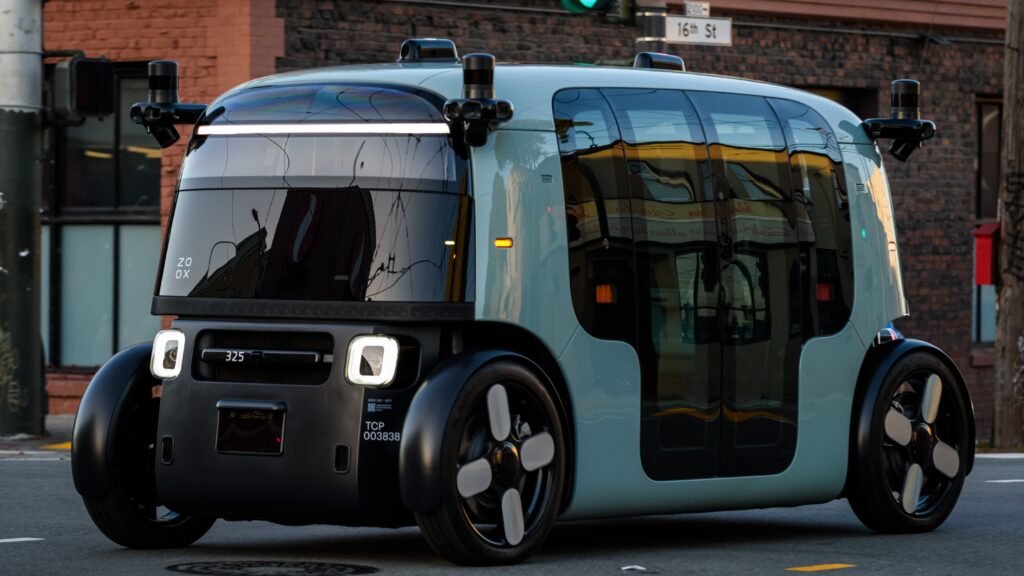
Amazon-owned Zoox’s driverless pods are now available through the Uber app in Las Vegas — but if you want a ride in one, you cannot actually ask for it. According to TechCrunch, the launch went live on Monday 16 November, making Zoox the first purpose-built, steering-wheel-free autonomous vehicle on Uber’s network — and the first time Zoox has opened its fleet to a third-party ride-hailing platform.
Riders cannot select a Zoox directly, at least initially. Anyone requesting UberX, Uber Comfort, Uber Electric, Uber Comfort Electric or Wait & Save in Las Vegas may be matched with a Zoox — or may simply get a human-driven car. The only lever riders have is an opt-in toggle for autonomous rides in the Uber app’s ride preferences, which increases the chances of a match.
There is no extra charge for being matched with a Zoox. Standard UberX-type fares apply, and Zoox will keep its own standalone Las Vegas app running alongside the Uber integration.
Tourist zones only
Do not expect a Zoox to pick you up anywhere in the valley. Service is limited to heavy tourist zones: the Las Vegas Strip, downtown Las Vegas and the Arts District. The launch announcement confirms riders can be matched with Zoox’s fully autonomous robotaxis through the Uber app at no additional cost, from resorts and venues on and around the Strip to downtown and the Arts District.
The casino corridor gets special treatment. Uber and Zoox also announced a multi-year partnership with MGM Resorts International, becoming the official rideshare and robotaxi partners for MGM properties in Las Vegas, with improved pickup and drop-off locations and signage at properties including the Bellagio and MGM Grand.
The detail the headlines skip
Behind the launch sits a structural detail that says a lot about how Uber is building its autonomous network. Unlike its partnerships with other self-driving developers, Uber told TechCrunch it will not provide maintenance and other services for Zoox in the Las Vegas market. Zoox keeps its own vehicles running; Uber supplies the demand.
That division of labour matters because of what comes next. Uber’s exclusive partnership matching Waymo robotaxis with Uber riders in Austin and Atlanta ends in January 2028, after which Waymo plans to offer rides directly through its own app. Uber still plans to host Waymo as long as the two agree — but Zoox is clearly a replacement bet, not just an addition.
Los Angeles is next
Zoox begins initial robotaxi operations in Los Angeles this year, with rides for employees, family and friends through its own app. Commercial service and Uber-app availability follow in 2027. The Las Vegas launch comes after the Nevada Transportation Authority earlier this year approved a permit allowing Uber to deploy up to 1,000 robotaxis in Clark County through partnerships with Hyundai subsidiary Motional and Zoox.
On Uber’s third-quarter earnings call this month, CEO Dara Khosrowshahi said Las Vegas “will become the first U.S. city where riders can access two fully driverless partners through the Uber app,” starting with “limited fleets” and expanding supply over the coming months. No fleet size was disclosed. Uber has now partnered with more than 30 autonomous-vehicle developers; Zoox still trails market leaders Tesla and Waymo — but it is the only one whose cars have no steering wheel at all.
Why this matters
The headline is that a steering-wheel-free car is now bookable on the world’s biggest ride-hailing app. The real story is the shape of the deal. Riders cannot choose a Zoox, Uber will not service one, and the service area is three tourist districts — yet this is the launch Uber chose to make Las Vegas the first US city with two fully driverless partners on its app, just as its Waymo exclusivity starts running down.
That is the template for Uber’s autonomous future: it does not build the cars, it does not maintain them, and it does not even let you pick one. It owns the demand and the dispatch, and the robotaxi companies compete to fill it. Zoox just became the first purpose-built vehicle to play by those rules — and Los Angeles, in 2027, is where the template gets its real test.
Meanwhile in Robotics: Tesla’s robotaxi operations show what the competition looks like after dark
Meanwhile in Robotics: Tesla’s California robotaxi expansion hit delays — the regulatory hurdle Zoox just cleared in Nevada