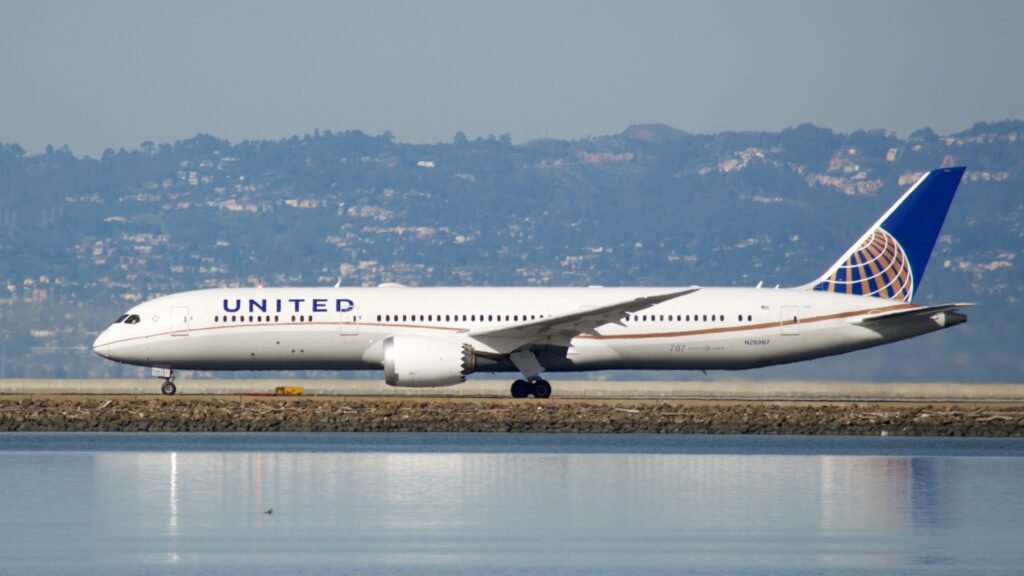
United Airlines suffered a widespread system outage on Monday afternoon that delayed departing flights across the United States — the fourth major American technology failure in five days, and the second time in 15 months that a weight-and-balance problem has grounded United’s planes. According to the Associated Press, the outage was resolved about 1 hour and 40 minutes after pilots first began reporting problems.
The problem, as pilots described it on the radio, was the system that calculates a plane’s final weight and balance before takeoff. Pilots could not get final weight figures and therefore could not get takeoff clearance. The first report came at about 4:02 p.m. ET from United flight 2787 in Denver, and radio traffic named at least 30 United flights across 12 airports between 4 and 6 p.m. ET. Flights already in the air and United Express flights were not affected.
United has not said which of its systems failed, and it has given no root cause. It did confirm there was “no indication that this was a cybersecurity-related issue.”
Two timelines, one afternoon
How bad the disruption was depends on whose numbers you use. AP reports the outage was resolved roughly 1 hour and 40 minutes after the first pilot reports, with FlightAware showing about 600 United flights delayed on Monday evening — though it is unclear how many were directly caused by the outage.
USA Today, citing FlightAware, counted 22 cancellations and 554 delays — about 17% of United’s flights — as of 6:10 p.m. ET, rising to 28 cancellations and 811 delays, about 25%, by around 9:50 p.m. ET. United, meanwhile, told CNN the outage itself lasted about 30 minutes and fewer than 150 flights were impacted. The gap is explainable: FlightAware’s counts include knock-on delays that piled up long after the system came back.
Four failures in five days — none of them connected
The United outage did not happen in isolation. It was the fourth major US technology failure in five days: Microsoft Outlook was disrupted on 12–13 November before services were fully restored on Saturday; on Friday 13 November the FAA ordered a nationwide ground stop after a newly installed industrial-grade router malfunctioned and flooded the aging air-traffic-control system; and on Monday morning, thousands of people could not access online accounts at several major US banks after JPMorgan Chase suffered a technical problem it blamed on a software bug in on-premise hardware.
These are separate incidents with separate causes, and every source stresses they are not connected. The link is timing — and the shared finding that none of them was a cyberattack. The FAA said United’s problem was on United’s end, and Transportation Secretary Sean Duffy said it was unrelated to FAA systems. What failed, in each case, was the ordinary machinery underneath American infrastructure.
This already happened to United
The most uncomfortable part of the story is the precedent. In August 2025, United grounded planes at major US airports, delaying more than 1,000 flights, because of an hours-long outage of Unimatic — a system housing flight information fed into weight-and-balance calculation and flight-time tracking. United told AP it had no further information on whether the same system was affected on Monday.
Why does it matter this much? Pilots use performance software to check the aircraft can safely take off given weather, runway, fuel, baggage, cargo and passenger load. Former United pilot and aviation safety expert Steve Arroyo told AP: “It is extremely important to have all of these numbers accurate and precise.” Without the numbers, the plane does not move.
Why this matters
The commodity coverage of this outage is a single incident: system fails, flights delayed, resolved same afternoon. The story that matters is the pattern. Four major systems failed in five days, none of them attacked, none of them exotic. And United’s failure is a repeat: the same weight-and-balance pipeline brought the airline down 15 months ago, and the airline will not say whether it was the same system this time.
That is the frame worth watching. American infrastructure keeps tripping over its own aging systems, in public, in the same week — and the fixes keep arriving after the fact. The next failure will not need a hacker. It will need a Monday afternoon and a system nobody checked.
Meanwhile in Tech News: America’s power grid is already straining under AI data centres — the same infrastructure fragility, a different system