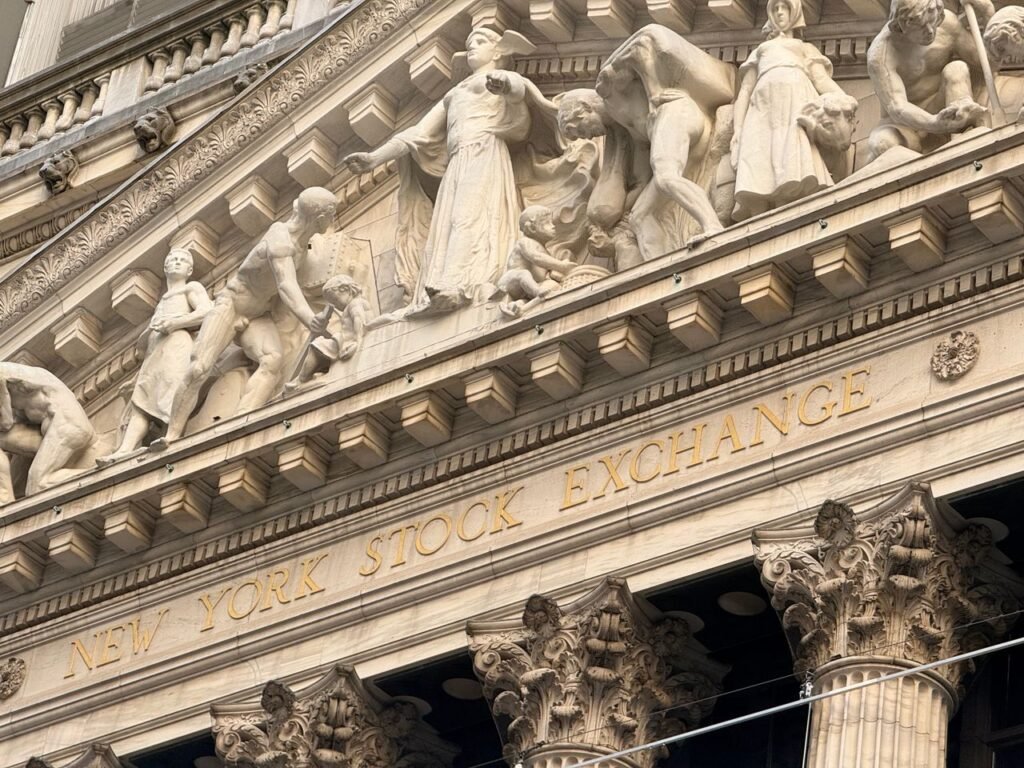
Anthropic has filed to go public, and Wall Street’s reaction may matter more than the filing itself. The maker of Claude submitted its S-1 on October 26, setting up a Nasdaq listing under the ticker ANT that reports say could raise as much as $100 billion as early as next month.
That would make it one of the largest stock market debuts in history. But the filing tells a stranger story than the headline valuation, and the market’s chilly response to AI fundraising suggests investors will no longer fund the buildout on faith alone.
The Numbers That Refuse to Add Up
According to TechCrunch, Anthropic recorded revenue of $16.3 billion for the first half of 2026, up from $1.2 billion in the same period last year. Its operating loss narrowed to $693 million from $2.1 billion, and the company posted its first quarterly operating profit, $974 million, in the second quarter.
Then comes the number that stops everyone cold: a net loss of $80.7 billion for the same six months, up from $13 billion a year earlier. As TechCrunch notes, that figure was largely driven by noncash accounting adjustments tied to convertible debt, not cash walking out the door. Strip it out and you get a company suddenly close to operational breakeven while growing revenue more than thirteenfold in a year.
The filing also puts Anthropic’s cash pile at $131.7 billion, built on roughly $141 billion raised since its founding. It does not yet disclose share counts or pricing, leaving the roadshow to decide whether a valuation reportedly pitched between $1.5 trillion and $2 trillion survives contact with public investors.
Why Wall Street Flinched First
According to Reuters, Anthropic’s filing landed in the middle of a broader reckoning over who pays for the AI buildout. Meta unveiled a plan this week that could raise as much as $97.5 billion through equity offerings, and its shares have fallen more than 11% since it announced a new stock class to fund share sales and reported its first quarterly cash burn in more than a decade.
Reuters reports that AI stocks accounted for nearly 75% of the S&P 500’s return in the first half of 2026, per Carson Group. This year’s AI capital spending by Amazon, Alphabet, Meta, Oracle and Microsoft alone will likely equal their cumulative spending since ChatGPT launched in November 2022, per J.P. Morgan data cited by Reuters.
The strain is already showing further down the food chain. Reuters notes that smaller, debt-heavy firms are feeling the heat, with CoreWeave’s bond yields soaring and its shares hitting their lowest since May 2025 last week. As one strategist put it to Reuters, “Not even Anthropic will get a blank check.”
The Control Catch Nobody Priced
Anthropic’s seven co-founders will hold 50.1% of shareholder voting power through a “Founder LLC,” a structure the company says is designed to preserve its AI safety mission.
Separately, its Long-Term Benefit Trust, established in 2023, will appoint most of the board. As TechCrunch points out, voting power will not match economic ownership, leaving public shareholders with little practical control over technology that, by Anthropic’s own admission, poses “catastrophic or existential risks to humanity.”
Why this matters
This IPO is not just a listing. It is the first public mark-to-market of the entire AI trade. Private rounds let Anthropic raise $65 billion in a single Series H without justifying its price to a skeptical public; a Nasdaq listing forces that justification in real time, in the same week Microsoft and Alphabet report earnings and Meta tests how much equity the market will absorb.
If the roadshow holds up near the reported valuation, the AI funding machine keeps running. If it slips, expect the conversation to change overnight, from “how fast can we build” to “who actually pays, and what do they get for it.” Watch roadshow demand and the earnings calls. The answers will set the price of AI ambition for the next year.
Meanwhile in AI Tech: Broadcom’s $42 billion Anthropic deal shows how circular the AI money-go-round has already become. Meanwhile in AI Tech: the AI chip debt wave now stretches from SpaceX to Broadcom to Oracle.