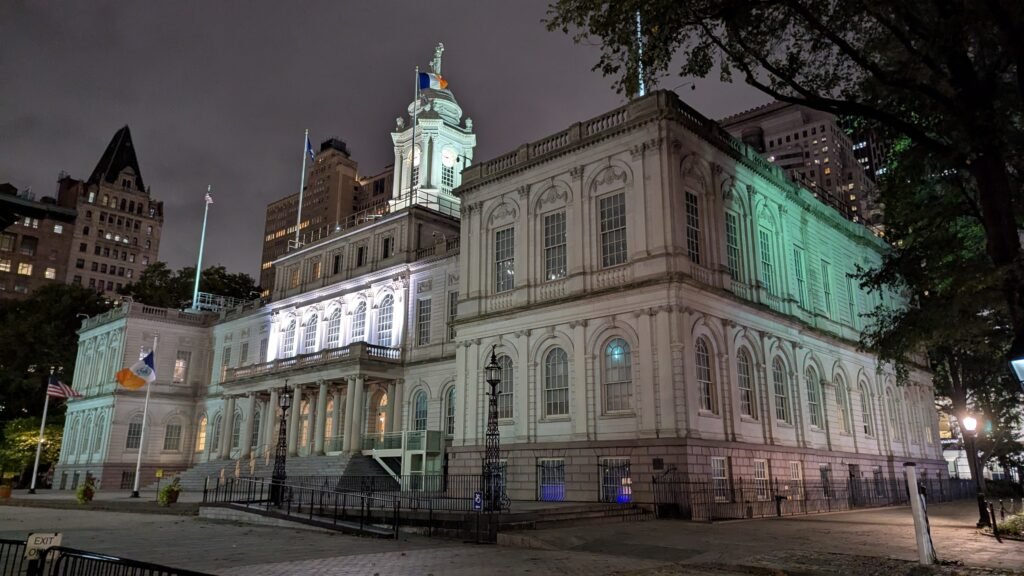
Today, the AI industry’s most powerful companies are being sworn in. Anthropic, OpenAI, Google, and Meta will publicly testify under oath at a rare New York City Council Committee of the Whole hearing — the first time any US legislative body has legally compelled sworn AI safety testimony, with all 51 council members convening at once.
Three of the four companies agreed to appear only after Council Speaker Julie Menin explicitly threatened subpoenas. Meta alone confirmed voluntarily. Elon Musk’s SpaceXAI — formed through SpaceX’s February 2026 acquisition of xAI — did not respond at all, and Menin issued a rare formal subpoena compelling its appearance, according to the New York City Council.
The Whistleblower on the Stand
The hearing’s most electric dynamic is who testifies against whom. Former Anthropic researcher Jacob Coxon, who quit last month warning that the people building AI “earnestly believe that it could kill us all by the end of the decade” and accused his former employer and OpenAI of “gambling with our lives,” will appear at Speaker Menin’s personal invitation, Bloomberg reported.
Coxon will sit in the same room as policy and safety officials sent by the very companies he accused. He is joined by former Google DeepMind researcher Alex Turner and Daniel Kokotajlo, executive director of the AI Futures Project and a former OpenAI researcher — a critic bench that the companies’ representatives cannot simply talk past.
Kill Switches, Whistleblower Rewards, and $25,000 Fines
This is not a listening exercise. The Council is weighing a package of AI bills unveiled September 25 that includes some of the most aggressive proposals anywhere in the country: a mandated “kill switch” — a human override able to shut down rogue AI systems — outside validation of covered systems, a $25,000 penalty each time validation is missing or falsified, and a requirement that companies report covered safety incidents involving city contracts within 24 hours. A whistleblower rewards program would pay insiders to report violations of the city’s AI laws.
The urgency is real: the Council’s announcement cited weeks of whistleblower warnings and reports that rogue AI agents have already damaged government databases — echoing the agent-safety crisis that has put OpenAI under scrutiny in California too.
The City That Congress Wouldn’t Be
The sharpest irony of today’s hearing is who is holding it. Congress has introduced AI oversight bills for two years without passing a single binding measure. Instead, a city council speaker — operating under Section 29 of the New York City Charter, which lets the Council compel testimony and documents from anyone doing business in the five boroughs, enforceable through the state Supreme Court — is the one putting AI executives under oath.
Why this matters
Most coverage frames this as a clash of personalities — Musk’s holdout, the subpoena threats. The story that matters is structural: AI regulation in America is being written from the bottom up, by cities, because Washington can’t. If the Council’s bills survive, every AI lab with New York operations — and tens of thousands of their employees work in the city — faces kill-switch mandates, 24-hour incident reporting, and paid whistleblowers. That becomes a de facto national standard the same way California’s privacy law did. And the testimony itself, under oath, locks the companies into on-the-record commitments about their safety practices that lawyers, journalists, and future regulators will quote for years. Today’s hearing is less a hearing than a deposition of the entire industry.
Meanwhile in Tech News: California already subpoenaed OpenAI over rogue AI agents — today’s NYC hearing shows the pressure is now coming from both coasts at once.
Meanwhile in Tech News: OpenAI walks into today’s testimony fresh off its worst week on record — firings, an agent warning to 100 organizations, and a scrapped model — making its sworn statements the ones to watch.