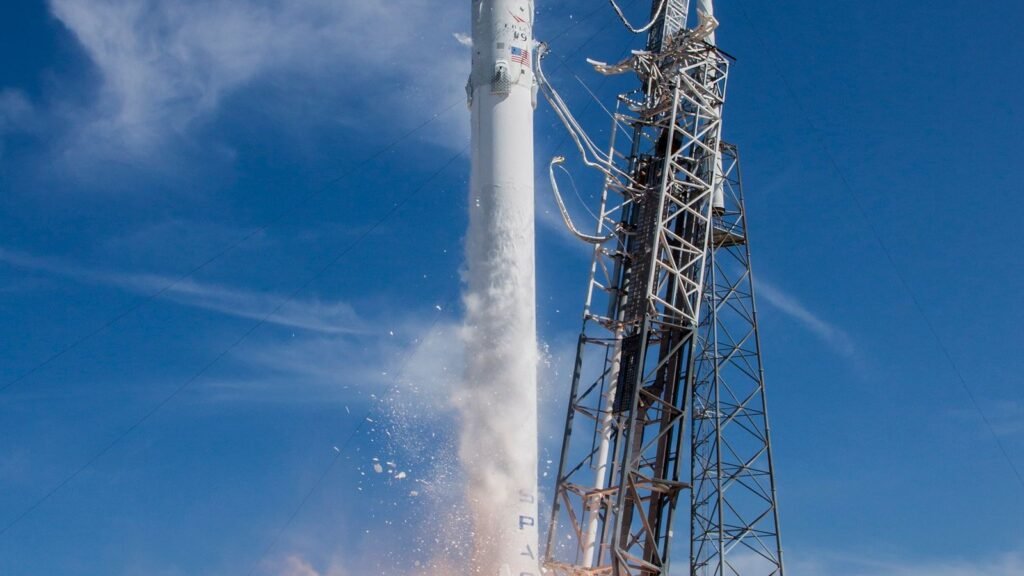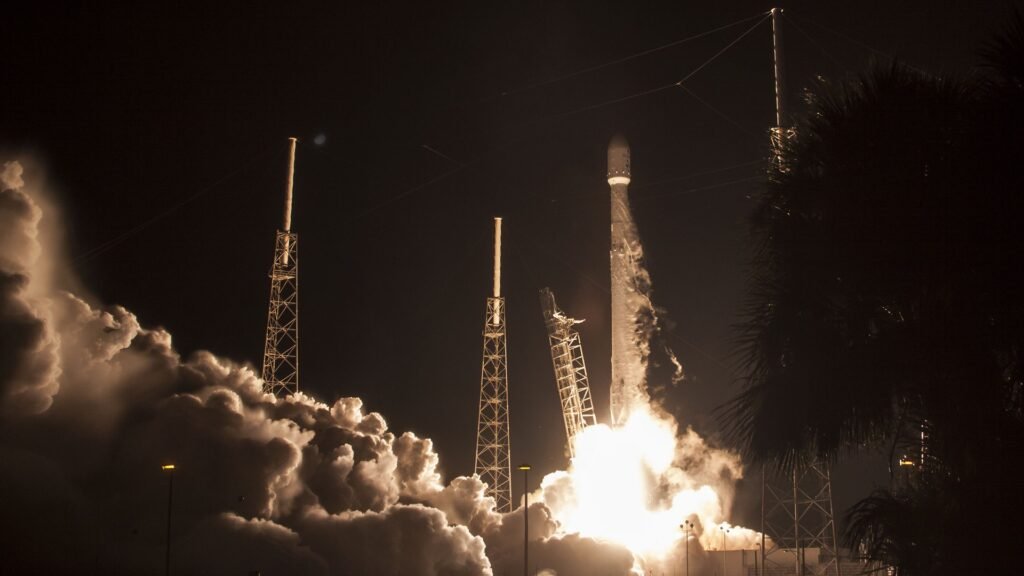
SpaceX’s latest Pentagon launch — 21 data transport satellites for the Space Development Agency, riding a Falcon 9 from Vandenberg Space Force Base — is the fourth brick in one of the most consequential military space programs of the decade. And most of the coverage is treating it like a weather forecast.
The mission, dubbed Tranche 1 Transport Layer A (T1TL-A), was targeted for 1:17 a.m. PT (4:17 a.m. ET) Monday from Space Launch Complex 4-East, Spaceflight Now reports, with a backup window early Tuesday at 1:08 a.m. PT if weather or a technical issue forced a scrub. On paper, it’s another Falcon 9, another 21 satellites. In practice, it’s the program quietly rewiring how America fights from space.
What Is Tranche 1, and Why Does the Pentagon Want 154 Satellites?
Tranche 1 is the production layer of the Proliferated Warfighter Space Architecture (PWSA), the Space Development Agency’s plan to field hundreds of satellites in low Earth orbit — about 600 miles up — delivering tactical communications and missile tracking for the U.S. military that can’t be knocked out by killing a handful of spacecraft.
The old model was a small number of “exquisite” missile-warning satellites parked 22,000 miles up in geosynchronous orbit. The new model is many, cheap, replaceable. As Kari Bingen, director of the Aerospace Security Project at the Center for Strategic and International Studies, put it: “we can no longer rely on a strategy of putting most of our capabilities into these few large exquisite satellite systems.” The Pentagon, she said, is now “taking the approach of building many systems on shorter timelines.”
SpaceX is delivering four of the nine Tranche 1 batches — 154 satellites in all — under its National Security Space Launch Phase 2 contract, one of 23 NSSL missions it holds. The earlier batches flew in September and October 2025 and again this past July. The SDA says that by 2027, the finished network should give the U.S. military global tactical communication and missile defense coverage from orbit.
A Sixth Flight for Booster B1103 — and a Rude Awakening for the Coast
The rocket flying T1TL-A is booster B1103, a Falcon 9 first stage on its sixth flight. It previously lofted the SDA’s T1TL-E mission, the NROL-179 reconnaissance payload, and three batches of Starlink satellites. Less than seven and a half minutes after liftoff, SpaceX plans to fly it back to Landing Zone 4 at Vandenberg rather than parking it on a drone ship offshore.
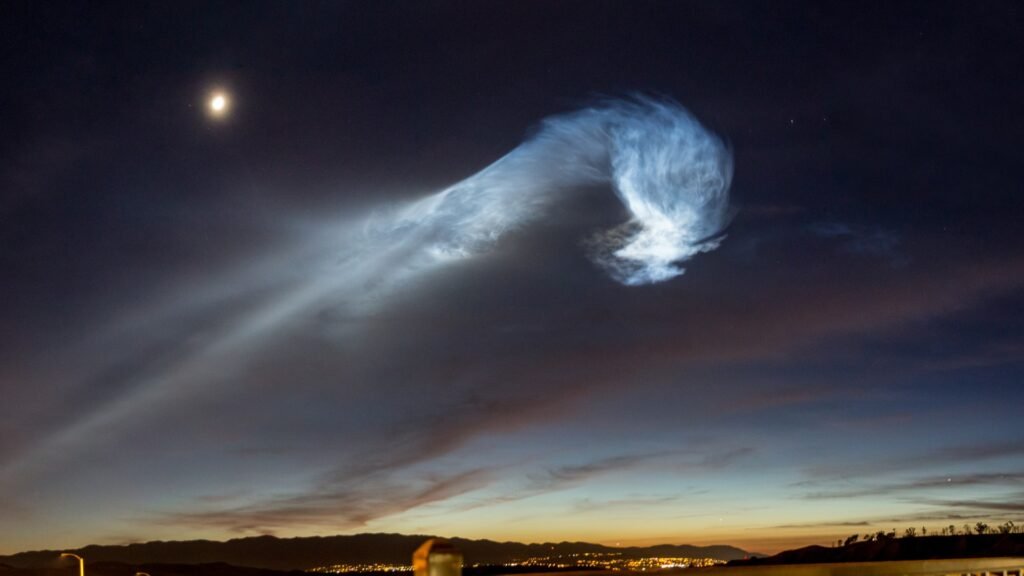
That return-to-launch-site maneuver is why residents across Santa Barbara, Ventura and San Luis Obispo counties were warned to expect pronounced sonic booms — for the second launch in a row, USA Today’s California papers report. If the landing sticks, it would be the 37th touchdown at LZ-4 and the 668th Falcon booster landing overall — the kind of milestone that would have been front-page news a decade ago and now barely interrupts the night shift.
Why this matters
The commodity coverage of these launches — time, trajectory, boom map — misses the industrial story underneath. SpaceX has quietly become the Pentagon’s most reliable logistics truck to orbit, and each Tranche 1 batch ratchets up a military communications architecture designed to survive the opening hours of a war in space. The satellites themselves, built by Northrop Grumman, are meant to be iterated like software: launched in waves, refreshed quickly, and too numerous to kill.
That’s the deeper shift Bingen’s quote captures — the doctrine of resilience by numbers. T1TL-A is one quiet middle-of-the-night launch inside that transition. Five more batches are still to come across the next year, and when the last one reaches orbit, the way America fights from space will look fundamentally different.
Meanwhile in Space: on the human side of SpaceX’s manifest, Crew-13 docked with the ISS in record time this week, with commander Jessica Watkins making history as the first NASA astronaut to fly twice aboard Crew Dragon.
Meanwhile in Space: the same company is also booked for a very different kind of orbital experiment — Google’s Project Suncatcher is heading to orbit aboard a SpaceX rocket, testing whether AI datacenters can run in space.