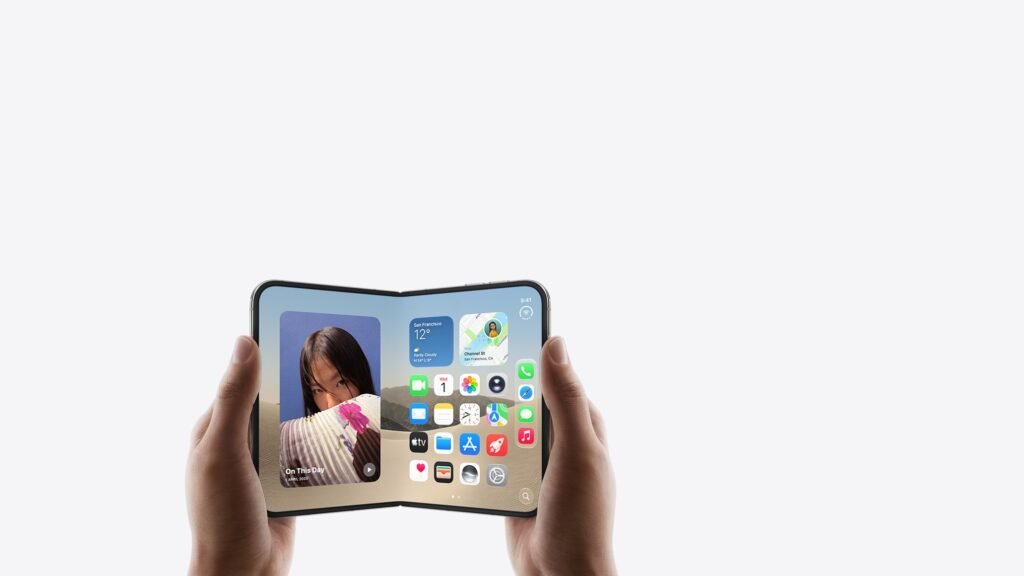
The iPhone Duo lists at 15,999 yuan in China. That is roughly $2,400 — about $400 more than the $1,999 Americans will pay when pre-orders open on October 16. Apple is charging its Chinese customers a 20% premium on its most important new product in a decade, in the market the Wall Street Journal calls the company’s biggest battleground for foldables.
According to the Wall Street Journal, China is where the foldable battle is decided — and it is where Apple starts behind. Huawei has been selling foldables in China for years and outselling expectations, while Apple is the newcomer asking buyers to pay a steep premium. The question behind the $400 gap is whether Apple is taxing its most competitive market, or pricing in the fight it knows it is walking into.
The China foldable price ladder nobody printed
Here is the number everyone arguing about the Duo skipped: the full China foldable price ladder, in one place.
iPhone Duo: 15,999 yuan (~$2,400). Huawei Pura X Max: 10,999 yuan (~$1,550). Xiaomi 18 Fold: 10,999 yuan. Samsung Galaxy Z Fold8: 12,999 yuan (~$1,830). Huawei Mate XT2: 19,999 yuan (~$2,820). So the Duo sits roughly $850 above the best-value foldables in the Chinese market — the Xiaomi and the Pura X Max — and $850 below Huawei’s tri-fold Mate XT2.
That ladder is the real story. Apple is not pricing the Duo against American phones; it is pricing it against a market where excellent foldables already cost $1,550. The $400 China markup reads less like a tax than like a bet: Apple believes the foldable buyers it wants in China are not price-shopping against Huawei, the same way iPhone Pro buyers never price-shopped against Huawei’s slabs.
The math that has Apple smiling
The projection behind the bet is striking. A Counterpoint estimate cited by Bloomberg suggests Apple could sell up to 6 million Duos and take 25% of the global foldable market — leapfrogging Huawei’s 22%. If that number holds, the China markup is not a penalty on Chinese buyers. It is Apple charging the market that will decide the product’s fate while still undercutting the absolute top end.
For American readers, the timeline is concrete: pre-orders open October 16, with availability October 23. The Duo’s distinctive passport-size 5.4-inch outer screen and 7.6-inch inner display are the product bet; the China price ladder is the business bet. Both get decided in the same market at the same time.
Why this matters
Every free rewrite of the WSJ piece skipped the price math — and the price math is the whole argument. Foldables are a China-first category: Huawei, Xiaomi, and Oppo built it there while Apple watched. The Duo’s success at $1,999 in America depends on volume, and the volume has to come from a market where buyers can get a good foldable for $1,550 and a great one for $1,830. If the Counterpoint projection is right, Apple wins the category it sat out for six years. If it is wrong, the $400 markup in the world’s toughest phone market will be the first thing analysts circle. China is not the Duo’s second market. It is the exam.
Meanwhile in Mobiles: The OnePlus 16 launches October 12 with a 9,000mAh battery America can’t buy.
Meanwhile in Mobiles: Samsung’s Galaxy S26 could cost $100 more in the US — battery tech like this is why.