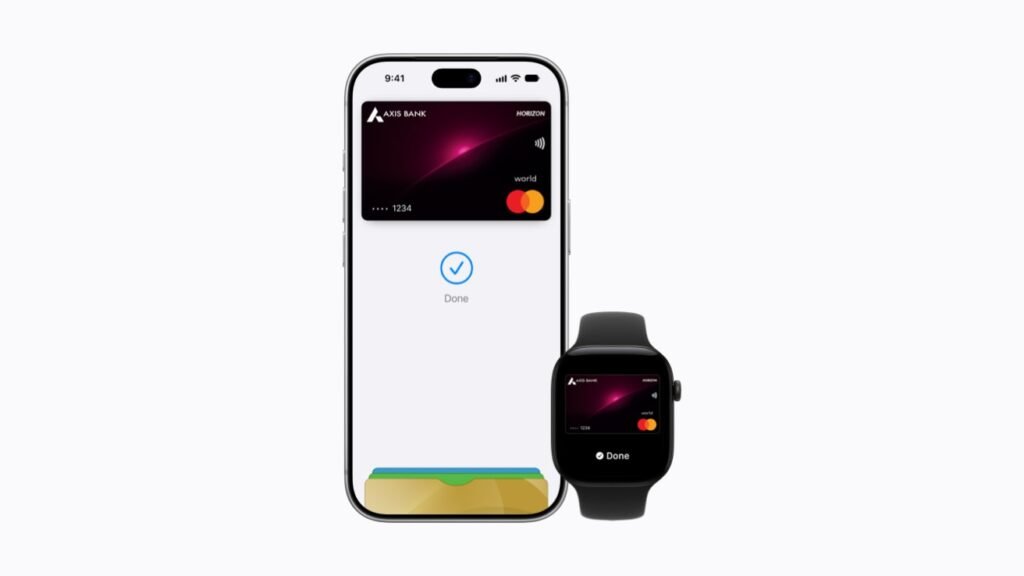
Apple Pay has officially arrived in India. The contactless payment service launched September 30 with Axis Bank as its first banking partner, supporting Visa and Mastercard credit cards on iPhone, iPad, and Apple Watch. TechCrunch broke the news, citing sources familiar with the launch.
Eligible Axis Bank customers can add their cards to the Wallet app and use Apple Pay for online purchases and contactless payments at supported terminals. Local coverage confirms the rollout covers Apple’s full device lineup, with Face ID, Touch ID, or passcode authentication.
The UPI Problem
Apple Pay is walking into the hardest payments market on earth. India’s digital payments are dominated by UPI, the state-backed system that moves money directly between bank accounts — scan a QR code, money moves, no card network involved. UPI handles the overwhelming bulk of Indian digital transactions.
Apple Pay, by contrast, is launching as a card-based, NFC-contactless product. It isn’t competing with UPI; it’s addressing a much smaller premium-card segment. In a country where small restaurants and shops rarely accept credit cards at all, Apple Pay’s addressable market is a slice of a slice.
So why bother? Follow the money.
The Real Play: Transaction Fees
As TechCrunch notes, Apple’s India business has been compounding quietly: the company accounted for 28% of India’s smartphone market by value in 2025, up from 23% a year earlier, per Counterpoint Research. India already produces about a quarter of all iPhones globally, a share that could reach 30–35% within five years.
Apple Pay gives Apple a transaction fee on every tap from that growing, affluent iPhone base — another monetization layer on hardware it already sold. Even as a niche service, the economics work: premium credit card users transact at higher values, and Apple takes its cut. This isn’t a land grab for India’s payments market. It’s a toll booth on Apple’s own customers.
The Acceptance Patchwork
The launch comes with a practical caveat. Apple Pay transactions may work at a terminal run by one payments provider and fail at another whose acquiring bank hasn’t enabled the service — meaning acceptance will be uneven in the early months, even for customers with supported cards. That’s a rough first impression for a product whose entire value proposition is “it just works.”
Expect the bank list to expand quickly, though. India’s banks have watched Apple’s premium user base grow for years; the first mover (Axis) gets the affluent early adopters, and competitors won’t sit that out for long.
Why This Matters
Apple Pay in India is a case study in how Apple expands services: not by winning the mass market, but by monetizing the premium sliver it already owns. UPI won India’s payments war years ago — Apple isn’t fighting that war. It’s building a quieter, higher-margin business on top of 28% of the country’s smartphone value. The question isn’t whether Apple Pay beats UPI. It’s how many banks sign up before the novelty wears off.