The Pitch: Don’t Build the Robot, Build on It
Feather Robotics doesn’t want to win the race to build the perfect humanoid. It wants to sell the track. The startup, founded in 2025, is building what its founders call the “Android of robotics” — a modular hardware and software platform that lets developers deploy real robots on real tasks today, instead of waiting for someone’s general-purpose breakthrough.
The contrast with the industry’s heavyweights is deliberate. According to TechCrunch, while Tesla and Figure are trying to build both the robot body and a foundational AI “brain” that isn’t widely deployed yet, Feather hands developers a working machine and an open toolkit and gets out of the way. “You can’t buy a Tesla robot today and develop on top of it,” co-founder Hoa Mai told the outlet. “Hardware players like Nvidia or Apple started with a product that worked and was deployable, and then they added complexity over time.”
Who’s Building It
Mai isn’t new to this. His previous humanoid startup was sold to 1X, and he teamed up with Parsa Bakhtiari — a former Tesla Model 3 engineer who at one point reported directly to Elon Musk — to start Feather. That pedigree helped attract Gradient Ventures, which led the startup’s $7.6 million pre-seed round.
$30,000 and Already Shipping
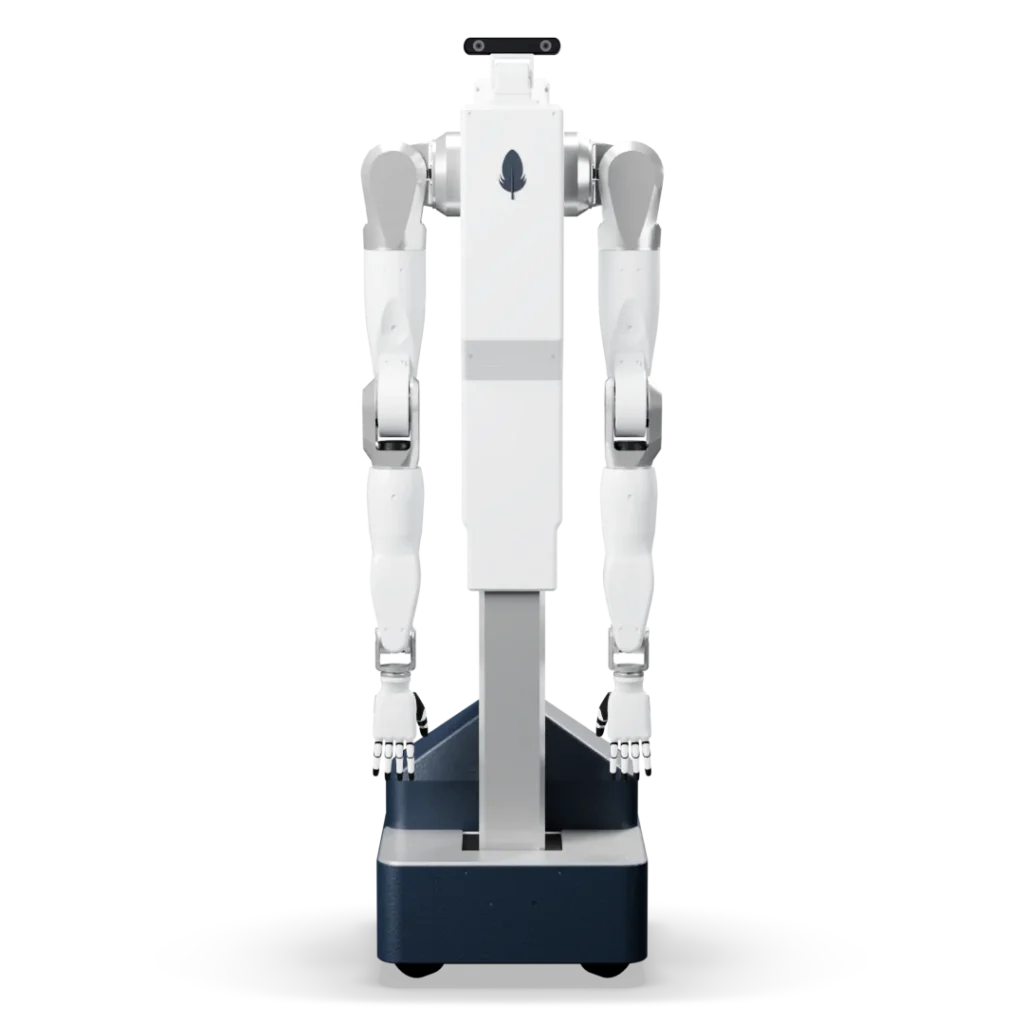
The robot itself is modular: developers can customize the hardware for different jobs, right down to adjusting arm lengths. On the software side, Feather isn’t locking anyone into its own AI — the hardware can run models from Nvidia, Skild, or Physical Intelligence, whichever fits the task.
And this isn’t a render on a pitch deck. TechCrunch reports the company has already surpassed $1 million in revenue, with its robots working as cooks in restaurants and cleaning up science labs. Customer names are undisclosed, and the company says a year of field testing has resolved nearly all of its early issues — with a big product launch now on the way. Feather’s own site lists pricing starting at $29,990, with units shipping today and financing available.
The Homegrown Advantage
Then there’s the price: $30,000, roughly half what Unitree charges for its H2 Edu. Mai openly admits Feather took a page from Chinese robotics companies like Unitree — but with new foreign-made models facing restrictions entering the U.S. market, Feather is positioning itself as the homegrown option.
Gradient’s Darian Shirazi told TechCrunch he sees no direct U.S. competitors, splitting the hardware landscape into three camps: startups like Sunday building household robots, heavyweights like Figure and Tesla chasing general-purpose machines, and Feather alone as the modular humanoid platform. His pitch on the economics is blunt: a laborer costs $50,000 to $60,000 a year once you count training and HR. A Feather robot costs $30,000, once.
Why This Matters
Feather’s real bet isn’t the robot — it’s the ecosystem. Mai expects thousands of physical-AI application companies to exist within five years, and Feather wants to be the platform they all build on. If he’s right, the company that owns the developer layer could matter more than whoever ships the flashiest humanoid.
The honest caveats: customer names, deployment counts, and independent reliability data are all undisclosed, and the revenue and pricing figures are company-stated. But a shipping product, real revenue, and a clear lane with no direct U.S. rival make Feather one of the more grounded bets in a hype-heavy corner of robotics.
Meanwhile in Robotics:
Skild AI just launched a universal “brain” for robots — the kind of model Feather’s hardware is designed to run.
Beijing opened the world’s first 4S robot mall, pushing humanoids from lab demos to retail shelves.