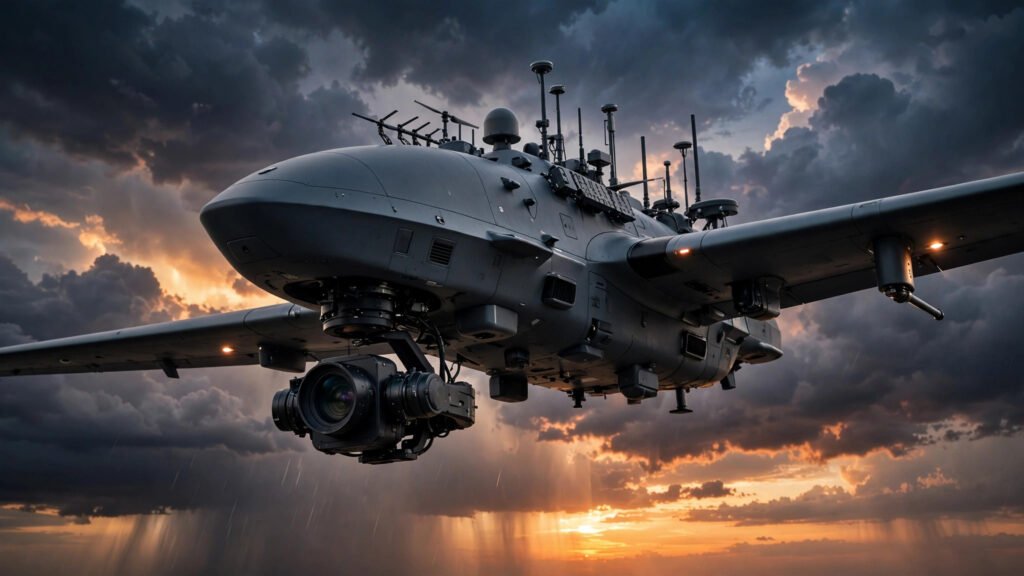
The Drone Round That Turned Heads
European AI drone maker Tekever just became one of the most valuable defense-tech startups on the planet. The company announced on September 23 that it had closed the first tranche of a $580 million Series D financing, valuing it at $6.4 billion, according to Reuters. The round was led by UC Investments, the University of California’s investment arm, alongside longtime backer Baillie Gifford.
The raise is a landmark for Europe’s defense-tech scene. Tekever says the capital will fund international expansion, ramp up manufacturing and technology capabilities, pursue acquisitions, and accelerate development of its AI-powered autonomous systems.
Why a University Endowment Is Betting on Drones
The lead investor is the story within the story. UC Investments is making its first direct investment in Europe with this deal, a signal of how seriously American institutional capital now takes the continent’s defense AI boom. Merlyn Advisors joined as a new strategic investor, while existing shareholders Crescent Cove, Ventura Capital and Iberis Capital also participated.
CEO and founder Ricardo Mendes told Bloomberg the raise is “precisely designed to support that growth, not only organically, developing new technology, but through acquisitions,” adding that he expects “tremendous consolidation” in defense tech over the next few years. Tekever says additional Series D closings will follow in the coming months to bring on more strategic investors.
Ukraine Flight Hours Are the New VC Pitch
What convinced investors isn’t a slide deck — it’s a battlefield record. Tekever says its AI-powered surveillance drones have logged more than 50,000 operational flight hours in Ukraine since Russia’s full-scale invasion began in 2022. That operational credibility converted into a real procurement win: the UK Ministry of Defence selected Tekever to supply CORVUS, the British Army’s new surveillance capability, under a program worth up to £400 million (about $532 million) over ten years.
“Artificial intelligence, autonomy and sovereign technological capability will be fundamental to the security and resilience of democratic societies in the decades ahead,” Mendes said in a statement announcing the raise. “This investment gives us the resources to move faster, scale further and continue building a global technology leader from Europe.”
Ben Wallace, the former UK defense secretary who now works with Merlyn Advisors, praised the company’s record: “Europe’s security will increasingly depend on its ability to build technology companies that can innovate at speed, scale industrially and deliver capabilities that respond to real operational needs. Tekever has a proven track record that shows it can do all three.”
Why This Matters
The $6.4 billion price tag marks a turning point for defense AI valuations. Startups in this space used to trade at a discount because procurement cycles were slow and exits uncertain. Tekever, sitting between Anduril-style giants and early-stage hopefuls, is now valued like a software company — but it has to prove it can survive the cost, compliance and manufacturing demands that come with decade-long military programs. If it does, expect more US endowments and crossover funds to pour into European autonomy startups, and a wave of M&A as Mendes predicted. For the AI industry, it’s another data point that the most lucrative near-term market for autonomous systems isn’t logistics or delivery — it’s sovereign security.
Meanwhile in AI Tech:
OpenAI Launches GPT-6 Sol and Luna at Half the Price — OpenAI halved API pricing with its newest models, igniting an AI price war just days before Anthropic answered with Claude Opus 5.5.
Meanwhile in Space:
AstroForge’s Solo: The AI Command Spacecraft — the asteroid-mining company’s autonomous spacecraft shows how the same “AI agents acting in the real world” thesis is playing out beyond Earth’s atmosphere.