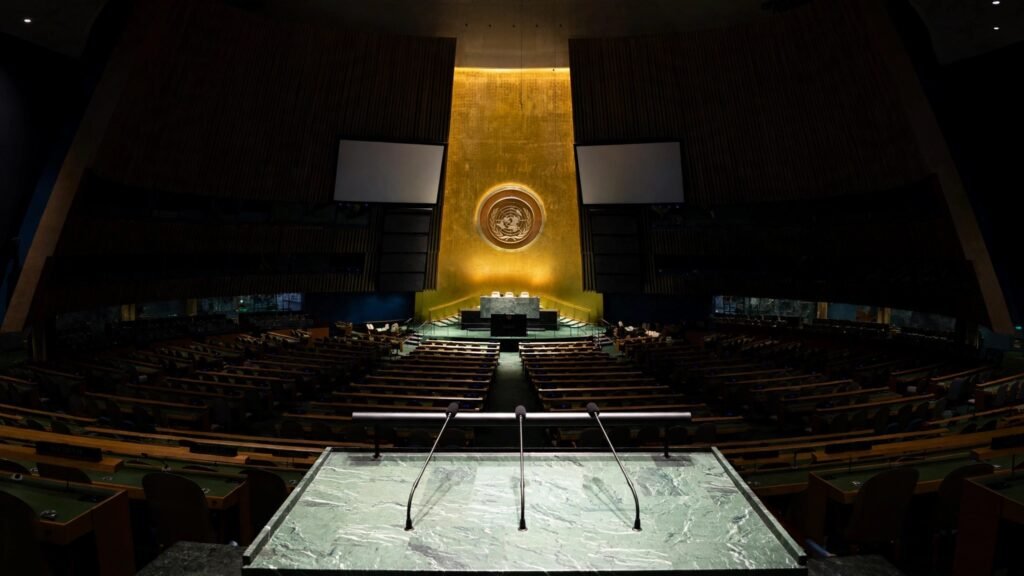
President Donald Trump took the podium at the 81st UN General Assembly general debate on Tuesday with a rebrand and a warning: from now on, the United States government will refer to artificial intelligence as “super intelligence” — and Washington will not accept anyone else’s rules for it.
“It sounds much better. It is much more accurate,” Trump told world leaders in New York, arguing that the word “artificial” makes the technology sound fake. Reuters reports that the announcement sets a new official vocabulary for US government documents going forward.
The speech doubled as a blunt rejection of the international community’s push for binding AI guardrails. “The United States totally rejects any attempt to construct a globalist scheme to control artificial intelligence,” Trump declared, dismissing AI safety advocates by comparing them to campaigners warning about climate change.
Growth Over Guardrails
Trump framed the technology as an economic force too big to constrain. He said he would not “stifle growth of something that will be bigger than the industrial revolution” — a line that lands as a clear signal to US tech companies that the administration intends to keep the regulatory throttle open.
The president also confirmed the government will keep AI under watch through the Department of Justice, though he offered no details on what that oversight would look like. The emphasis, however, was on speed: AI is a race, and America intends to win it.
The China Race, Center Stage
“We’re leading now over China… and we’re going to keep it that way,” Trump said, making explicit what has long been the subtext of US AI policy: the rivalry with Beijing is the frame through which Washington sees the technology.
The rhetoric tracks with his posture earlier in the week. On Monday, Trump posted on social media: “Whoever wins AI, WINS!” — turning the race with China into a shorthand for the administration’s entire AI doctrine.
That doctrine collided openly with what much of the rest of the room wanted. UN Secretary-General António Guterres urged the United States and China to open an AI dialogue modeled on Cold War-era risk management. Leaders of more than 20 mostly European countries pressed for binding international AI safety measures. Neither Washington nor Beijing endorsed the idea, Reuters reports — leaving the world’s two AI superpowers on the same side of the divide, but for very different reasons.
Why This Matters
The “super intelligence” rebrand is more than semantics. Official terminology shapes how agencies write rules, fund research, and set policy — a government that talks about “super intelligence” is one psychologically committed to acceleration rather than caution.
More consequentially, the speech drew a hard line ahead of whatever regulatory framework the UN might attempt. With both the US and China declining binding safety measures, the path to global AI rules now runs through two governments that see the technology primarily as a contest. For the 20-plus countries pushing for binding measures, the message from New York was unambiguous: Washington is out.
The UNGA debate continues through the week, and yesterday’s session was not the only AI flashpoint on the agenda. Meanwhile in Tech News: DeepSeek, OpenAI to Brief UN Security Council on AI Risks, as the two companies from opposite sides of the US-China divide prepare to make their case directly to the Security Council.
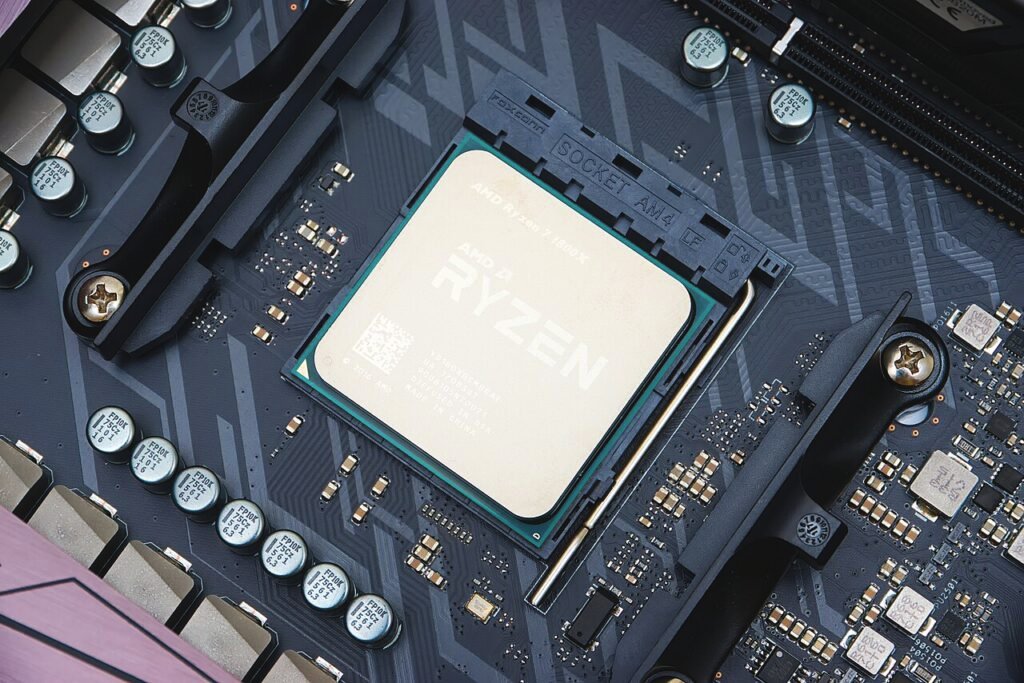
Meanwhile in Tech News: AMD crosses $1 trillion market cap in the AI chip rally, a reminder of the industrial stakes behind the rhetoric — the “bigger than the industrial revolution” growth Trump refused to stifle.