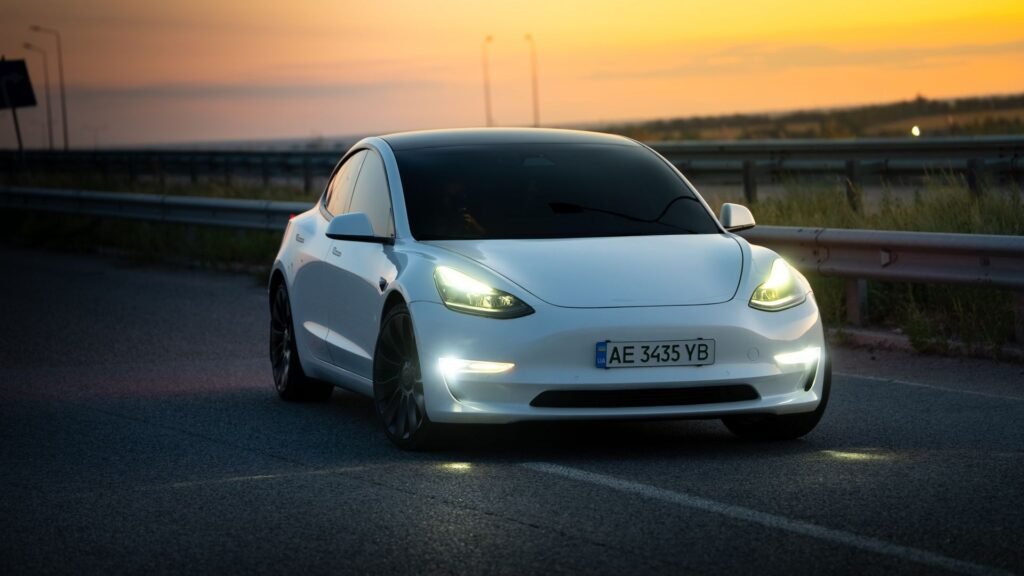
Tesla has started rolling out Full Self-Driving v15, its first major version jump since v14, aimed at the system’s most complained-about weaknesses. According to Electrek, the rollout began on November 21 — and the headline is a number Tesla wants you to remember: 25x better handling of safety-critical cases.
The number comes with no evidence attached. Tesla’s release notes say the new vision encoder improves the critical intervention rate by 25 times — but not what the rate was, what it is now, or how it was measured. That gap is the story.
Reality View turns the dashboard into a video game
The change drivers will notice first is on the screen. Tesla Reality View — called Tesla Augmented Reality in the release notes — is a generative visualization streaming a view from a virtual camera above the car, replacing the old simplified graphics with a detailed rendering of the street and FSD’s planned path. As Gizmodo reports, Elon Musk’s own summary was: “It’s like GTA.”
Tesla says the view lets drivers “see & control what FSD is planning to do,” Musk says drivers can tap any point to direct the car — though so far that exists only in Tesla’s own demo video.
The update goes after FSD’s weakest spots
The release notes read like a list of FSD’s most persistent complaints: better detection of road signs, animals, debris, and tire chains; better detection of potholes and standing water; better speed handling in school zones and bad weather — plus slowing down for speed cameras. It also adds navigation that learns from fleet routes, parking picks from your history, a Bike Rack Mode, and monitoring that works with hats and sunglasses.
Each targets a documented failure. In a September test, Brussels nonprofit Johanna.be found FSD over the limit in 55% of 30 km/h zones, averaging 44 km/h while the screen showed 50. Musk first promised pothole avoidance in 2019 and said again in August it was “coming soon.” And NHTSA is reviewing a petition claiming Tesla’s Robotaxis speed through active school zones, on top of an October 2025 investigation into FSD running red lights.
The 25x claim, checked
A multiplier without a baseline cannot be checked, and Tesla still will not publish the disengagement data that would settle it. Electrek did the math anyway: its data suggested FSD v14 could go a couple of thousand miles between critical interventions, so 25x would put v15 near 50,000 miles — well beyond the roughly 10,000 Electrek says Tesla needs for limited unsupervised service.
But v14’s own history says to wait for proof. When it arrived in October 2025 it came with hallucinations, brake stabbing, and excessive speeding, and early crowdsourced data showed about 732 miles between critical disengagements. It improved — then some point releases went backward.
One change runs the other way: v15 loosens driver monitoring in higher-speed profiles, while sleeping drivers on FSD keep making headlines and European regulators push Tesla to tighten monitoring. Looser supervision and a 25x safety claim make uneasy companions.
Why this matters
For owners, the picture is narrower than the announcement. It is a first wave — Tesla has not said which vehicles get it first, though it has told investors the AI4 computer can run it — and Musk says the wide release comes in December with the 2026 Holiday Update. Tesla FSD v15 is still supervised: the driver stays responsible at all times.
The bigger question is whether v15 closes the gap between Tesla’s claims and its evidence. In April, Musk wrote v15 “will far exceed human levels of safety, even in completely unsupervised and complex situations,” This time the release notes target the exact weaknesses owners and regulators keep naming. If the driving gains are as real as the visuals, it is a big update — and the fleet will tell us within weeks.
Meanwhile in Cars & EVs: Tesla already walked back its self-driving language once this year — our report on FSD being renamed assisted driving in Europe explains why. Meanwhile in Cars & EVs: if v15 clears the road to unsupervised driving, the economics change fast — see our Cybercab $29,990 true-cost breakdown.