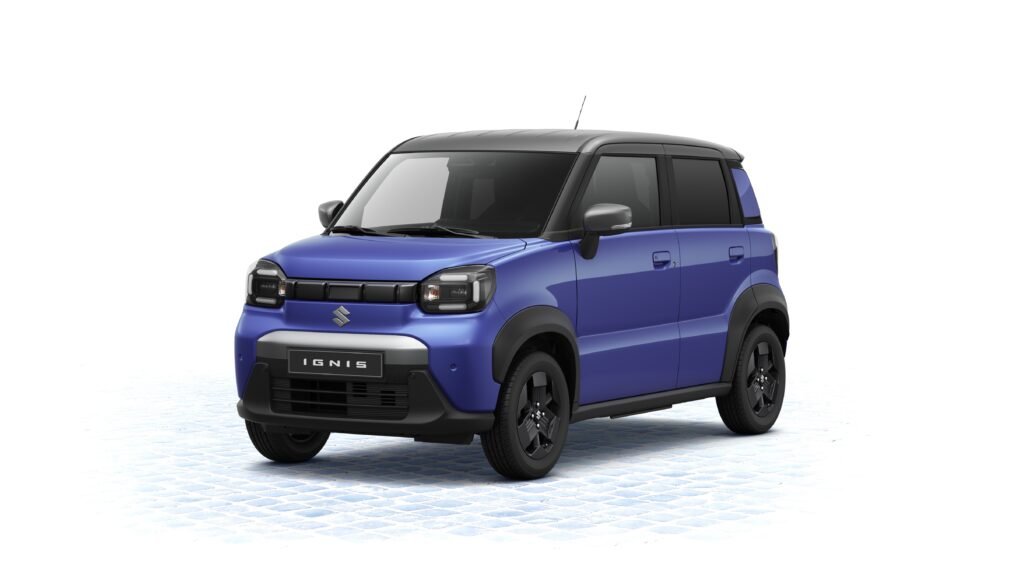
Suzuki has unveiled its first compact electric car for global markets — and the cheapest EV in its lineup runs on its biggest rival’s batteries. The all-new electric Ignis, revealed in an online world premiere on November 25, goes on sale in Europe from summer 2027. It is small, cheap by design, and built around a battery pack supplied by BYD’s battery unit — at least in its Japanese sibling.
The car itself is straightforward. A 26 kWh lithium iron phosphate battery sits under the floor of Suzuki’s dedicated HEARTECT-e platform, feeding a compact eAxle — motor, inverter and reduction gears in one unit — making 67 kW (90 hp) and 133 Nm to the front wheels. It is 3,570 mm long, 1,565 mm wide and 1,635 mm tall, seats four, and turns in 4.5 meters. Charging is up to 50 kW DC, with a fast charge to 80% in under 30 minutes. Safety kit includes Dual Sensor Brake Support II, lane keep assist, a driver monitoring system and seven airbags.
Two Numbers Suzuki Won’t Give You
What Suzuki did not announce is as important as what it did: there is no driving range and no price. The press release gives neither, and Suzuki’s own announcement confirms both are undisclosed. Any figure you see quoted elsewhere is an estimate, not a fact.
But there is a benchmark from Japan. The Ignis’s sibling, the e Sky, uses the same 26 kWh LFP pack on the same platform, is rated at 310 km (193 miles) WLTC, and has been on sale in Japan since November 16 from ¥2.12 million — about $13,500. The Ignis is bigger than the e Sky (3,570 mm against 3,395 mm), so its range will differ, but the sibling’s numbers are the honest anchor for what this car costs to build. What Car? expects a UK starting price under £20,000 and more than 150 miles of range.
The BYD Connection
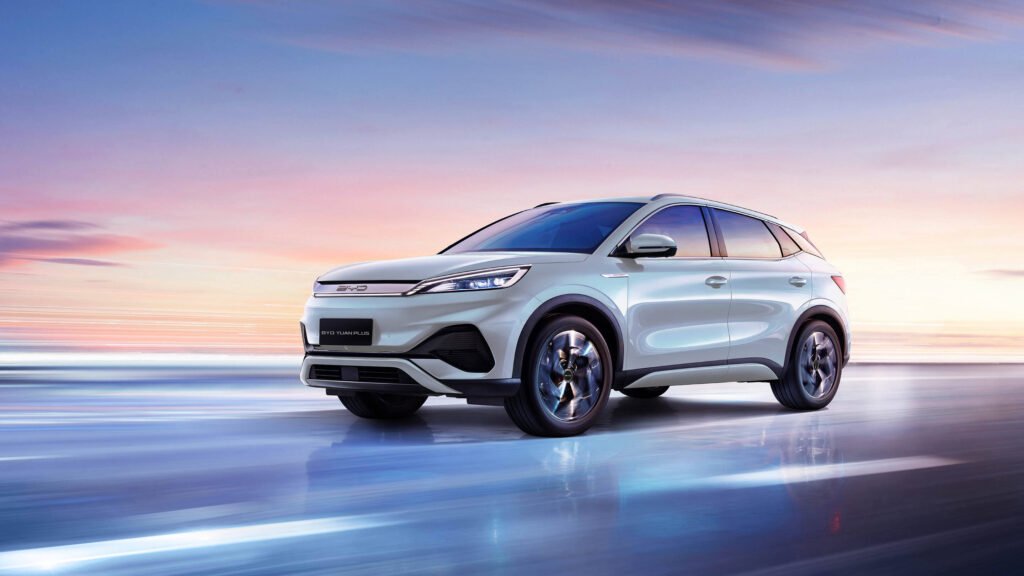
Here is the twist. The e Sky’s 26 kWh LFP pack is supplied by FinDreams, the battery unit of BYD — as Electrek reported in October. Suzuki has not confirmed the Ignis’s cell supplier, so this article will not state as fact that the Ignis itself has a BYD battery. But the Ignis uses the same pack size and chemistry as the BYD-powered e Sky, on the same platform, from the same company. The sub-$20,000 EV race is now being fought with borrowed batteries: Suzuki’s budget push runs on cells from the Chinese rival it is trying to undercut.
“The all-new Ignis unveiled today is Suzuki’s first compact EV for global markets, bringing together the experience we have cultivated through decades of small car development,” said Suzuki president Toshihiro Suzuki, invoking the company’s “Sho-Sho-Kei-Tan-Bi” philosophy — smaller, fewer, lighter, shorter, beauty.
Not Coming to America
No US launch is announced or expected: Europe first, then other markets from summer 2027, with production expected at Suzuki’s Hungary plant from the second quarter of 2027. American buyers get the same answer they got for the Renault Twingo.
Reaction from Ignis fans has been mixed. Online, some call the new styling a downgrade from the old boxy Ignis, comparing it to the S-Presso and Wagon R. The old car had a cult following for its chunky looks; the new one trades that for a softer, rounder design with a floating roof and LED lamps with digital-numeral-inspired graphics.
Why This Matters
The Ignis matters because it is a template. A 26 kWh LFP pack, a 90 hp motor, a sub-£20,000 price, and a battery bought from a rival — that is how a legacy carmaker builds a cheap EV in 2026 without losing money on every one. The template is being proven in Europe and Japan first; US buyers keep being denied it. The question is not whether Suzuki can build a $13,500 EV, but whether anyone will let Americans buy one.
Meanwhile in Cars & EVs: the Ignis joins a growing list of cheap European EVs Americans cannot buy — the Renault Twingo E-Tech starts under $20,000 and stays in Europe. And the market it is launching into is already moving fast: EVs took a third of European sales in October.