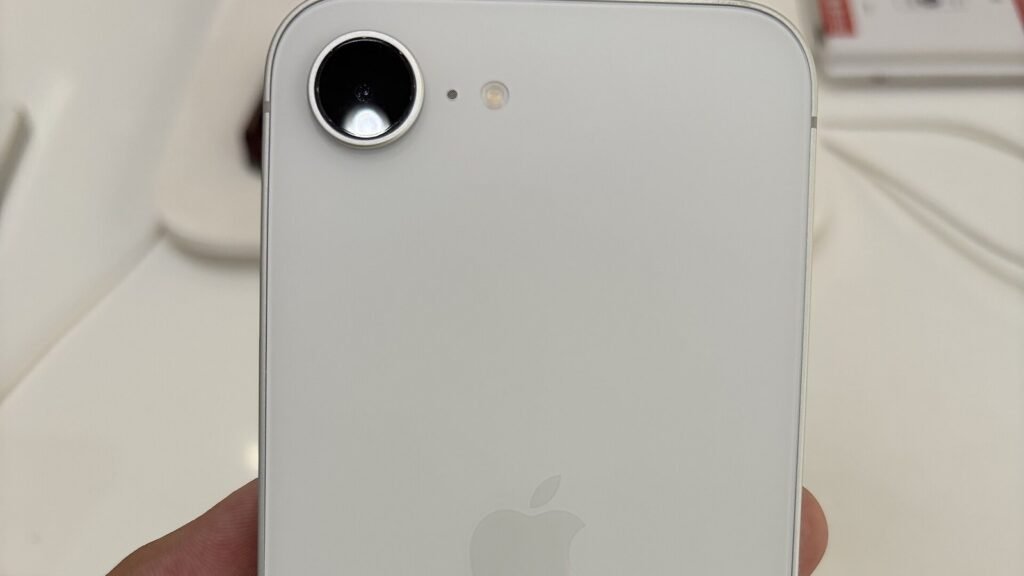
Apple is about to break one of its oldest habits. The standard iPhone — the model that has launched alongside the Pro every September since the iPhone 11 — will reportedly skip the autumn event entirely and arrive in spring instead. According to Bloomberg’s Mark Gurman, writing in his Power On newsletter on Sunday, Apple plans to unveil the iPhone 18e and the standard iPhone 18 around February or March 2027, as part of a five-product budget wave.
The wave, timed to the iOS 27.4 software cycle, also includes an updated entry-level iPad, a second-generation MacBook Neo and a refreshed MacBook Air. A second batch — the iPhone Air 2, an OLED iPad Air and a new iPad Pro — follows in the first half of 2027, though Gurman says those are “a little bit behind” on the manufacturing schedule.
What the Budget iPhones Actually Get
Neither phone is a redesign. The iPhone 18e — the successor to this year’s iPhone 17e — gets Apple’s A20 chip and 9GB of RAM, up from 8GB, according to analyst Jeff Pu, with longer battery life. The standard iPhone 18 gets the same A20 chip and 9GB of RAM and is otherwise close to the iPhone 17. Gurman describes the 18e as a chip upgrade only. The MacBook Neo 2 steps up to an A19 Pro chip and 12GB of memory, from 8GB, while the entry-level iPad gets an A19 chip with Apple Intelligence support, Wi-Fi 7 and Apple’s C1X modem. The MacBook Air moves to the M6 chip.
Why Apple Is Splitting the Year in Two
The schedule fits a deliberate shift under Apple’s new chief executive, John Ternus, to spread launches across the year rather than stacking them into one autumn event. PhoneArena reports the company is likely to split the spring announcements across multiple events — there are simply too many products for one stage. Last March set the template: Apple announced the iPhone 17e on March 2 and the first MacBook Neo on March 4, with both on sale by March 11.
There is a harder commercial logic underneath. US smartphone shipments fell 9 percent year over year in the third quarter of 2026, according to Counterpoint Research, and Apple — with 57 percent of the market — was the only manufacturer that grew. At the same time, the memory shortage is squeezing every hardware maker: the MacBook Neo’s price rose from $599 to $699 in June, and its education price climbed from $499 to $649 by October. A budget wave is how Apple defends its share while component costs climb — cheaper models, refreshed twice a year, keep buyers inside the ecosystem.
Why This Matters
The split launch changes the buying calendar. Anyone shopping for a budget iPhone this Black Friday should know the 17e’s successor is roughly three months away — and that Apple now treats the budget tier as a spring story, not an autumn afterthought. It also changes the competitive picture: Samsung and Google raised their flagship prices by about $100 this year to cover memory costs, while Apple held its Pro increase to $100 and pushed the bigger rises onto Macs and iPads. The spring wave suggests Apple will fight the memory crunch in the budget tier, where price sensitivity is highest and a $50 difference decides the sale.
None of this is confirmed by Apple, and Gurman’s dates have slipped before. But the shape of 2027 is now clear: two iPhone launches a year, with the cheaper phones getting their own moment. The iPhone is no longer a September product. It is a twice-a-year one.
Meanwhile in Mobiles: Apple’s iPhone 18 Pro price hike and the order cuts that followed — and the iPhone Duo sold out, pushing preorders to January 2027.