Apple’s long-rumored smart home hub is finally within sight. According to 9to5Mac, which cites a new Bloomberg report from Mark Gurman, Apple plans to unveil the device — known internally by the codename J490 and colloquially as the HomePad — on October 13, alongside a refreshed HomePod mini and a new Apple TV 4K.
The hub will reportedly run an entirely new operating system rumored to be called homeOS. This would be Apple’s first brand-new OS since visionOS shipped with the Vision Pro — and arguably its most consequential software debut since then.
A Smart Display, Years Late — or Arriving Exactly When Siri Is Ready
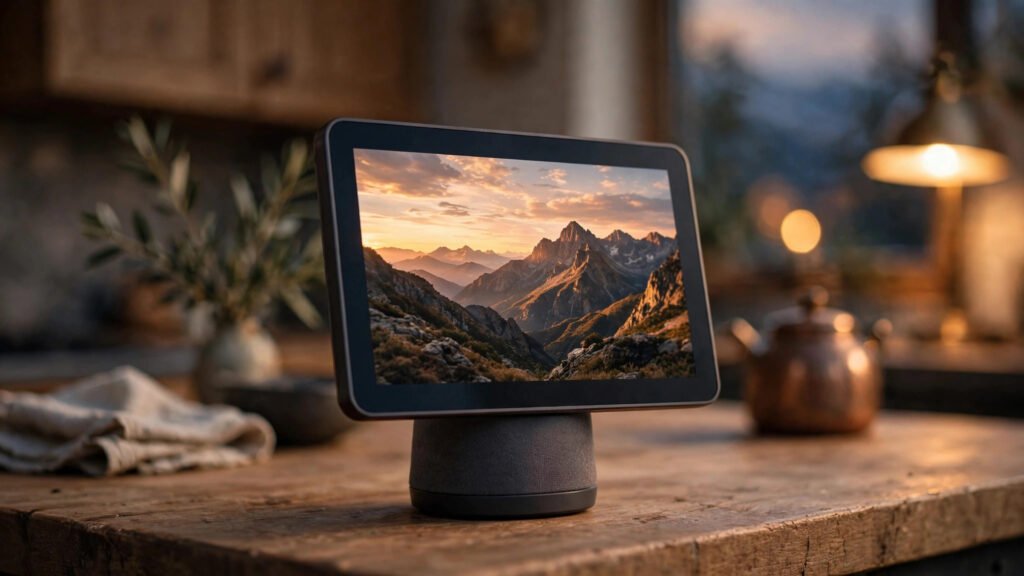
Amazon’s Echo Show and Google’s Nest Hub have owned the smart display category for years. Apple’s counter so far has been HomePods that only talk back. The HomePad changes that with a roughly 6-inch square-ish touchscreen mounted on a speaker base — as thick as an iPhone, with bezels like older iPads — held aloft by a tiltable metal arm, per Gurman’s reporting via GSMArena.
There is no battery — USB-C powers it — and Apple is reportedly offering just one color, the standard gray aluminum finish. A wall-mount version with a thinner speaker base is also reportedly in the works.
FaceTime video calls, Intercom-style messaging, music, photo slideshows and full HomeKit and Matter smart-home controls round out the feature list. Early reports floated a price around $350, though that figure remains unconfirmed.
homeOS: Apple’s Franken-OS for the Wall
The details 9to5Mac pulled from Gurman’s report read like a greatest-hits album of Apple’s design systems. homeOS is reportedly built on tvOS under the hood, with iPhone-style widgets, iPad-like app layouts — a two-panel Messages app is apparently included — and Apple Watch-style icons on the home screen.
The clever bit is the distance trick. The default interface leans heavily on large photo slideshows and clock faces, similar to the iPhone’s StandBy mode, and the display reportedly adjusts what it shows based on how far away you are — glanceable from across the room, detailed controls when you step closer. Leaked setup screens from the past week show a Photo Face powered by iCloud Photos.
Voice and facial recognition are expected to identify household members and surface personal calendars and reminders for each person. The new Siri AI sits at the center of all of it — at least in theory.
Why this matters
Every spec above is table stakes for a smart display in 2026. The HomePad’s real story is Siri — and it’s the angle the commodity coverage is burying. This device reportedly waited months on the assistant, its launch slipping until the overhauled Siri AI was ready, and it’s easy to see why: a home hub is the single hardest environment for a voice assistant. Multiple people give orders from across the room, there is no screen tap to confirm intent, and a mistake that runs your lights, locks or morning routine is far more visible than a wrong search result.
That makes the HomePad the first Apple product that is a public referendum on its own AI. If the new Siri understands a shouted multi-step request from the kitchen and nails it, Apple has its living-room beachhead — and the rumored multi-unit strategy, a hub in every room, starts making business sense. If Siri stumbles, the entire product is dead on arrival, because nobody buys a $350 display for its widgets.
Amazon and Google solved the “good enough assistant” problem years ago. On October 13, we’ll find out whether Apple’s wait was worth it.
Meanwhile in Apps & Tools: Apple’s Siri pitch comes with a permissions shadow — the macOS warning Apple just slapped on Meta’s Muse shows how aggressively Cupertino is policing AI data access, and that same gatekeeping instinct will define exactly what HomePad’s Siri can and can’t touch.
Meanwhile in Apps & Tools: the race to build an assistant that actually does things isn’t standing still — OpenAI’s Codex running full coding jobs in the cloud shows where agentic AI is headed, and HomePad is Apple’s answer to the question of who controls the home side of that future.