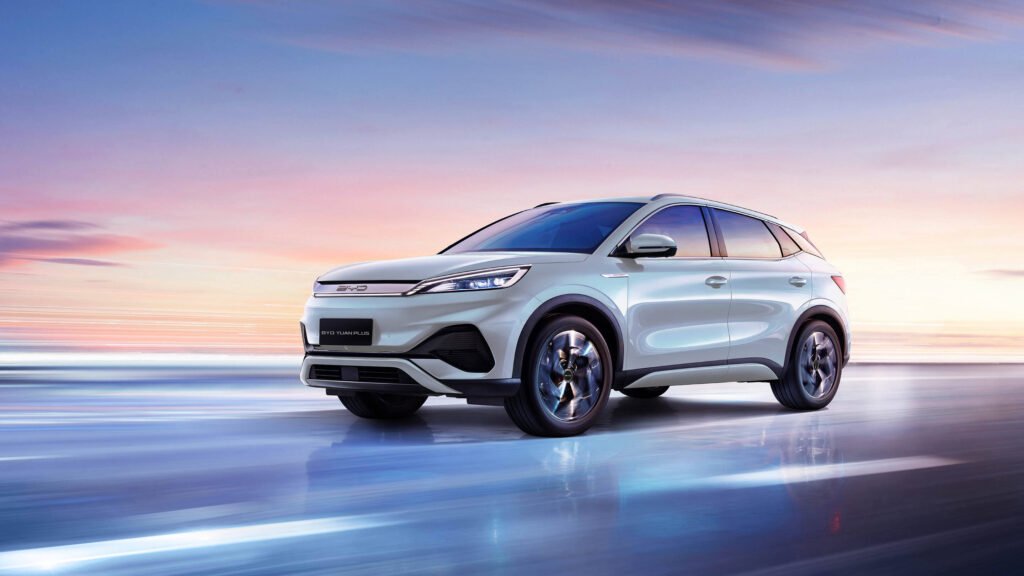
BYD is about to own the factory that builds the Ineos Grenadier, and Ineos is packing its bags for America. The Chinese EV giant confirmed on Tuesday that it has entered exclusive negotiations to buy Ineos Automotive’s plant in Hambach, France — a deal that would make BYD the first Chinese automaker to buy an existing car factory in Europe.
According to Electrek, BYD wants the plant as its second passenger-car factory in the European Union, after its site in Szeged, Hungary. Ineos, meanwhile, said it will move production of the Grenadier SUV and Quartermaster pickup to the United States, which accounts for about 70 percent of its sales.
One factory, two moves
Hambach is a small plant with a long history. It opened in 1997 as “Smartville,” Mercedes’ Smart Fortwo factory; Ineos bought it in 2020 and started Grenadier production there in 2022, investing nearly 540 million euros in the site since 2019.
Capacity is about 30,000 vehicles a year — less than three days of BYD’s output, given the 3,561,615 passenger vehicles it sold globally in the first 10 months of 2026. BYD is not buying the plant for what it builds today. It is buying a “Made in France” label.
Neither side disclosed a price or a closing date, and the sale still needs works-council consultation. Ineos would keep building both models at Hambach “for the medium term” if the deal closes, and BYD has made no commitment on how many of the plant’s roughly 1,000 employees it would keep.
Tariffs are redrawing the map
The motivation on both sides is the same word: tariffs. Reuters reports that BYD is seeking European production sites ahead of the EU’s planned local-content rules. China-built BYD EVs already face a 17 percent EU duty on top of the standard 10 percent car tariff, Chinese hybrids face quotas, and proposed “Made in Europe” rules would tie subsidies to local content. A French plant solves several of those problems at once.
Ineos is doing the same math in reverse. Every Grenadier shipped from France to the US gets hit with a 15 percent tariff, and the Quartermaster pickup falls under the 25 percent tariff on imported pickups. When seven out of ten of your customers are American, building trucks in Lorraine stops making sense. Ineos has shortlisted US sites, has not named any, and aims to start American production in 2028.
BYD is not alone. Leapmotor started building its B10 at Stellantis’ Zaragoza plant in October, Dongfeng plans a Stellantis build in France, Geely is reportedly lining up a Ford plant in Spain, and Chery already assembles in Barcelona. Back in May, BYD’s Stella Li said the company would rather own and run a plant than form a joint venture — Hambach fits that description exactly.
The 186-car gap that explains the urgency
There is a race inside this deal, and BYD is currently losing it by a rounding error. Through October, BYD registered 320,445 vehicles in Europe, up 133 percent. Chery was just ahead with 320,631, up 235 percent. The gap is 186 cars.
Europe matters more because home is not going well: BYD brand sales in China fell 40 percent to 1,544,699 vehicles in the first 10 months of the year. A French factory is not just about dodging tariffs — it is about keeping the European growth story alive while the home market shrinks.
Why this matters
For American buyers, the takeaway is simple: a US-built Grenadier is coming. If Ineos hits its 2028 target, the truck that today carries a 15 percent tariff — 25 percent for the Quartermaster pickup — will roll off an American line instead.
Hambach is the clearest proof yet that tariffs do not stop cars from crossing borders — they move the factories instead. Ineos is leaving Europe to build in America because of tariffs. BYD is buying into Europe because of tariffs. The protectionist era is not shrinking the auto industry’s map. It is redrawing it, one plant at a time.
Meanwhile in Cars & EVs: BYD’s Ti7 was banned from the EU days ago over its Defender-like design — the same look that made the Grenadier famous. And meanwhile in AI Tech: Tesla’s AI5 chip is set to power the next Optimus robots.