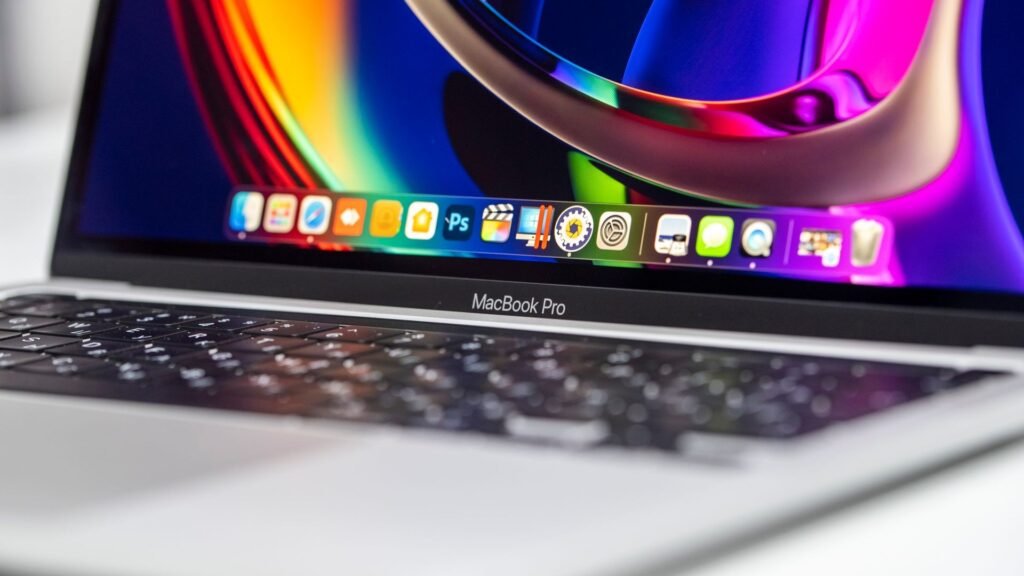
Apple said on Monday it will host a “Pro and tell” event in Los Angeles on October 28 — and the headline act is expected to be something the company swore it would never build: its first touch-screen MacBook Pro. The event, Reuters reports, is the latest in a rapid-fire series of launches under chief executive John Ternus, coming after September’s Duo foldable iPhone and last week’s HomeView smart-home hub.
Apple itself has confirmed only the date and the name. Everything else comes from reporting — most of it from Bloomberg’s Mark Gurman, via 9to5Mac — and it paints the most dramatic Mac shake-up in years: redesigned 14- and 16-inch MacBook Pros with OLED touchscreen displays, an entry-level 14-inch MacBook Pro and a 24-inch iMac with the new M6 chip, and an iPad mini with an OLED screen.
Twenty Years of “No” — Ending With a Touchscreen
For the better part of two decades, Apple executives publicly dismissed the idea of a touchscreen Mac, arguing that touch belonged on the iPad and vertical touchscreens were ergonomically wrong. If Gurman’s reporting holds, October 28 is the day Apple officially changes its mind. The new MacBook Pros are expected to pair OLED displays — brighter, more contrast-rich panels long rumored for the Mac — with full touch support, plus a Dynamic Island replacing the notch and a “significantly lighter” chassis than today’s models.
That combination matters more than it sounds. An OLED touchscreen MacBook Pro doesn’t just add a feature; it ends the last meaningful hardware distinction between the Mac and the iPad, and it forces macOS to become a touch-first interface in places — the biggest shift in how you interact with a Mac since the trackpad gestures of the 2010s.
The Chip Paradox: The Flagships Get Last Year’s Silicon
Here is the wrinkle the spec-lists glide past: the redesigned touchscreen flagships are expected to run M5 Pro and M5 Max chips, while the cheaper, unchanged-design entry-level 14-inch MacBook Pro and iMac jump straight to the new M6. Read that again — the machines with the old design get the new chip, and the machines with the new design get the older chip.
It is a quirk of Apple’s silicon cadence: the M6 arrives first in the entry tier, while the Pro and Max variants of a chip generation traditionally lag by months. The practical upshot for buyers is genuinely useful information nobody’s spec rundown spells out: if raw chip generation is what you care about, the cheapest new Macs announced on October 28 may outrank the flagships — at least until the M6 Pro and M6 Max follow.
Also on the Table: An OLED iPad mini
The iPad mini is reportedly in line for its first OLED display, alongside a FaceTime camera relocated to the landscape edge — a quiet admission that most people use the mini sideways — and a revamped speaker setup. It is a meaningful refresh for Apple’s smallest tablet, which has been on a slow update cadence.
Why This Matters
The service angle is simple: if you are shopping for an entry-level 14-inch MacBook Pro or an iMac, do not buy one this week. Chip-only updates to both are expected in about two weeks, and last-generation machines will get cheaper the moment they land. For the touchscreen flagships, the calculus is different — they are a first-generation redesign of the Mac’s most iconic product, which historically means waiting for reviews is the smart play.
Zoom out and the pattern is the real story. Under Ternus, Apple is shipping at a pace it hasn’t managed in years: a foldable iPhone in September, a smart-home hub last week, and now a touchscreen Mac event on October 28. Whether the touchscreen MacBook Pro is a triumphant about-face or a reluctant concession, it signals an Apple willing to break its own taboos — and that is the most interesting product news of the fall.
Meanwhile in Gadgets: Fitbit’s Edge launch — price, specs, and the fine print, and Fairphone’s $119 Fairbuds 2 with swappable batteries.