From Bank Bins to Robot Arms
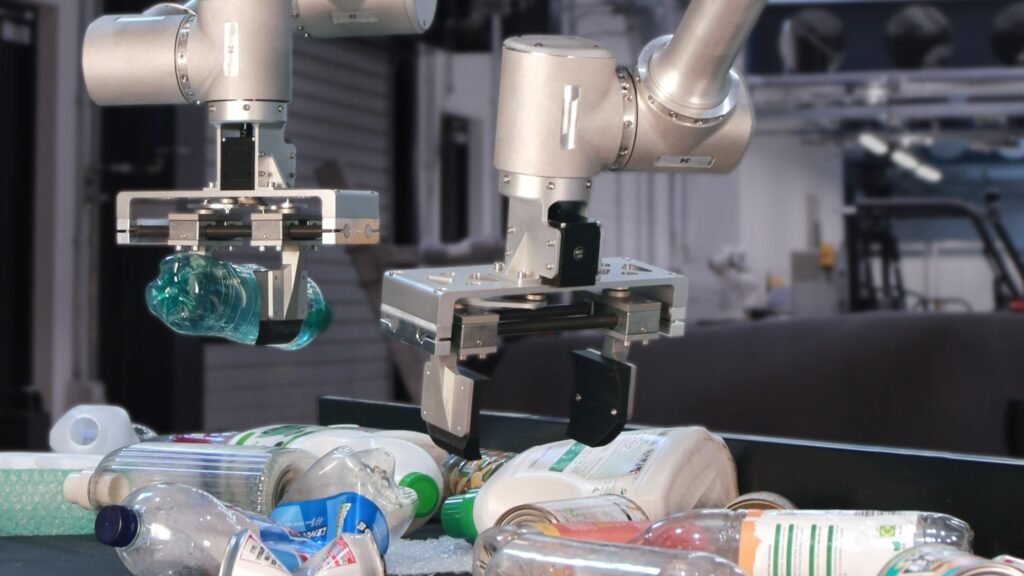
For Danu Robotics founder Amy Ma, the eureka moment came while working as a software developer at a London bank. The building had separate recycling bins — which she watched get emptied into the same trash. “Even though they have tons of money, there’s all these different recycling bins that just end up in the same place,” she told TechCrunch. Six years later, her Edinburgh-based company is bringing its answer to market: H.E.R.O., an AI-powered robot that sorts recyclables speeding past on a conveyor belt.
The commercial signal is already there. Danu has $500,000 in signed contracts, letters of interest from two large customers, and more than 200 prospects in its sales pipeline — aimed at a recycling-sorting market the company sizes at $20 billion across Europe and North America. TechCrunch reports a $5 million late-seed round is funding the commercial push.
The Pincer, the Picks, and the Payback
H.E.R.O.’s edge starts with the hardware: it grabs items with a pincer claw instead of the suction-based arms sold by competitors like Glacier and RecycleEye, and its AI keeps improving the sorting software the longer it runs. The performance numbers come from the University of Edinburgh’s own case study on the company — Ma earned her MSc in High Performance Computing with Data Science there in 2021, with supercomputing support from the university’s EPCC centre. According to Edinburgh Innovations, the prototype hits 40 picks a minute against 10 to 20 for a trained human, cuts contamination below 1 percent, and trims operating costs by 30 to 100 percent.
Then there is the payback math, which Ma states bluntly: a working site earns roughly $485,000 in additional revenue from having the robot on the line, against a $160,000 initial investment and $24,000 a year in maintenance. Recycling centers make their money from the materials they recover — so unlike most automation pitches, a robot that sorts better has an immediate, measurable return. The machine pays for itself in months, not years.
Why This Matters: Sorting at the Source
The funding-round coverage stops at the term sheet. The more interesting part is Ma’s second act: she wants H.E.R.O. sturdier, smaller, and more versatile — portable enough to work outside dedicated waste facilities. “Once it’s smaller, it can be used as a stand-alone recycling solution for events, for shopping centers, hospitals, or airports to recycle their waste at the source,” she told TechCrunch. That is the real disruption hiding inside a recycling story: not a better conveyor line, but intercepting waste where it is created — before the bins get emptied into the same trash, the way her bank did.
The timing is deliberate, too. Danu will be showing H.E.R.O. in Startup Battlefield 200 at TechCrunch Disrupt, October 13–15 at San Francisco’s Moscone Center — a debut in front of exactly the investors who fund industrial automation, days after this story breaks.
Meanwhile in Robotics: the money is moving across the sector — robot-mower maker FireFly just filed for a Nasdaq direct listing under ticker FFLY, and we did the share-overhang math the announcement skipped.