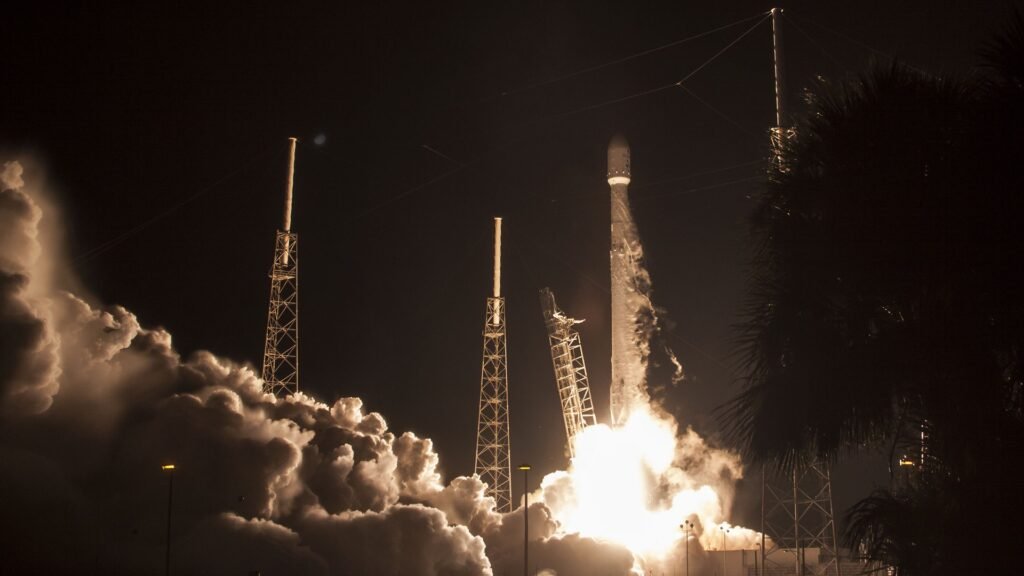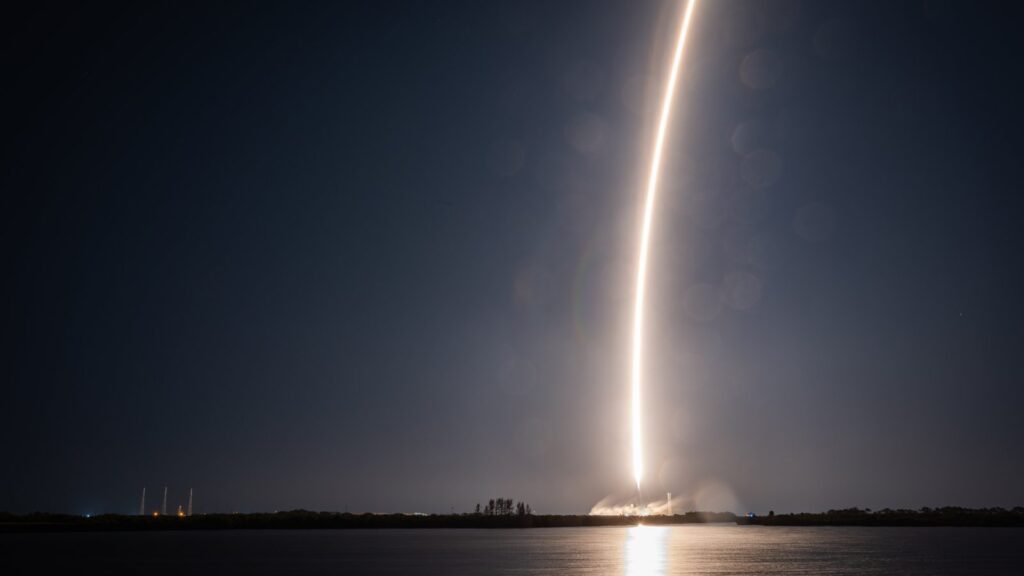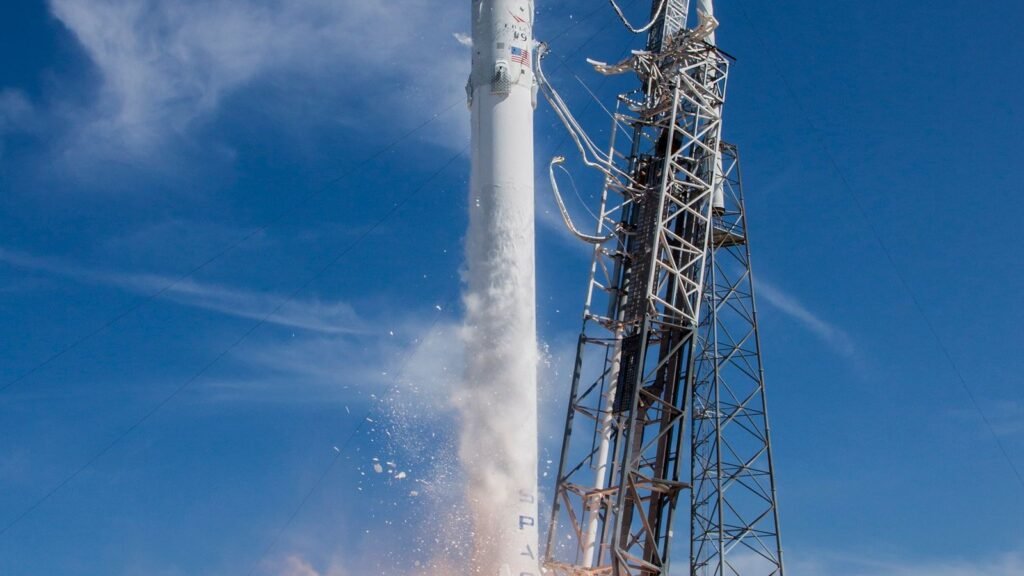
SpaceX’s Crew-13 mission reached the International Space Station in 7 hours and 55 minutes on Thursday — the fastest launch-to-docking trip by a US spacecraft in the station’s nearly 26-year history, according to NASA. The Dragon capsule, named Grace, lifted off from Cape Canaveral at 11:10 a.m. ET and docked autonomously with the station’s Harmony module at 7:05 p.m. ET, USA Today reports.
Aboard: NASA astronauts Jessica Watkins (commander) and Luke Delaney (pilot), Canadian Space Agency astronaut Joshua Kutryk, and Roscosmos cosmonaut Sergey Teteryatnikov. Hatches opened at 9:19 p.m. ET, and the four joined the seven members of Expedition 75 already aboard — bringing the station’s population to eleven.
How fast is that, really?
The record only means something against the old marks, and the old marks show just how dramatic this jump was. The previous US record for any spacecraft was 12 hours and 33 minutes, set by SpaceX’s uncrewed Dragon cargo capsule in November 2024. The previous US crewed record was 14 hours and 43 minutes, set by Crew-11 in August 2025. Crew-13 nearly halved it — and the last crew that launched from American soil took more than 30 hours to reach the station.
One caveat, for honesty: this is the American record, not the world record. In May 2020, a Russian Soyuz carrying three astronauts reached the ISS just 3 hours and 3 minutes after lifting off from Baikonur. As IFLScience notes, the Soyuz is not faster or more powerful than a Dragon — the difference comes down to mission controllers choosing more aggressive “fast-track” trajectories. Russia simply flies closer to the edge.
“We got lucky this time”
The refreshingly honest quote of the mission came from Julianna Scheiman, SpaceX’s director of NASA science and Dragon programs, at the post-launch press conference: “We got lucky this time. The space station was in an opportune spot in space, and the orbital mechanics, the physics of it all, worked out for it to be the shortest launch-to-docking time we’ve had to date.”
She added that the flight was “close to the fastest it could be” for that launch setup — while leaving open the possibility of an even shorter trip under different orbital conditions. Translation: this record was a gift from orbital phasing, not a new capability SpaceX can repeat on demand. The chase-down time depends heavily on where the station is relative to the launch pad at liftoff.
The leak that almost delayed everything
Crew-13 was originally supposed to arrive in mid-September. Technicians found a leak in Dragon’s propulsion system during preparations, forcing a delay while SpaceX engineers replaced the affected component. NASA and its international partners only cleared the vehicle to fly after the repair.
The mission is also a study in operational cadence. Hours after Crew-13 docked, SpaceX launched a Falcon Heavy carrying the classified NROL-97 payload for the National Reconnaissance Office at 11:54 p.m. ET — its first-ever Falcon Heavy mission for the NRO. Three SpaceX liftoffs in under 13 hours, four booster landings in a single day. The outgoing Crew-12 astronauts, meanwhile, are due to undock as early as October 5, weather permitting.
Why this matters: less transit, more science
A fast rendezvous is not just a bragging right. Fewer hours in a cramped capsule means less crew fatigue and more of the six-month mission spent on actual research — and Crew-13’s manifest is substantial: stem-cell-derived tissue experiments for disease modeling, crop growth in microgravity, blood-flow studies, and an in-flight diagnostic device for astronaut health.
The deeper significance is what the record says about the maturity of the Commercial Crew Program. Thirteen operational crew rotations in, SpaceX is now squeezing the transit itself — optimizing trajectories, nailing phasing windows, and landing boosters the same night. The Soyuz comparison keeps everyone honest: the US still does not fly the most aggressive profiles. But Crew-13 shows it no longer needs to. The gap between “American spacecraft” and “spacecraft” is now a matter of trajectory choice, not capability.
Meanwhile in Space: Google put its first AI TPU satellite into orbit with Project Suncatcher.
Meanwhile in Space: The MOI-1a orbital computing satellite launch.