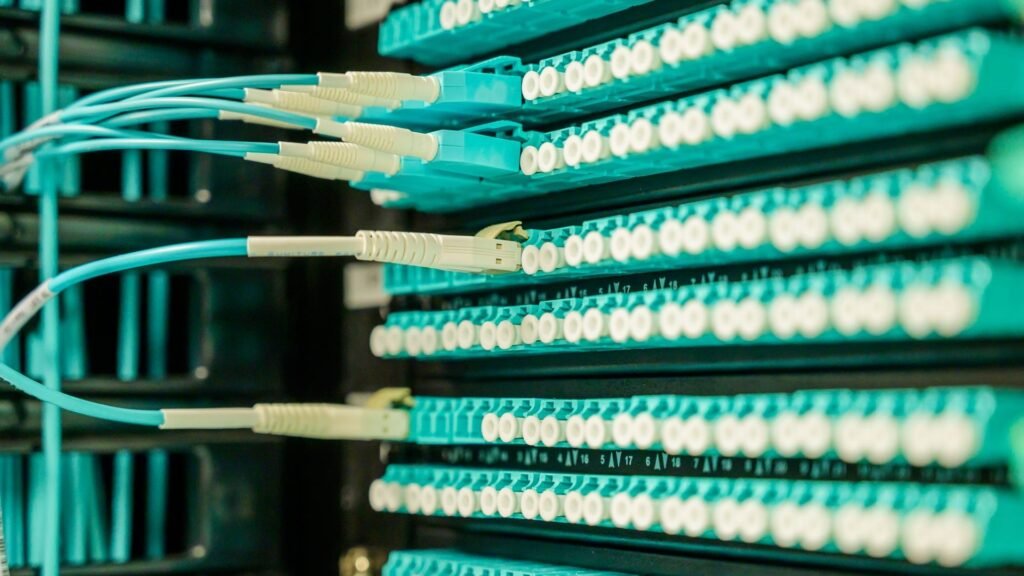
HPE turned its annual networking investor day into a $1.2 billion mic drop. According to Reuters, the company announced that Vultr, the fast-growing independent cloud provider, placed a $1.2 billion order for its AMD Helios AI racks — the first order ever for the system — while nearly tripling its long-term networking growth forecast on AI demand. Shares jumped nearly 6% in premarket trading.
The $1.2 Billion Order Nobody Saw Coming
Vultr will deploy the racks — officially the AMD Helios AI Rack by HPE — across its U.S. data centers to meet enterprise and service-provider demand for AI model training and inferencing. As Barron’s reports, the system is a direct competitor to Nvidia’s advanced AI data-center architecture, pairing AMD AI chips with “purpose-built” HPE networking hardware and software.
The buyer matters as much as the hardware. Vultr isn’t a household name like AWS or Azure — it’s one of the “neoclouds,” the independent clouds selling AI compute to customers who don’t want to be locked into the hyperscalers. A $1.2 billion commitment from a neocloud is a vote of confidence not just in HPE’s racks, but in the whole secondary-cloud layer of the AI boom.
The Number That Buried the Headline: “Low-to-High 50s”
The order was only half the story. HPE now expects networking segment revenue to grow at a compound annual rate in the high teens from fiscal 2026 through fiscal 2029 — up from its prior 5% to 7% forecast — and raised its fiscal 2027 outlook to the high teens to low 20s, up from 14% to 17%, with operating margins in the mid-to-high 20s, Barron’s reports.
But the number that should make investors sit up is narrower: for data-center networking specifically, HPE projects annual revenue growth in the “low-to-high 50s” through fiscal 2029. Networking unit head Rami Rahim called data centers the company’s fastest-growing market. “AI is reshaping the technology stack, making the network more strategic and driving significant new demand from enterprises and service providers,” he said, per Reuters.
HPE also sweetened its Juniper Networks math, lifting expected annual run-rate cost savings from the acquisition to $800 million by the end of fiscal 2028, up from at least $600 million — a sign the integration is delivering faster than promised.
Why This Matters
Everyone tracks the GPU. But an AI cluster is only as good as the fabric tying tens of thousands of accelerators together — and HPE is now telling Wall Street, with numbers, that the network is the AI trade’s next chokepoint. Growing a sub-segment at 50%+ annually through 2029 is the kind of trajectory usually reserved for the chipmakers themselves.
Two implications worth watching. First, AMD’s rack-scale push is finding real buyers. An independent cloud betting $1.2 billion on Helios suggests enterprises want a credible Nvidia alternative — and HPE is now its loudest reseller. Second, the neocloud layer is consolidating. If Vultr can place billion-dollar orders, the independent AI clouds aren’t fringe players anymore; they’re the demand HPE’s “strategic network” bet is built on.
HPE’s stock, up 156% this year as of Tuesday’s close, is already priced like the market believes it — shares touched a record Wednesday. Notably, optical networking names Coherent, Lumentum, and Corning all slipped more than 1% the same session, per Barron’s — a reminder that in the AI infrastructure trade, capital is rotating toward whoever owns the next bottleneck.
Meanwhile in AI Tech:
- OpenAI pulled back the curtain on GPT-6.1 Sol pricing at DevDay — read how the flagship model stacks up
Meanwhile in Tech News:
- Trump sat down with AI CEOs to hash out guardrails vs. speed — the full breakdown of the White House meeting